Reviving the lost art of letter writing
While lamenting the lost art of letter writing we can celebrate how a Korean author is trying to keep it alive.
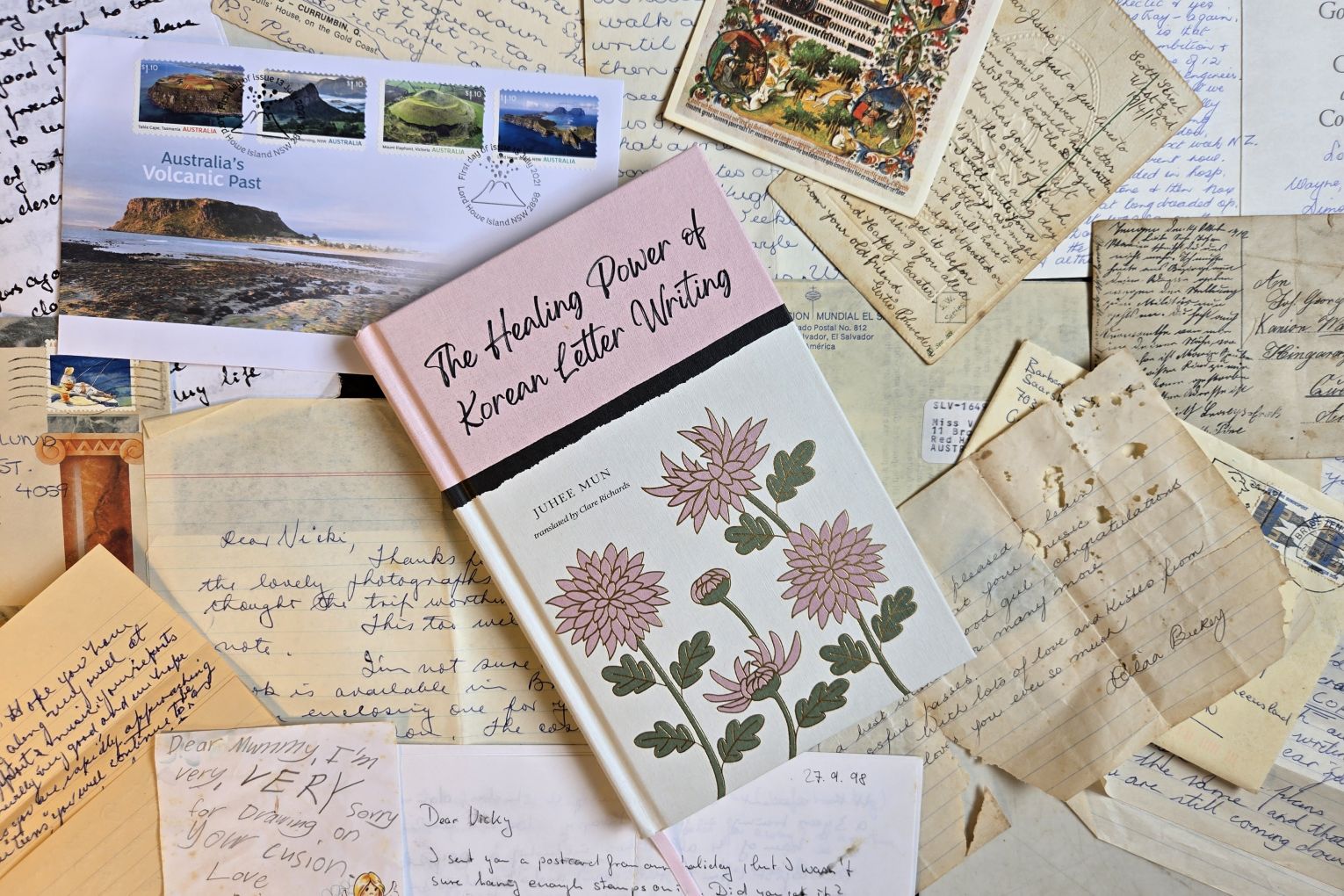
The magic of receiving a handwritten letter in the mailbox – it is a rare event for most of us these days. And even though I no longer write letters, I was saddened to see that the Danish postal service, PostNord, was ceasing mail delivery. The announcement came on the final day of 2025 – a sad farewell to the year and another nail in the coffin of the art of letter writing.
It made me feel quite nostalgic as I remembered the childhood thrill of going out to see what the postie had left me – perhaps some money in a card with news from a grandparent, or maybe a few pages from a penpal (whom I’d probably never meet) on the other side of the world. That anticipation will become a quaint antiquity for generations to come, at least in Denmark.
These pensive musings came less than a week after I received a special Christmas gift from my daughter – a book titled The Healing Power of Korean Letter Writing by Juhee Mun (published in 2022, with a new English translation by Clare Richards in 2025).
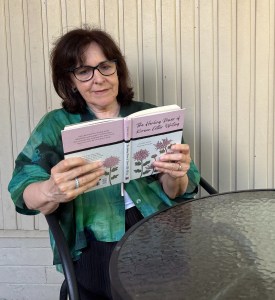
I have been to South Korea twice and have a fascination for aspects of its culture, even taking Korean language lessons. My first thought was that the title had something to do with the technique of writing the Hangeul characters, which the language comprises. But no, it’s about the author’s experience of owning a little shop in Seoul called Geulwoll (글월 meaning “letter”), where people are encouraged to enter, choose some special stationery and sit down to write a letter.
The juxtaposition of these two events gave me considerable food for thought. While the Denmark news was a sign of what’s likely to come as electronic and AI-generated forms of communication will dominate more and more, the book was an appeal to take the time to embrace a very personal and human art, cherished in the past and to which we should hold on.
You might like

One of the first worst-case scenarios that came to mind when thinking about the loss of the postal service (my specialty is jumping to worst-case scenarios) was that we’d all be royally screwed if our electronic means of communication were hacked and taken over.
We’ve been warned that the next type of war might be conducted in cyber space, and we’ve seen glimpses of the helplessness that overtakes an area when, for instance, an electricity grid is taken out.
So, how would we know what’s going on without emails, social media, TV news or even a government postal service? Would we return to horseback riders galloping through the night to deliver news and letters? It is not an outrageous idea.
Okay, so hopefully the cyber-apocalypse will not happen. But you don’t even have to worry about the downfall of civilisation to feel a sense of loss for old-fashioned letter writing. Look at the vile bile that gets spewed out onto social media. There’s minimal thought put into a lot of it, punctuation is non-existent and it disappears under the weight of the next hundred comments that quickly follow.
But it takes time to compose a well-structured handwritten letter. It takes thought. It takes planning – an introductory paragraph, the order in which news will be shared, then rounding off before signing off.
The Healing Power of Korean Letter Writing is like … a love letter to letter writing
Subscribe for updates
It also requires your writing hand doing more work than it has probably done for years, if you’re used to communicating on a computer keyboard, tablet or mobile phone. Correcting mistakes isn’t as simple as backspacing or pressing “delete”.
Reading The Healing Power of Korean Letter Writing is a lot like reading a letter. It’s a love letter to letter writing. And I adore the idea that in massive, bustling Seoul there’s an oasis designed to help visitors with their own letter writing.
You can even sign up for a customer penpal service and choose a letter written anonymously. Imagine that – reading a letter with news or even just deep personal feelings that someone wanted to tell another human without them knowing who wrote it. The only catch to receive this is that you must also write a letter and leave it for another penpal customer to read. Whether anyone decides to respond to these letters is left up to them. It sounds deliciously intriguing!
The book has lovely, soft pencil drawings with each short chapter, with titles such as The Best Place to Write or Letters as a Balm for Loneliness. And seeing as Juhee Mun is also in the business of selling stationery, there’s a chapter called Choosing Paper and Envelopes.
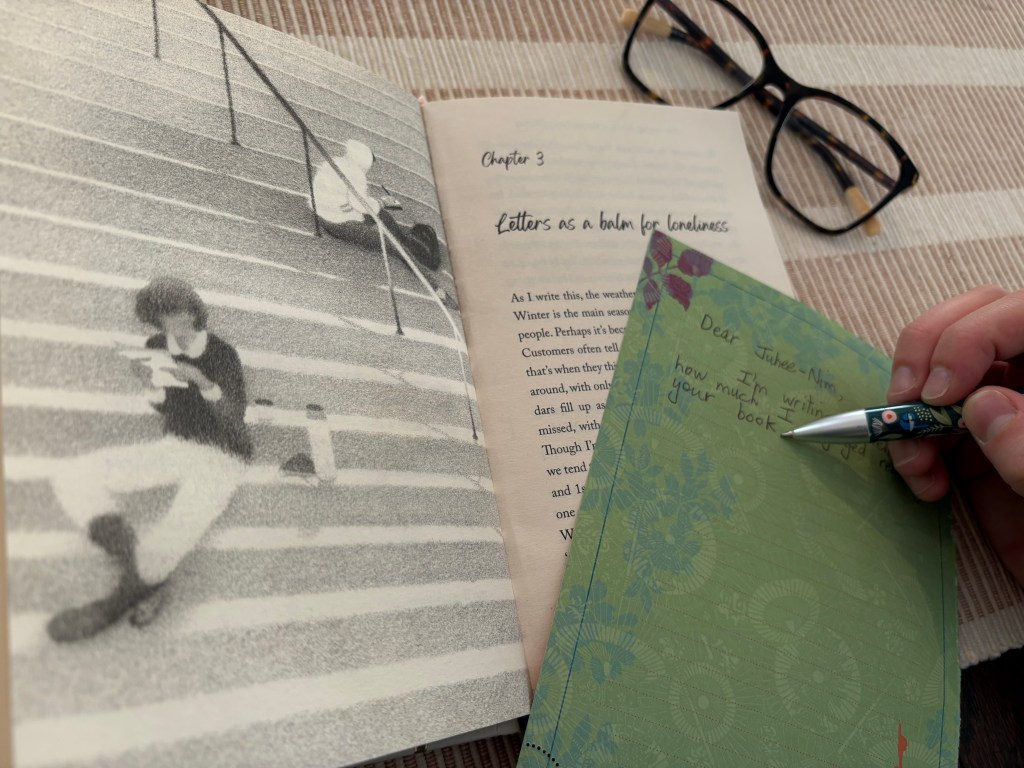
Delving into Geulwoll and its charming offerings led me to discover a number of books about writing letters. Of course, it’s not an original idea to write about the practice. It’s just that the combination of discussion about that with the idea of offering a specialist idyllic haven in which to carry out that practice is very appealing. Romantic even.
Apparently, a private company will still be delivering mail in Denmark, so all is not lost, but people will have to pay for the postage online or via an app, which automatically excludes some groups who struggle with that sort of thing.
You can’t help but feel that the drastic decrease in physical mail in many countries relying increasingly on electronic communications is surely prophetic of Denmark being the first of many to shut down government postal services.
Am I going to do my bit to help ward off the inevitable by buying some stylish stationery and taking an hour or two to compose the perfectly worded letter to a special someone, popping it in the envelope, carefully placing a stamp in the corner and pushing it through the slot in that red postbox? I’d like to think I will. Unless I put those thoughts into actions, I guess I cannot complain if letters become something future generations will only read about in historical novels or see in museums.
Vicki Englund is an author, screenwriter and journalist. She hasn’t handwritten a letter for a long time and will send the first one to Juhee Mun, author of The Healing Power of Korean Letter Writing.
Want to see more stories from InDaily Qld in your Google search results?
- Click here to set InDaily Qld as a preferred source.
- Tick the box next to "InDaily Qld". That's it.
Free to share
This article may be shared online or in print under a Creative Commons licence