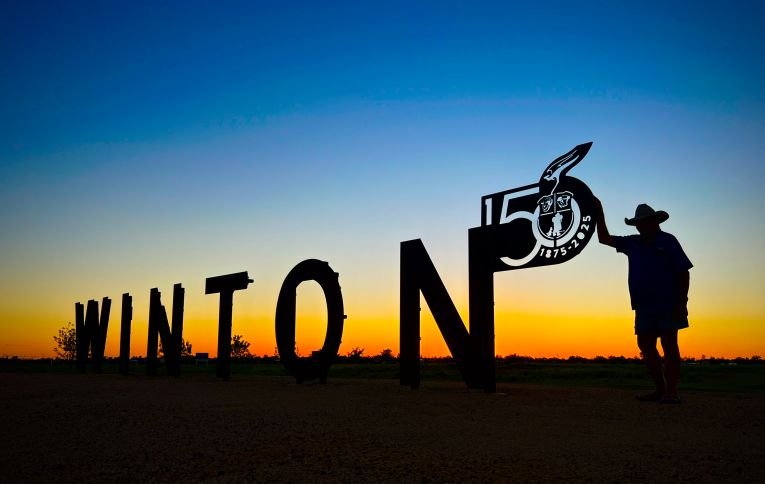
A town like Winton … 150 years in the creation
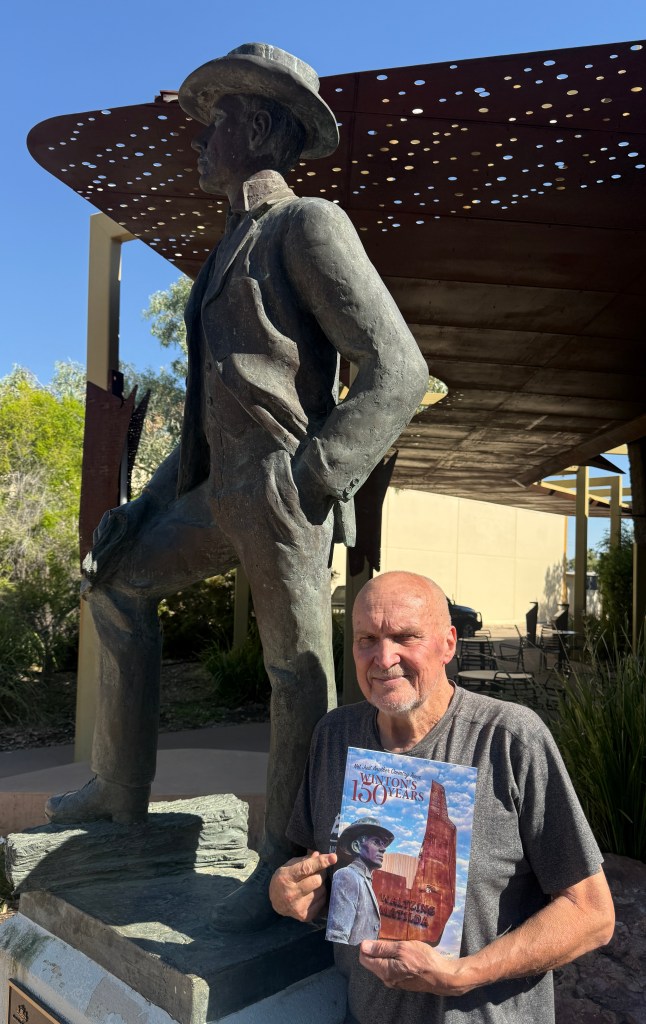
John Elliott’s tribute to Winton sits between the covers of a new book celebrating the Outback Queensland town’s 150 years.
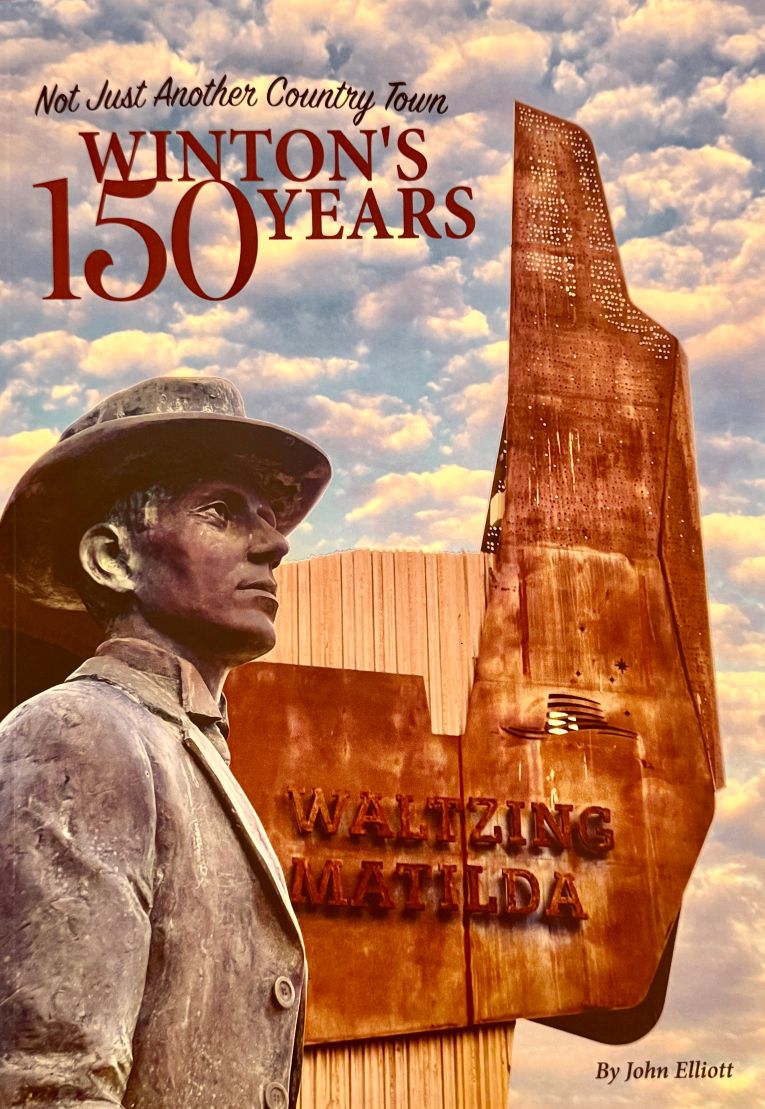
Not Just Another Country Town celebrates Winton’s 150th anniversary and endeavours to work out why Winton has always punched above its weight.
Banjo Paterson’s 1895 poem Waltzing Matilda was a first step in establishing Winton on the world stage. I still wonder how A.B. Paterson ended up in this part of Australia. How he ended up in Winton. Why and how did he write Waltzing Matilda?
 I’m positive that when he wrote the poem he had no idea it would achieve the long-lasting fame that it has.
Author Grantlee Kieza wrote a book about Banjo Paterson. His opinion is that the poem came along at a perfect time in Australia’s history: “Banjo captured the Australian character fighting to establish our place in the world. We were a young country full of promise and Waltzing Matilda managed to communicate that promise.”
Here we are 130 years down the track, still revelling in the success of Waltzing Matilda. The whole nation hears the song and proudly stands to attention. The song has allowed Winton to share in its fame.
All these benchmarks keep happening in the Winton story. The First World War came along and it seems the whole community signed up to go off and fight.
There is a feeling in some other towns that Winton has been lucky. You can’t be lucky for 150 years. Maybe there’s something in the bore water that creates the luck.
You might like
I’ve had the good fortune to visit Winton several times over the years, photographing for the Winton Shire Council, other tourism organisations and national magazines. On a couple of those visits I travelled with the Slim Dusty touring show. I was thrilled when I heard that Slim’s 101st album was going to be called West of Winton and that the title track was written by local butcher Ray Rose. Turns out Ray was a genius writer and, like all of Slim’s writers, he wrote about what he knew, so he wasn’t making it up.
Ray had lived the life he wrote about. There is an integrity in bush ballad lyrics that don’t exist in any other genre. Winton has a direct connection with Waltzing Matilda and a Slim Dusty album. It doesn’t come more fair dinkum than that.
It’s not just country music that is connected to Winton. In 2003 musician Graeme Leak designed and built the musical fence on the edge of town. The musical fence played a small part in helping Australian singer-songwriter Gotye win three Grammys. Gotye visited Winton and was fascinated by the musical fence and contacted Graeme to ask if he could use recordings of it in his 2010 song, Eyes Wide Open. The bass line used in the song is the sound of the fence. Gotye won global recognition and continues to, very generously, keep mentioning the fence and mentioning Winton.
Winton has always been connected with the fabric of Australian storytelling folklore. It continues today with the Bronze Swagman poetry competition, the writers festival and the annual film festival. Filmmakers started coming here in the early 2000s. They loved the Winton landscape and were impressed by the help that locals gave to their productions.
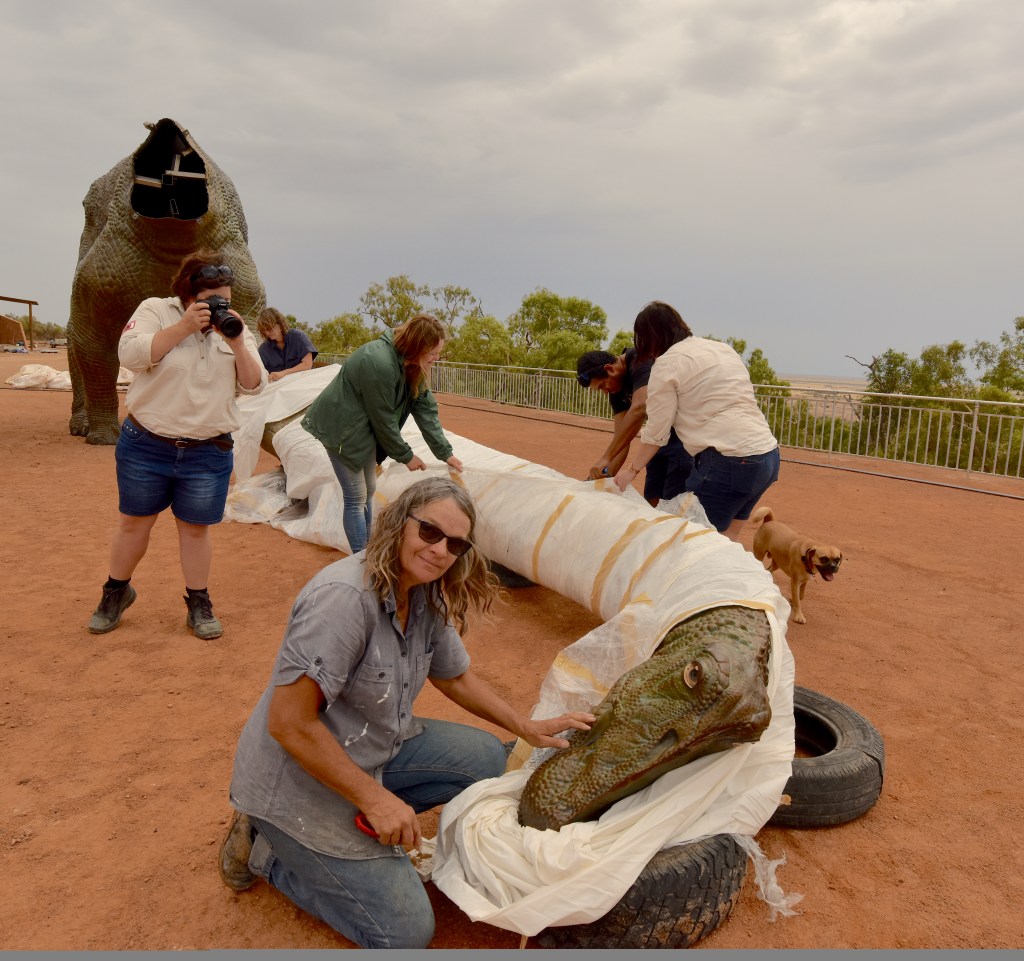
In 1999 Winton sheep farmer David Elliott found dinosaurs on his property near Winton. Twenty-six years later David and his team are well on their way to building one of the biggest natural history museums in the Southern Hemisphere, the Australian Age of Dinosaurs. This museum won’t only change tourism into Winton, it will change tourism into Queensland. And, to a degree, it will change tourism in Australia. People will come from all over the world.
In the early days of tourism, Vince and Peter Evert, Charlie Phillott and Peter Knowles were early champions for attracting visitors to the town. Somehow Vince knew that all of Australia would be fascinated by the landscape around the Winton Shire. No sealed roads and hardly any accommodation, but Vince knew they would come, so he stuck at spreading the word, year after year. Winton kick-started tourism in Outback Queensland and continues to be a leading light in the tourism field today.
Subscribe for updates
The local council has always been very brave in supporting all sorts of wild and woolly schemes. They’ve had good financial management over the years and they’re always prepared to have a crack at things that other councils might shy away from.
Winton has a long history of community, civic and business leaders who are brave and prepared to have a go at things. Hot on the heels of the early explorers, settlers came to grow wool on the lush grasslands after rain. The wool industry was king in the west. The weather patterns and landscape tested the early settlers, but there were more good years than bad years. Money earned from the wool industry built a strong base financially and allowed all the other things to happen.
The North Gregory Hotel was destroyed by fire three times – in 1899, 1916 and 1946 – and it looked as though no one was going to rebuild it. The council got on board and did whatever it took to replace the hotel. They had to get the law changed because local government couldn’t own a hotel. They rebuilt the hotel and it reopened in 1955 – and is still visually impressive.
Same thing happened when the Waltzing Matilda Centre burned down in 2015. Butch Lenton was the mayor at the time and the council committed straight after the fire to build the new museum. Council was going to rebuild, no matter what, but then the State and Federal governments came on board. It worked out and now the town has an incredible museum. Architecturally, it stands out and would stand out in any city in the world. The town certainly punches above its weight.
Winton has been a shining star for 150 years and it will continue to shine in the future. I mentioned earlier that the town has had an incredible number of songs written about it and featured in many books. Having events like the Outback Writers Festival continues the writing culture started by Banjo Patterson back in 1895.
Films will continue to be made in the area. The films wave the flag and say “this is who we are” to people right around Australia. Winton has been built on a culture of storytelling and, once our stories are out there in the world, they continue to attract people to visit and interact.
Our main street is like a pressure cooker that throws locals and visitors into a giant mixing bowl. We all come out the other end better people for the experience. That’s part of the magic of the place.
When visitors go home, I’m sure they talk about the locals they met as much as they sing the praises of our museums, pubs and landscape. It is the people that make Winton special. We’ve tracked down 150 locals to photograph and feature in this book.
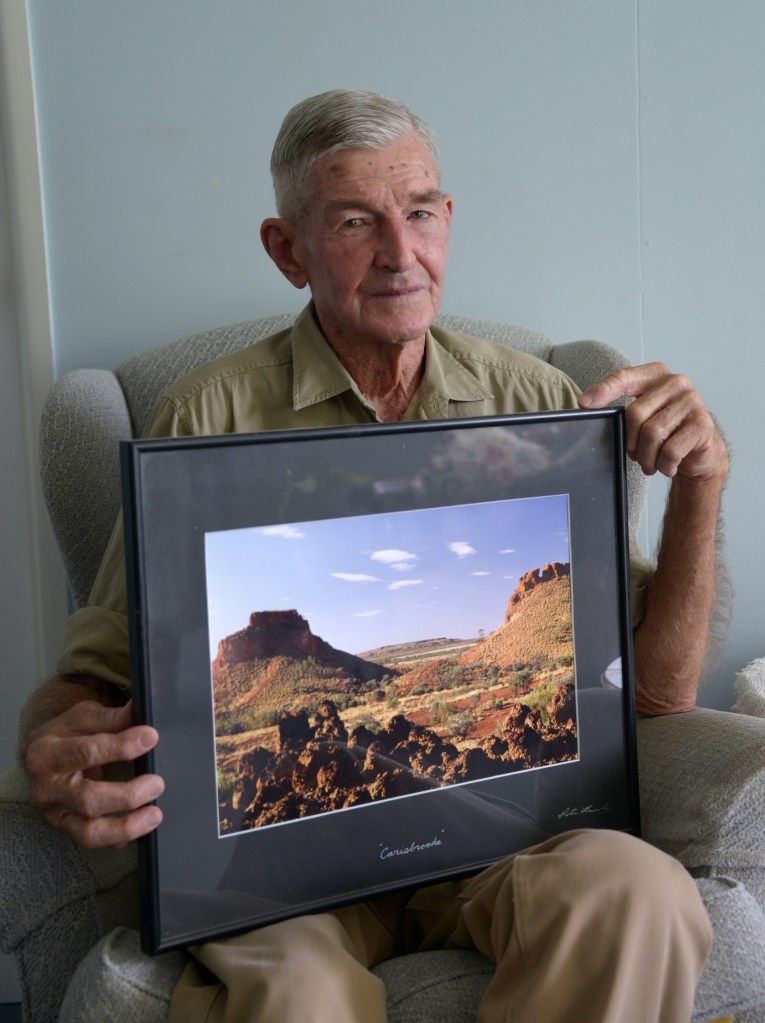
As an 11-year-old budding photographer I used to look enviously at magazines and books with exotic landscapes. Most of the country I saw was flat and uninteresting. That all changed in 1968 when I travelled to Mount Isa on a Skennars bus coach. I have a vivid memory of my first sighting of the Ayrshire Hills, 70km north of Winton. It looked like the moon to me and I knew that one day I’d come back and photograph them. Happy to say I’ve had the opportunity to do so many times.
I am so thrilled that we have collected many of these stories and photographs to be included in this book.
Not Just Another Country Town – Winton’s 150 Years by John Elliott, $29.95. To purchase, click on winton150.com.au/
John Elliott was born in Blackall and left when he was 16. A photographer and writer, he has worked in regional Australia and lived in Winton from 2015 to the end of 2020.
Want to see more stories from InDaily Qld in your Google search results?
- Click here to set InDaily Qld as a preferred source.
- Tick the box next to "InDaily Qld". That's it.
Free to share
This article may be shared online or in print under a Creative Commons licence