Love and lament: A poet’s take on Meanjin coming home
The literary journal Meanjin was stolen by pesky southerners decades ago but now it has been acquired by QUT – and is back where it belongs.
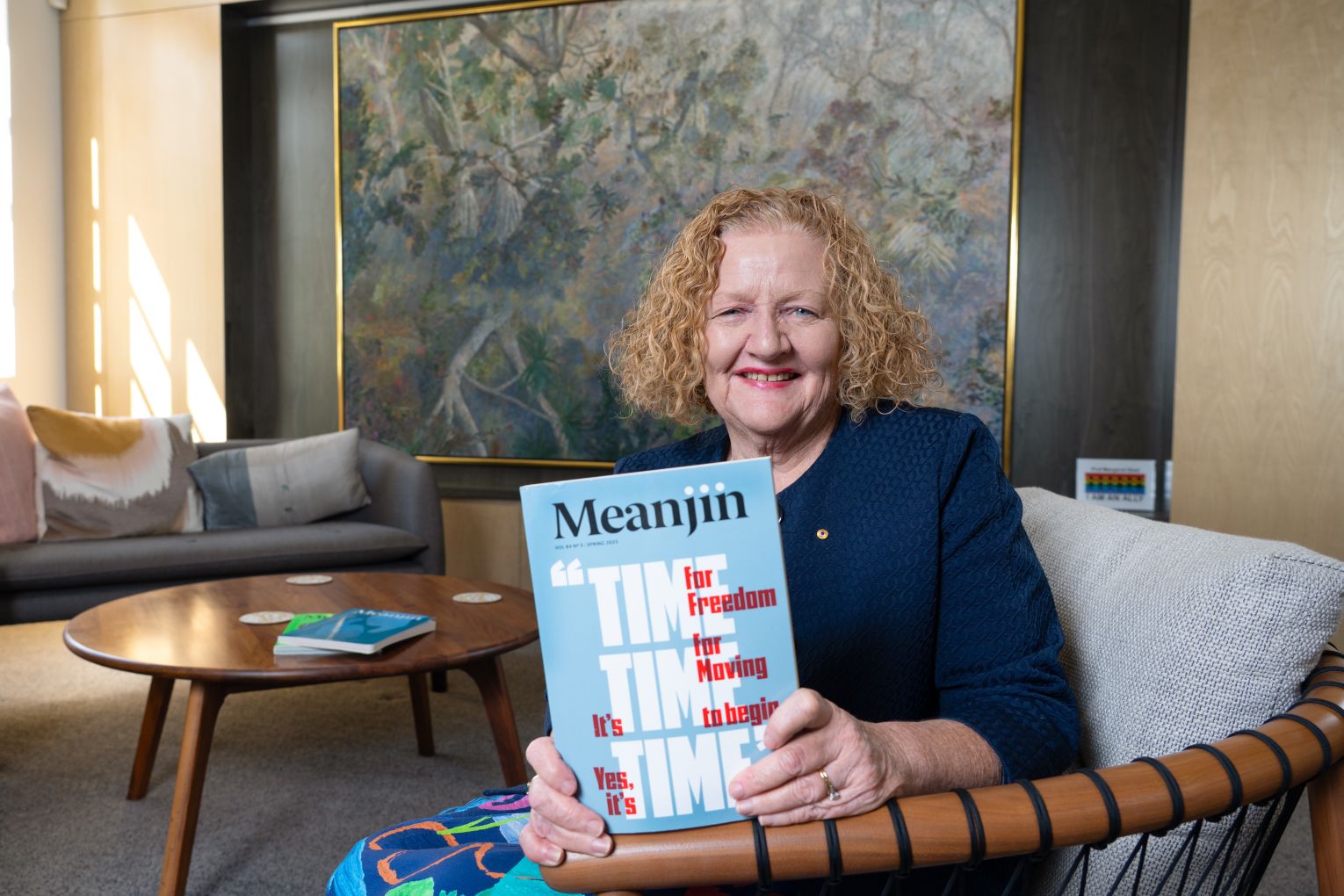
It’s wonderful news that the literary journal Meanjin is coming home to Brisbane 80 years after it relocated to Melbourne. It took that many decades for them to see the light?
QUT Vice-Chancellor Professor Margaret Sheil broke the good news last week that QUT would return Meanjin to Meanjin/Magandjin – the home of the Turrbal and Yugara peoples.
“Since its foundation by Clem Christsen in Brisbane in 1940 Meanjin has been instrumental in shaping literary and intellectual culture,” Professor Sheil says.
We bought it from Melbourne University Press (MUP), which is surprising, because I thought QUT was strapped for cash. I guess not.
MUP chair Professor Warren Bebbington says there had been several offers to acquire the title but that it was QUT’s “understanding of the journal’s legacy” that put it ahead of the pack.
This means that Brisbane is now home to two of the country’s most esteemed literary journals – Meanjin and Griffith Review, founded by Professor Julianne Schultz, who turned it into what is arguably the best of the journals.
I have been a contributor to both … more so to Griffith Review, which is currently edited by Carody Culver, who is doing a terrific job – and I’m not just saying that so I can submit something soon. Although, I might!
You might like


These journals are so important to literary life. There are others worth mentioning, including Southerly, Overland, Island, Westerly the now-defunct Adelaide Review.
These ‘little magazines’ … have been essential to the development of literary movements, most notably modernism
These publications were once known as “little magazines”, signifying that they were small circulation, non-commercial periodicals. They have played a foundational role in literary life around the world and have been incubators for new talent. Griffith Review, for example, discovered Melissa Lucashehnko (or did she discover them?) and she has gone on to be a literary star.
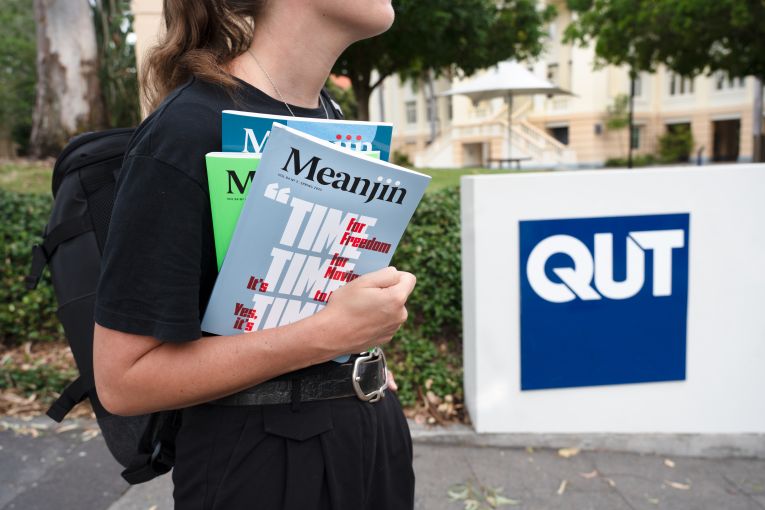
These “little magazines” emerged prominently in the early 20th century to challenge mainstream conventions and have been essential to the development of literary movements, most notably modernism.
They are seed beds for writers. Consider the fact that The Little Review serialised James Joyce’s Ulysses and how The Criterion (edited by T.S. Eliot) was central to the development of 20th century modernism.
Despite the switch to digital, little magazines continue to provide space for marginalised voices and radical, nonconformist or life-changing writing, particularly through niche independent publishing.
Many are still published as hard copies and have an online presence too, like Australian Book Review. Some are completely online, like the Brisbane-based StylusLit edited by poet Rosanna Licari. It publishes local authors and poets, including yours truly.
Subscribe for updates
And this is where I should declare that I am writing about Meanjin and praising little magazines because as a poet and author they have been very important to me and my generation of desperado bards.
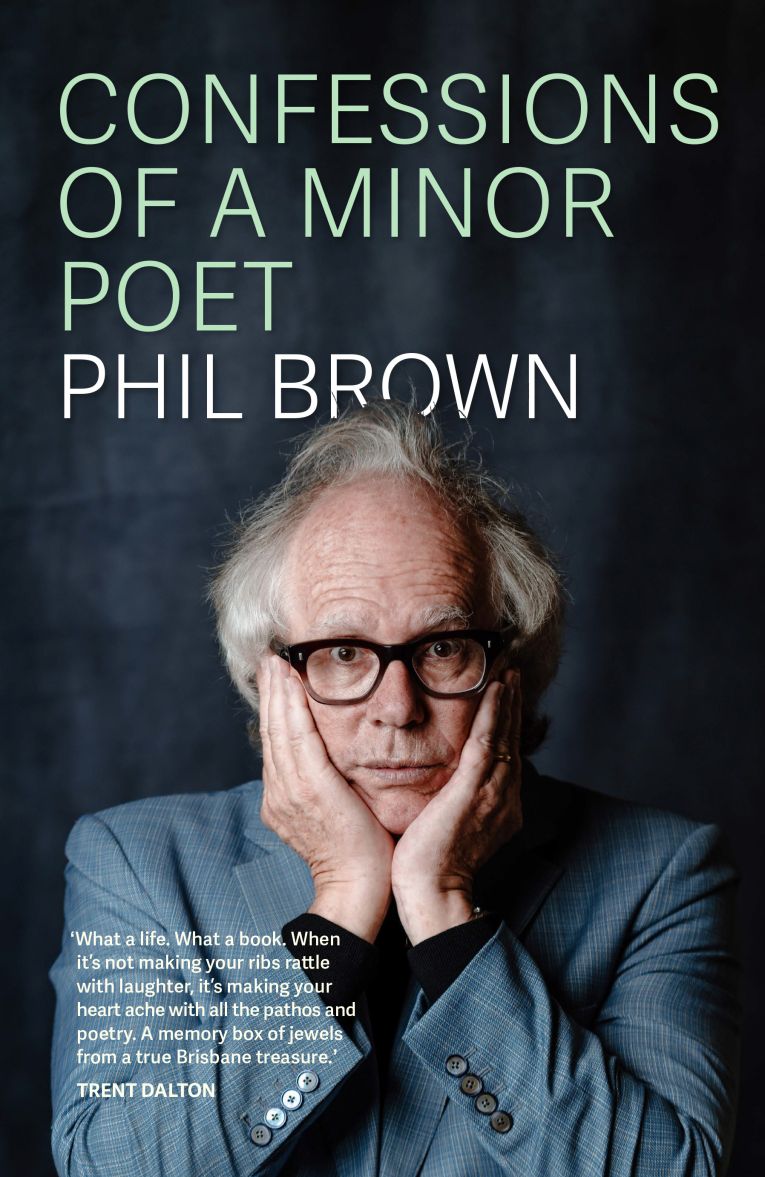 I have published poetry and essays across a number of these journals some of which are no longer with us. We thought we had lost Meanjin, too, when MUP pulled the plug, but thank God it will live on.
I used to constantly send poems to Meanjin early in my career and most got knocked back. I wrote about this in my memoir, Confessions of a Minor Poet, recently published by Transit Lounge:
I was getting a lot of rejection. I remember getting a ‘Dear Phil’ letter from the poet Kris Hemensley, who was editor of Meanjin at the time. He pointed out that my writing was narrative poetry and that wasn’t fashionable. ‘I am not able to consider the poems for publication because what I’m seeking is a poetry that’s more than a simple story,’ he wrote. ‘And written in language a bit more demanding than simple rhyme.’ He suggested I seek publication elsewhere and finished with the rather unnecessary line: ‘What is poison for one might well be life’s elixir for another.’ Ouch.
Imagine my joy (a somewhat belated joy) when decades later I finally cracked Meanjin in 2010. The author Sophie Cunningham was editor at the time, and she commissioned me to write an essay, Memories of a Mentor: Bruce Dawe, which was about my long association with the late great poet of Middle Australia. That is a while ago now, but I can still feel the thrill of seeing my name in the contents page.
Publication in these journals means a lot to writers and no matter what stage of your literary career you are at it’s always a badge of honour to get published in the likes of Meanjin or Griffith Review.
I was pleasantly stunned when Carody Culver chose my poem, The Trouble with Eternity, to appear in Griffith Review86: Leaps of Faith in 2024. Even better, I got to read that poem and a few others at a Griffith Review event at Avid Reader in West End.
These little magazine or journals are such an important part of the ecology of the literary scene. It is especially important that they are supported, and who better to do that than universities. I have always thought that Griffith University’s continued support for Griffith Review was recognition that such a journal is part of the soul of a university in this soulless corporate age.
And it is wonderful that QUT has now taken control of Meanjin. It will complement the creative writing program within the QUT School of Creative Arts. Professor of creative writing Kari Gislason says QUT has a distinguished alumni of writers who have gone on to be renowned Australian authors.
“They will, I’m sure, celebrate this partnership,” Professor Gislason says. “It affirms how creativity, literature and excellence in writing allow us to think deeply and connect our ideas in imaginative ways to the world around us. Meanjin’s move to QUT tells our students that this is as true now as it ever was.”
Who knows, I may even submit an article or a poem to Meanjin again. Of course, I am fully prepared for rejection (all poets are), but you never know.
Want to see more stories from InDaily Qld in your Google search results?
- Click here to set InDaily Qld as a preferred source.
- Tick the box next to "InDaily Qld". That's it.
Free to share
This article may be shared online or in print under a Creative Commons licence