War and peace and what lies beneath
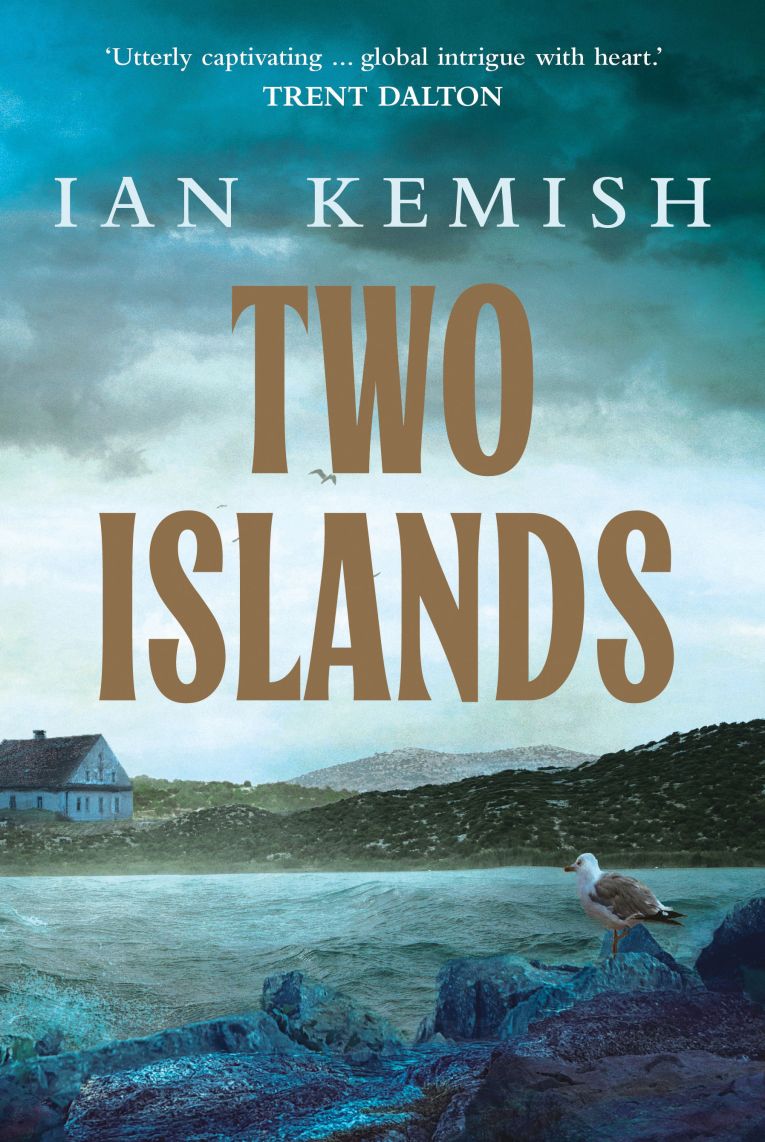
A high stakes novel which sees killers pursue an exposed witness to the horrific crimes in the Balkans in the 1990s is a thrilling debut by a former Australian diplomat.

Leafing through the opening pages of this compelling work – part-political thriller, part-crime thriller – it struck me that there is a near-failsafe shortcut for judging whether a book is going to be worth your while to read.
If it has an epigraph that moves you – to tears, rage or laughter, it matters not – then you can settle in for guaranteed hours of absorbing delight. Good writers can spot good writing a mile off.
In the case of Two Islands, retired diplomat and debut novelist Ian Kemish chooses a wonderful quotation from Rebecca West’s Black Lamb and Grey Falcon, for my money the best travel book of the 20th century: “Goodness is adorable, and it is immortal. When it is trodden down into the earth, it springs up again, and human beings scrabble in the dust to find the first green seedling of its return.”
 Kemish shrewdly follows the advice given to all who long to communicate convincingly on the printed page – write about what you know.
Among the two regions he knows most intimately are the former Yugoslavia, which in the early 1990s became the first corner of Europe to know war since 1945, and the weatherbeaten Scottish Hebrides, where he has strong family links.
You might like

The further into this volume you go, the more astounded you will be that an historically based work of the imagination can enlarge your vision of how warm, complex, frustrating and, in the end, affirming life’s struggles can be.
Set in 1997, years before the International Criminal Court would become one of the foremost obstacles Serbian, Croat and Bosnian war criminals had to fear, the centre of the action is one of the most remote corners of Britain. Niko, an eyewitness to, and escapee from, one of the worst massacres of the Bosnian War, is on the run seeking safety on one of the Western Isles of Scotland.
The book’s other main character is Anita Costello, an Australian war crimes investigator on secondment to The Hague tribunal. She is also after Niko – not to eliminate him but to induce him to testify at a war crimes trial of one of the Balkan kingpins. But first she must find him.
For consumers whose average attention span is not that of former generations, Kemish considerately introduces and cyclically reintroduces his cast of characters. Soon, without having to strain one’s grey matter or turn back to check, the reader recognises Niko, Anita, Fergus and Ronnie as if each were a real person one has known for decades.
Subscribe for updates
Kemish is equally adept at filling in the “historical blanks”most of us have developed as that conflict recedes from memory, and demonstrating a keen psychological insight into all his characters. That he has time left over to lampoon home-grown provincialism, if ever so gently, is a bonus.
Towards the end – and this will naturally nourish the souls of readers who appreciate just how lucky most of us are to be living on this land – Kemish brings his long-suffering survivors to Australia, where he permits himself a whimsical comment on the indifference, or insularity, still commonly found here.
It’s January 2000 and a young man (I refuse to name him) who lived in Bosnia until that became impossible has embarked on a new life in which he’s training to be a journalist and, on this evening, he is watching TV in a Sydney share house.
‘This novel tries to remind us that even in eras we are tempted to romanticise, darkness was never far from the surface’
“Both his flatmates were engineering students, not much interested in world events. (The unnamed) was very much interested, but keeping up with international news had been difficult since arriving in Australia. He sometimes wondered if he was studying journalism in the right place. The local bulletins felt small, preoccupied tonight with a Pakistani cricketer sent home for something called an illegal bowling action. Whatever that meant.”
The next news item, highlighting public anger over asylum seekers, he finds baffling: “Australians had welcomed so many migrants over the years but panicked when people came by sea. Then a segment on the Russian election – a cold-eyed newcomer leading the polls. Niko didn’t like the look of him. He’d seen that kind of face before.”
While Kemish prefers not to moralise, but rather tell his story and leave readers to draw their own conclusions, he does reveal a key purpose behind the novel in the afterword:
“For the West, the Nineties are linked to warm reminiscences, of life in the immediate aftermath of the fall of the Wall, of Savage Garden, the Spice Girls and, just before decade’s end, the apotheosis of Ireland’s Troubles with the signing of the Good Friday Agreement.”
On most scores, that was a safer world than the one we inhabit in 2026. But the author closes on a salutary note: “This novel tries to remind us that even in eras we are tempted to romanticise, darkness was never far from the surface.”
Two Islands by Ian Kemish, UQP, $34.99.
Want to see more stories from InDaily Qld in your Google search results?
- Click here to set InDaily Qld as a preferred source.
- Tick the box next to "InDaily Qld". That's it.
Free to share
This article may be shared online or in print under a Creative Commons licence