High anxiety: Alien abduction as a metaphor for abandonment?
A father abducted by aliens, a mother who sees the spirits of dead people, a sister who communicates with angry dogs, and Noah Grey, whose life has gone off the rails … this novel has it all.
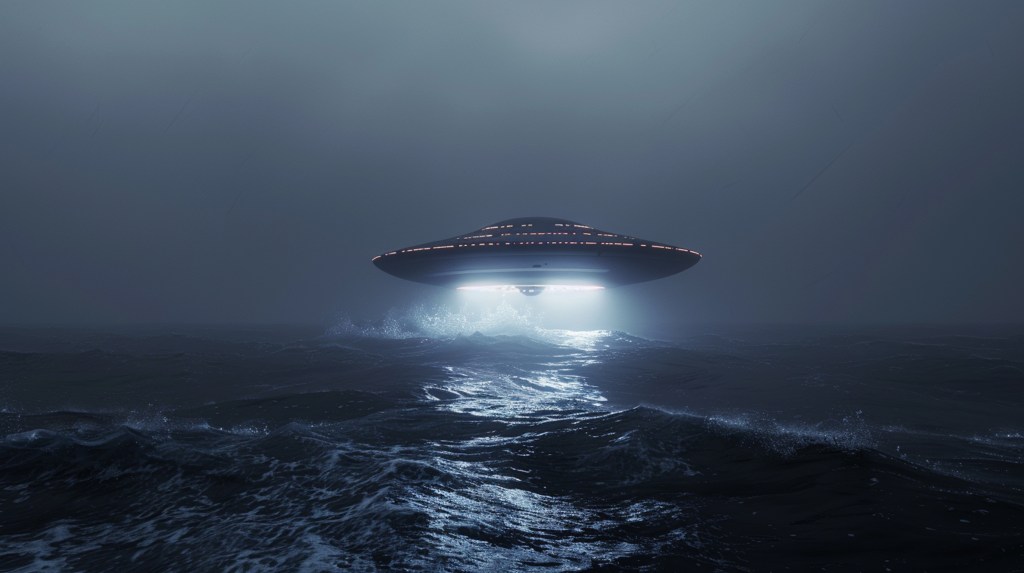
There has long been a history of unexplained lights and objects in the skies above Tasmania. A recent Australian Story episode on ABC-TV, The Westall UFO Mystery, revisited an incident 60 years ago when several schoolkids and adults saw what looked like actual flying saucers.
Maybe it’s because Tasmania is so remote, with little to the south of it other than the distant Antarctic, but the location seems ripe for stories of extra-terrestrial mysteries. In Brendan Colley’s second novel, The Season For Flying Saucers, he takes on a story about alien abduction and a fractured family. (Colley’s debut novel, The Signal Line, won the 2019 Tasmanian Premier’s Literary Prize for an unpublished manuscript and was also shortlisted for both the Victorian Premier’s Literary Awards and The Age Book of the Year Awards.)
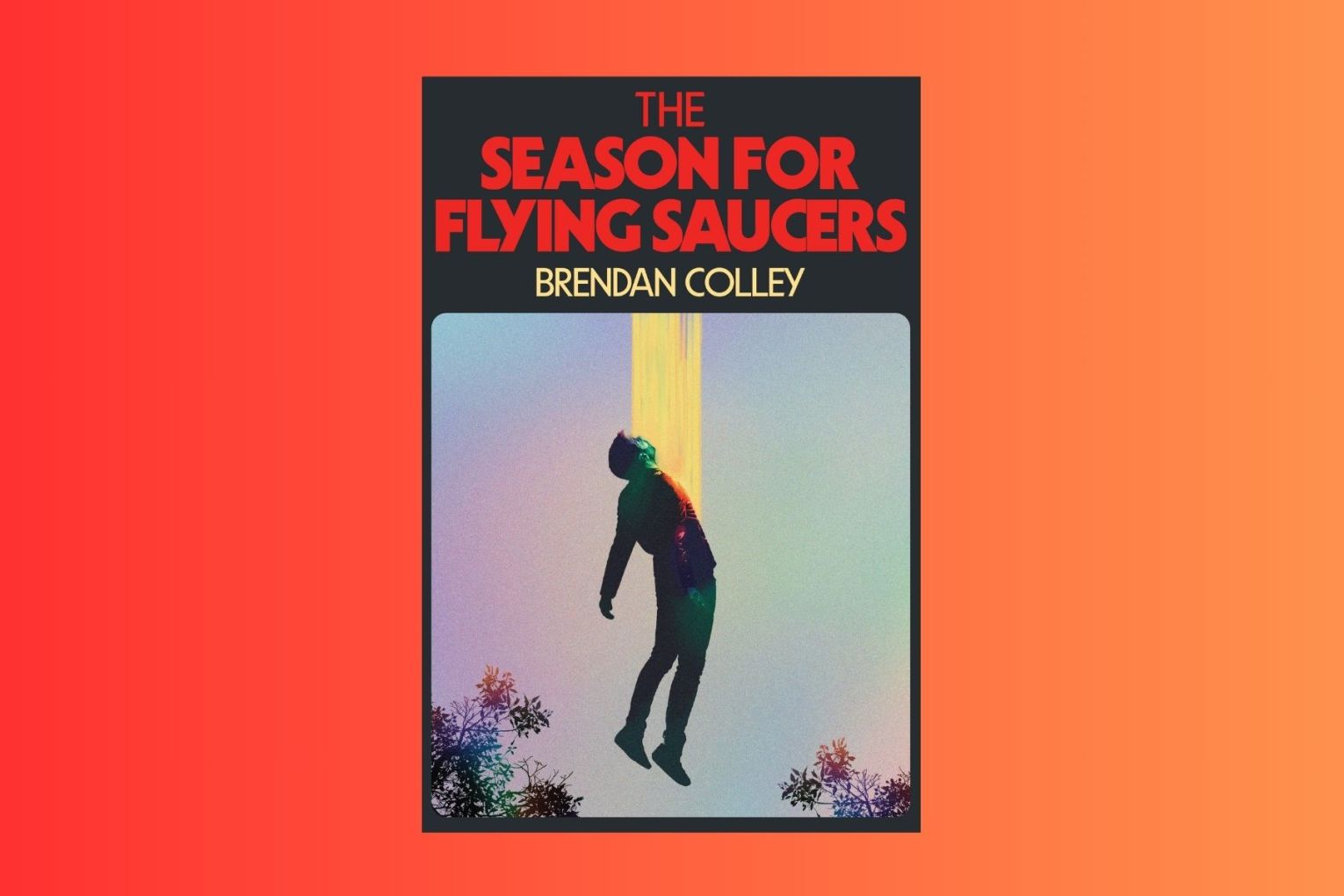
The cover of the book implies that the story will feature actual alien spacecraft, with a man suspended in the air with a bright beam shooting out of his chest as it appears he is being thrust upwards, possibly beckoned by whatever is above.
We learn that 13 years ago, Warwick Grey disappeared, allegedly abducted by aliens. His son, Noah Grey, recovering from the failure of his marriage, is trying to pick up his life. He’s living in Hobart, in what was the family home – bought after he got married – and now is contemplating what is known as “the season of the lights” upon this part of the world again.
You might like
It’s an ominous period, bringing back traumatic memories of another time when the lights took his father. And plenty of Tasmanians flock to areas near the house to witness the heavenly phenomenon and maybe even be taken away themselves.
At some level, the story can be read as that type of allegory
Reading the book, I started to wonder if it was all metaphorical: that Warwick merely left the family all those years ago and that, for whatever reason, Noah and his sister and mother perhaps believed the alien abduction was a more palatable narrative to digest than husband and father abandonment.
At some level, the story can be read as that type of allegory. Warwick, having seen a UFO when he was a child, seemingly became obsessed with them and was more than willing to be whisked away from his domestic, Earth-bound life with his family. It’s one thing to be taken by another race but yet another thing entirely to do it with enthusiasm. Was he so disenchanted with his earthly existence and the people in it?
Subscribe for updates
Noah, a brooding type of lead character without much to show in the way of enthusiastic emotion for anything, is unemployed and has taken up writing alien-abduction poetry, which he shares on social media. Sentiments in these reveal Noah’s deeply rooted longing for something better: “I may have requested for you to drop down a ladder, but no one wants to be scooped away, not really, a person only wants to be heard or seen.”
Now that Noah’s marriage has failed and he does not have a passion in life, does he want to be taken away as his father was all those years ago? The story taps into themes of alienation (pardon the pun), isolation and general ennui. Perhaps most of us wish for something better than what we’ve got right here.
Warwick’s disappearance caused the family to completely fracture but, on this 13th anniversary, Noah’s sister, Martha, and his mother, Patricia, return to the family home, the excuse of money being tight drawing them together to share the abode. Noah hasn’t seen either of them for 12 years. The highly religious Patricia is unnerved by her son’s poems, feeling as if he is inviting the aliens in. Understandably, she doesn’t want to lose a second relative to celestial beings.
Another family member to return is Warwick himself. After 13 years, there he is. And you would think that his wife, son and daughter would be pummelling him with hundreds of questions about what he has been up to. Warwick does not talk about his time away and there is an almost incredible lack of curiosity from his family. But an author with Colley’s skill has got cards to play, and as the story unfolds further, these types of nagging questions begin to garner answers. You almost feel as if you must go back and read the book again when you realise what is going on.
There’s muted emotion in the story, with this reader feeling kept at a distance from the challenges facing Noah and his family. This prevented me from caring too much about the outcome, which is obviously not ideal. However, if you can get beyond that aspect and go along for the ride, there’s no doubt that The Season For Flying Saucers will provide a thought-provoking reading experience.
The Season For Flying Saucers by Brendan Colley, Transit Lounge, $34.99.
Want to see more stories from InDaily Qld in your Google search results?
- Click here to set InDaily Qld as a preferred source.
- Tick the box next to "InDaily Qld". That's it.
Free to share
This article may be shared online or in print under a Creative Commons licence