Life cycles: Poetry that explores history and the natural world
Jena Woodhouse’s poems straddle the terrain of both restraint and extravagances as she explores history, the natural world and family ties.
In the essay Think Little, American poet and writer Wendell Berry argues that the contemporary environmental crisis makes clear “there is no public crisis that is not also private”.
Berry further contends: “We are going to have to go far beyond public protest and political action. We are going to have to rebuild the substance and integrity of private life in this country … we need persons and households that do not have to wait upon organisations, but can make the necessary changes in themselves, on their own.”
Berry also notes that one of the most important discoveries of the 20th century exists not in the realm of science, technology or medicine, but rather in the dawning awareness that the earth has limits.
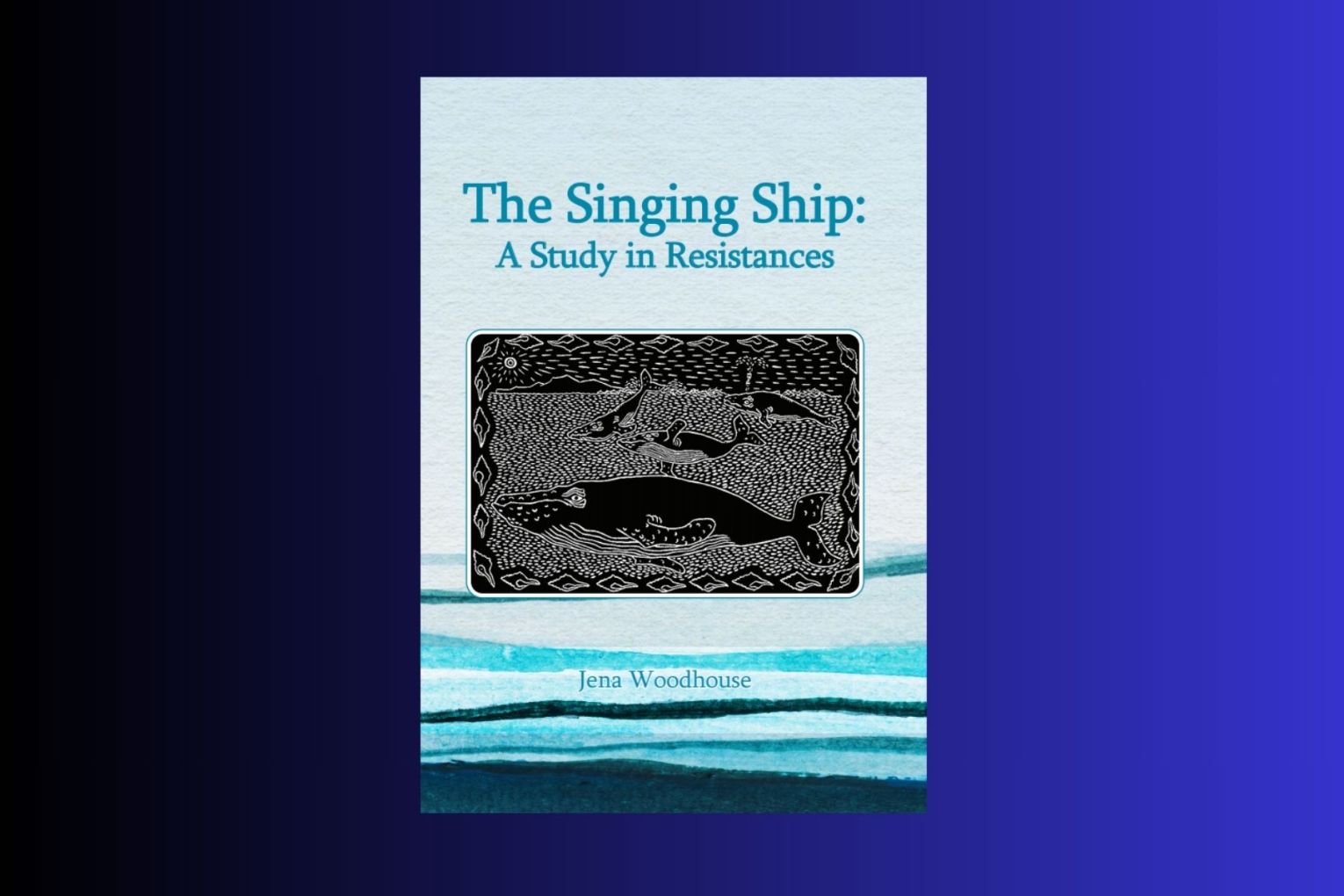
In her new collection, The Singing Ship: A Study in Resistances, Rockhampton-born and Brisbane-based poet Jena Woodhouse reveals herself to be a writer finely attuned to both the looming economic catastrophes that threaten the earth and also to its finiteness and limitations.
She takes this broad awareness one step further, applying it to a more personal examination of self, place and the concept of home in poems that explore the natural world and the inner world of the self.
‘Many of Woodhouse’s poems ably straddle the terrain of both restraint and extravagance’
Reading Woodhouse’s poems, I was reminded of the differing viewpoints on nature poetry offered by the American essayist, poet and naturalist Henry David Thoreau, and essayist, poet and philosopher Ralph Waldo Emerson. Thoreau favoured an “aesthetics of relinquishment” – or an ethics of restraint – in writing, while Emerson advocated for an “ethos of extravagance”.
You might like
Nature, paradoxically, is the ethical standard for both traditions, suggesting just how malleable nature is as a concept and a trope.
Many of Woodhouse’s poems ably straddle the terrain of both restraint and extravagance, concerning themselves with the existential experiences of creatures – a giant rainforest snail, a lyrebird, black cockatoos, albatross, cassowaries, soldier crabs, curlews, dolphins and whales, among others – as much as they do with pondering, and linguistically recreating historical moments.
Imaginary Sailors, Polynesia breathes life into the solitary existence of Polynesian sailors, communing with nature and the ocean: “With incantation as a means and end / the mariners attuned themselves to rhythms that told where / starpaths and birds’ trajectories and currents intersect / at no fixed point, upon a moving map, in navigators’ songs / inscribed by breath in oceanic air.”
Likewise, Landfall, Keppel Bay, 1770, tries to imagine the reaction of first settlers to landing on Queensland shores, finding themselves confronted with “an Antipodean Eden: pristine beaches / verdant islands they would name and claim / for England’s king” and encountering the Indigenous inhabitants: “… no farms, no sign of villages / though wisps of smoke could only mean / they were not the firstcomers; the unseen folk / who’d made the fires not yet disposed, or so / it seemed, to mark the ship’s arrival with a ritual / fragrances of nectar, honey, exhaled / by grey-green groves with brush-like / ornaments of blooms and parchment bark.”
What makes Woodhouse’s poems so eminently readable is the way in which she interweaves stories of the environment – of land, sea, and place – with the personal. Thus, as much as Landfall, Keppel Bay, 1770 is about early settlers (often called first invaders), it also offers a nod to the poems that will come later in the collection, dealing with her memories and entanglements with concepts of place, home and belonging, as she alludes in the final stanza to her family history: “Beyond the shore rose coastal hills / one mountain higher than the rest / where my grandfather would one day / build a transitory nest.”
The lives of her parents and grandparents are later explored in poems including An Old Man’s Dream Takes Root, Old Man with Canary and The Long Embrace.
Prefacing the poems that comprise the third section of her collection – Genius Loci: Childhood Iconographies – with a quote from English poet Carol Ann Duffy – “All childhood is an emigration”– is a telling hint of the blend of tumult and recollection embodied therein.
Subscribe for updates
Postcards from Konomie (i) and (ii) blends together notions of past and present, remembrances of a youth spent on Konomie, also known as the North Keppel Islands, and the twin yearnings of longing to belong and pining for liberation and adventure: “Once I would sit on steps like these / encroached upon by mango trees / dying to leave, to move away / already homesick, wanting to stay.”
Similarly, Two Girls in a Garden recalls the innocence and beauty of childhood friendship and afternoons spent in the garden: “I thought of Monet then / his vision of the waterlily pond / Giverny’s nuanced palette / paying homage to a gentler sun / far removed from Capricorn / different from our childhood home. / He lived according to the light / was said of Monet. So do we, though / in another hemisphere and century.”
Another Island to the South and Island where the Brolgas Danced both recall the island to the south of Konomie, where: “In a clearing at the island’s core / the brolgas danced / Camouflaged by ti-tree scrub / my friend and I would watch in awe / the regal choreography, the ritual romance.”
The beauty of this memory, however, is necessarily marred by the sadness of history, of colonialism and conquest: “Who gazed seaward from that spot / in wonder, troubling clairvoyance / waiting for the hour of the albatross: / the advent of seafarers whose ships / had wings like giant birds, when strangers / would be welcomed on that shore / and paradise be lost.”
‘She writes … herself into nature and revealing her own deep connections with the land, the sea and its animal inhabitants’
The poems comprising The Singing Ship: A Study in Resistances are at once celebratory and elegiac. Woodhouse’s subject matter is largely that of the vast and wild Australian continent and its oceans, that fragile realm in which passions and needs, and the primordial cycles of nature, still meet and interact.
She writes her own life against the backdrop of these cycles, writing herself into nature and revealing her own deep connections with the land, the sea and its animal inhabitants. These are compositions that favour plain-spoken observation over belaboured prose, and it is an approach that, for the most part, is effective.
If the rhyme schemes that appear every now-and-then feel somewhat jarring, elementary and forced, that simplicity is made forgivable by the often-quiet beauty and gentility with which she writes about the creatures whose plight so obviously fascinates and engages her.
Who, after all, can resist the glorious image of sea-urchins when they are described as reminiscent of “the pentagonal oil-lanterns of the ancient East” and as “thorny globules / lighting subaquatic rocks / liminal of promontories / adorning sunken argosies.”?
The Singing Ship: A Study in Resistances by Jena Woodhouse, Calanthe Press, $26.95.
Want to see more stories from InDaily Qld in your Google search results?
- Click here to set InDaily Qld as a preferred source.
- Tick the box next to "InDaily Qld". That's it.
Free to share
This article may be shared online or in print under a Creative Commons licence