The duty of dissent: Richard Flanagan on speaking truth in dark times
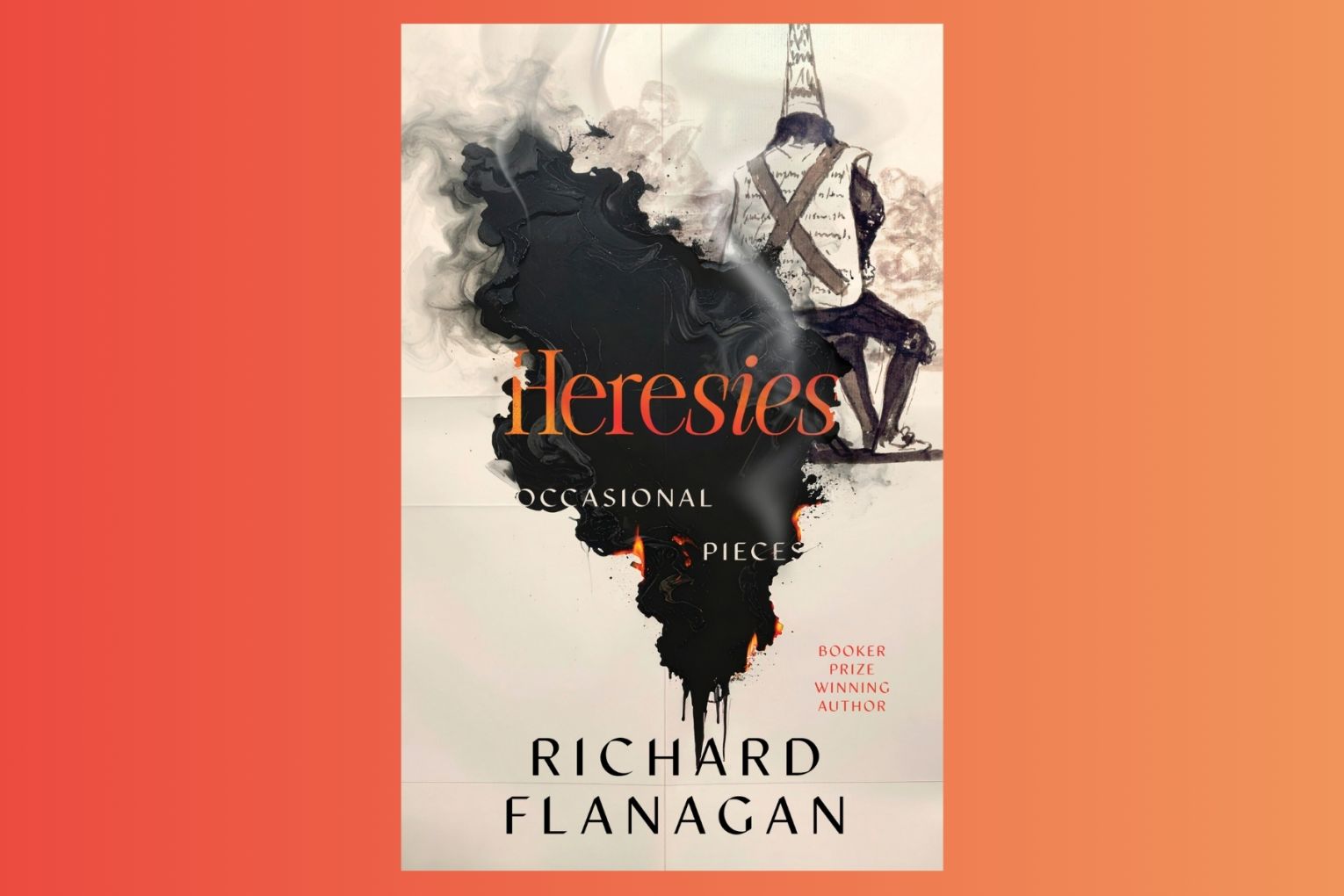
Richard Flanagan’s newly released book of essays is called Heresies and if you want to hear the heretic in person you can do that at Byron Writers Festival.
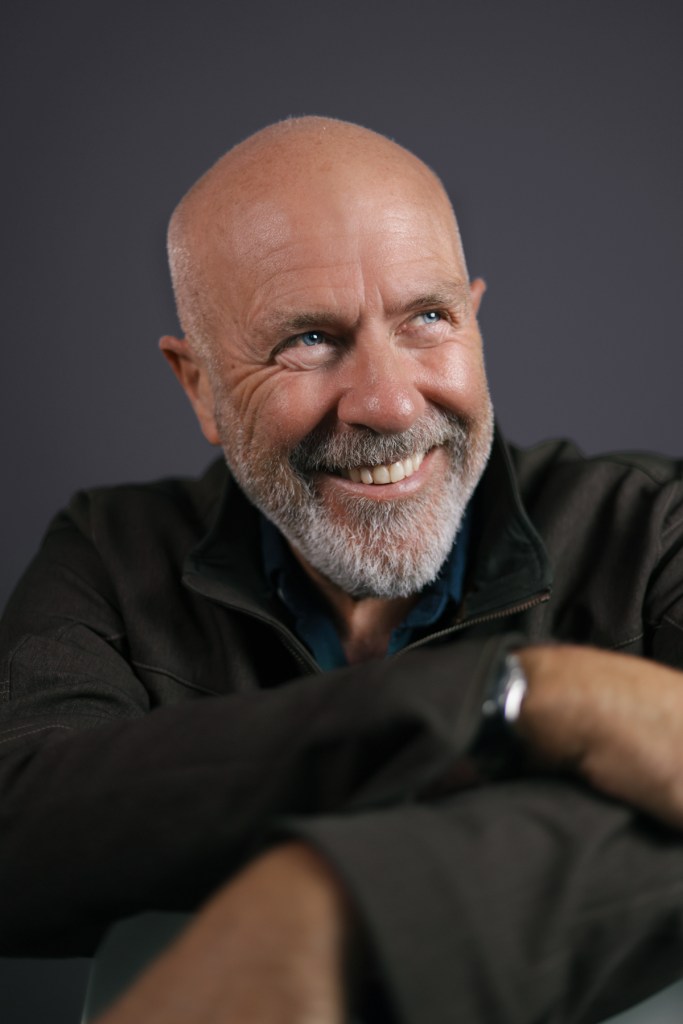
Australian author Richard Flanagan is grateful he’s in his right mind – and we should be, too. That’s something anyone listening to him at Byron Writers Festival next week should keep in mind. Because for a while there it seemed we would lose one of the most brilliant minds in Australian letters.
Flanagan will be in Byron Bay for this year’s festival, running August 14 to 16, and he is also a guest at Brisbane Writers Festival in October. The focus at both events will be his latest book, Heresies (which is subtitled Occasional Pieces), a collection of his essays or articles, if you will, of the shorter and longer variety. They are dazzling in their variety, clarity and honesty, in typical Flanagan style, and are all the sweeter because we know there is more to come.
A couple of years ago it seemed the well of his genius might run dry due to a diagnosis of early onset dementia, which turned out to be a misdiagnosis. Flanagan, with a new novel underway and his book of essays just out, describes the misdiagnosis as “tragi-comic”.
“I lived under a shadow for a year,” he says. “I was given 12 months to get my affairs in order. When you think you are headed for the dementia ward you’re very grateful to be in your right mind.”
Now at 65 he is counting his blessings and enjoying the simple things in life.
A conversation with Flanagan is like a flaneur’s journey through a city, never knowing where things might lead and making discoveries along the way.
He has an eye for detail, the minutiae of everyday life
You might like
He’s a serious bloke but equally given to light conversation. When we chat, he has just made a cup of tea, as have I, and I mention my ritual of tea and digestive biscuits. He knows a thing or two about these biscuits, as it happens, and how they are made and how their quality has been somewhat denuded along the way.
He knows more about digestive biscuits than I do, that’s for sure. He has an eye for detail, the minutiae of everyday life, and that is evident in some of his essays, too, which celebrate the simple things in life while also pointing out the absurdities. His erudition is evident but lightly worn.
He begins Heresies with Voltaire, author of the 1759 classic Candide, a man who famously witnessed the great earthquake that destroyed Lisbon, and that leads Flanagan to muse about the Spanish Inquisition and to draw parallels between then and now.
In his introduction, he writes: “Once more we feel the earth quaking. And perhaps unsurprisingly, with our recurrent need to find infallible answers by persecuting those who pose difficult questions, autos-da-fe have found fresh flavour and digital expressions with AI and social media.”
The term auto-da-fe, which means “act of faith”, was originally used to describe trial by the Spanish Inquisition. And as we both agree, with a nod to Monty Python, “Nobody expects the Spanish Inquisition!” I’m glad he’s a Python fan, too.
‘it was extraordinary that politicians thought they would decide who would speak and who we would be allowed to hear’
In Heresies, Flanagan argues that true writing means saying the unsayable and embracing heresy to counter political and cultural dogma. Of course, events such as Byron Writers Festival are so important as venues for free speech and a robust celebration of ideas.
Subscribe for updates
With that in mind, he includes a recent essay, On Adelaide Writers Week. He wrote it following the debacle that saw the event cancelled after writers quit in droves following the uninviting of Palestinian Australian writer Randa Abdel-Fattah. The festival board bowed to political pressure and the whole thing imploded spectacularly.
“I thought it was extraordinary that politicians thought they would decide who would speak and who we would be allowed to hear,” Flanagan says.
He writes: “If the aim of the Adelaide Festival Board members was, in their words, to act in a ‘culturally sensitive’ way, to lessen murderous antisemitism, they have instead only engorged it, allowing their act to feed into every antisemitic trope of the vilest kind. They have both gifted antisemites and the far right their cowardly act, and with it established a dangerous precedent to further encroach on freedom of speech nationally.”
He really can’t say it any plainer than that.
The book is a gift that covers a lot of territory, with reflections on the failed Voice Referendum and the toxicity of denial and the negative impact of colonialism. There are pieces on figures such as Salman Rushdie and the Segal Report, alongside personal meditations on family and love.
This is pure gold from one of our greatest writers, author of classics such as Gould’s Book of Fish and the Booker Prize-winning The Narrow Road to the Deep North, among others. His recent book, Question 7 (a genre defying book of creative non-fiction) won the 2024 Baillie Gifford Prize for Non-Fiction.
One of the longer essays I particularly enjoyed in Heresies is The Shadow Line, his 2013 longform piece about David Walsh, the creator of The Museum of Old and New Art (MONA) in Hobart. I hadn’t read that before and it was fascinating. And being a piece about a fellow Tasmanian and a man who had confided in Flanagan, he sought to make sure everything was above board.
“I did what journalists never do,” Flanagan writes in a brief introduction to that piece. “Because Walsh had been open about much that was deeply personal, I allowed him to read the article before publication. Characteristically, the only change he requested was the deletion of a story that reflected well on him. I took it out. Once the profile was published, David never forgave me for it.”
It’s something that Flanagan still finds a bit baffling, but he’s happy to share it again with us, and that’s much appreciated.
Richard Flanagan joins Kerry O’Brien for the Thea Astley address, Lessons From History, Jonson Street stage, Byron Writers Festival precinct, August 15, noon-1pm.
Heresies: Richard Flanagan in conversation with Sarah Kanowski of ABC Conversations, Byron Theatre, 69 Johnson St, Byron Bay, August 15, 6pm-7pm.
Heresies by Richard Flanagan, Penguin Books, $36.99.
Want to see more stories from InDaily Qld in your Google search results?
- Click here to set InDaily Qld as a preferred source.
- Tick the box next to "InDaily Qld". That's it.
Free to share
This article may be shared online or in print under a Creative Commons licence