Singular sensation: Dig into this stream of consciousness
Comprised of a single sentence, Adam Ouston’s historical and hallucinatory second novel mirrors the claustrophobia of a collapsed mineshaft and is a rare literary achievement.
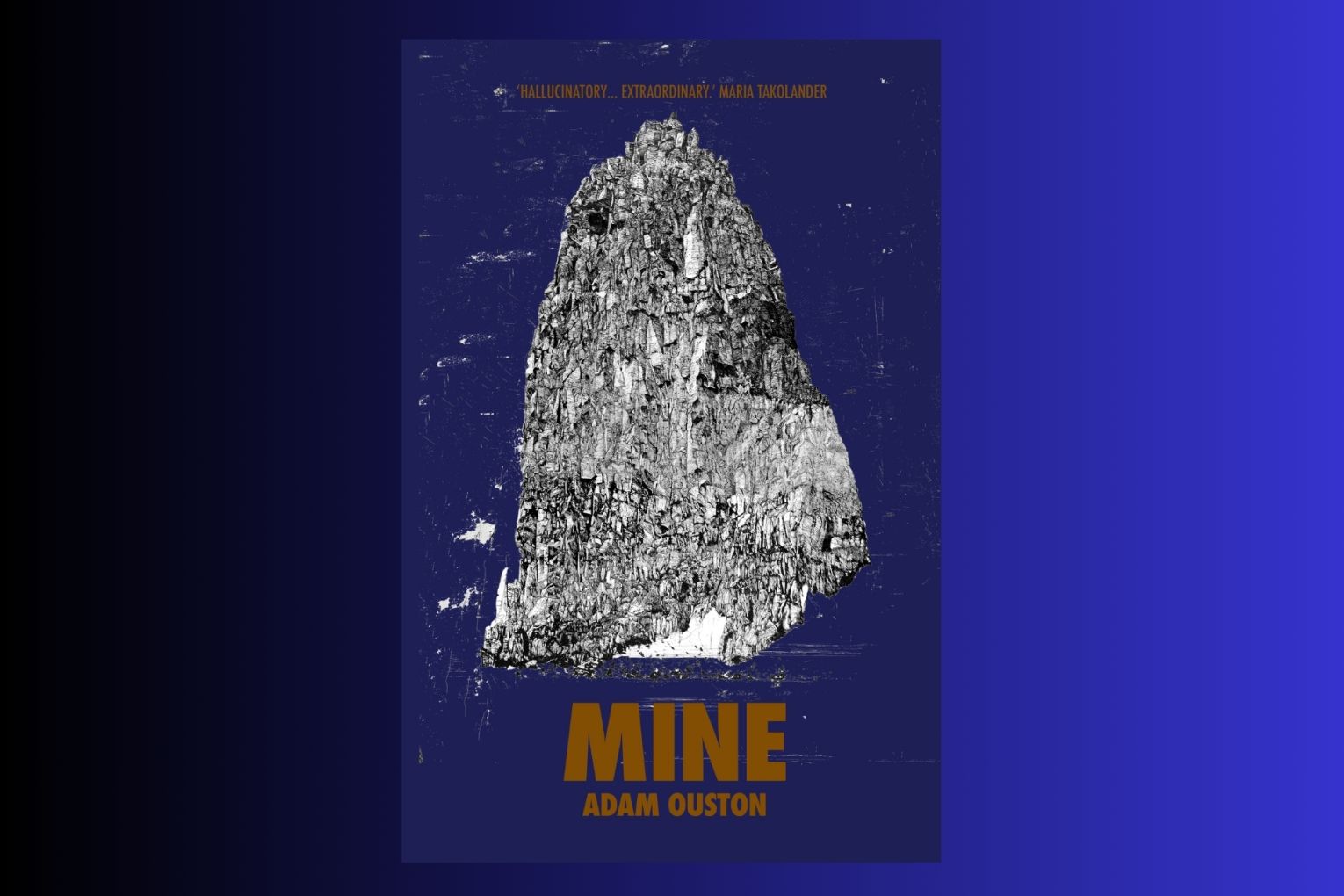
Tasmanian writer Adam Ouston’s much-anticipated second novel begins and ends with the sounds of bloodcurdling yet strangely life-affirming howling.
The first is a bone-shredding expression of terror and profound discomfort emitted by a trapped poet, activist and teacher. The second is the unearthly howl “of a lunatic wind that would never cease”.
In between the words that describe these two noises are multiple stories, unfurled in a seamlessly executed single-sentence narrative that is sustained across almost 280 pages, in language as elastic and enticing as the interconnected tales it skilfully interweaves.
Telling a longform story in a single sentence is a rare literary conceit and an even rarer successful literary accomplishment. Earlier this year, Daniel Kraus’ single-sentence novel, Angel Down, which focuses on a kaleidoscopic World War One story, was plucked from relative obscurity and awarded the prestigious Pulitzer Prize for Fiction.
Back in 2019, British writer Lucy Ellman’s intriguing Ducks, Newburyport told the story of an unnamed middle-aged mother of four in a single stream-of-consciousness sentence and was shortlisted for the Booker Prize. Such successes, however, are relatively rare and generally the best-known single-sentence books are still quite obscure. Think Hungarian Nobel Literary Laureate Laszlo Krasznahorkai’s The Last Wolf and Czech writer Bohumil Hrabal’s 1964 novel, Dancing Lessons for the Advanced in Age.
You might like

Still, to stretch the limits of the sentence itself remains, perhaps, the ultimate stylistic experiment and Mine is quite the achievement in that regard.
In the novel, while searching for inspiration for what will be his final work, an unnamed poet and defender of the Tasmanian wilderness finds himself trapped down an abandoned mine in the island’s mountain rainforests. As darkness envelops him and an overwhelming feeling of claustrophobia begins to dominate, he is visited by experiences, memories and voices from his past, as well as some tied distinctly to the desecrated, ravaged, pillaged and plundered landscape to which he has devoted himself and his life’s work.
Reading Mine is akin to finding oneself gripped in the all-encompassing, discombobulating hallucinatory state of a fever dream. Ouston’s narrative is ambitious and manifold, overlapping personal histories with Tasmanian history and geography, as well as interjecting separate micro-narratives dealing with mining practice and culture, poetry, precipitation and fish, and explorations and interrogations of the North Mount Lyell copper mining disaster of 1912 and geologist and explorer Douglas Mawson’s legendary Antarctic expeditions becoming trapped in pack ice.
Mine is an interweaving of the poet’s past, as well as his present, along with that of the mine in which he finds himself trapped and the land on which that mine is located
Ousten’s poet has tumbled headfirst into an abandoned mine while researching ghost towns, ostensibly as inspiration and information for his final great work. To him this work constitutes “a hauntology”, a reckoning with both the past and the future, a concept to which the title of the novel also alludes, with its dual references to digging up the land for its mineral resources and exerting ownership over it: “speak name own, mine.”
Mine is an interweaving of the poet’s past, as well as his present, along with that of the mine in which he finds himself trapped and the land on which that mine is located. His thoughts are at once tied to context and completely contextless, confused and clear, scattered and precise, much like the experimental one-sentence structure of the narrative itself, not to mention its sprawling contents.
Subscribe for updates
Its snowballing clauses, comma-strewn passages and parenthetical asides are all part of a single-sentence style that can, at times, become somewhat jarring and confusing
Mine’s narrative is neither discursive nor linear and Ouston’s conceptual aspirations are profound. For the most part his use of language is both particular and precise, though his narrative is, by reason of its very complicatedness, a complex and disconcerting one that requires the reader’s close attention at all times.
Its snowballing clauses, comma-strewn passages and parenthetical asides are all part of a single-sentence style that can, at times, become somewhat jarring and confusing, if only because of the intentional absence of the full-stop that generally allows the reader the space and time in which to draw a breath and ponder what it is they have just read. Here, the single-sentence structure allows no such room for pause or reflection.
The feverish and hallucinatory quality that permeates Ouston’s prose is perfect for the stories he tells because the novel’s primary narrator, the poet, seems to segue in-and-out of consciousness, floating between reality and unreality, a kind of dream-state and a keener, more conscious awareness of his thoughts and his surroundings.
There are points in the novel where the narration is briefly overtaken by the viewpoints of others – Louisa Orr, who is introduced as a real-life, current-day link to the Mount Lyell disaster and, in the final third of the story, by a voice which may or may not belong to the author and functions as an interlocutor and interrogator of sorts, questioning and challenging the poet, his thoughts, feelings and recollections.
These conjurations seem apt and an integral counterpoint to the mono-perspective of the poet, whose first-hand experiences and recollections bleed here into tales rooted in environmental and historical fact.
To read Mine feels akin to what I imagine tumbling headfirst down a mineshaft might be like – terrifying, haunting, occasionally suffocating – but it is also something more and that is that it is quite unlike anything else I have ever read in Australian literature.
Stylistically and conceptually, Ousten has penned a singularly original book that is both haunting and exorcism, as thought-provoking, engrossing and phantasmal as it is utterly, often confoundingly, wondrous.
Mine by Adam Ouston, Transit Lounge Publishing, $34.99.
Want to see more stories from InDaily Qld in your Google search results?
- Click here to set InDaily Qld as a preferred source.
- Tick the box next to "InDaily Qld". That's it.
Free to share
This article may be shared online or in print under a Creative Commons licence