From courtroom to Country: Rethinking what justice actually looks like
Part philosophical meditation and part historical reckoning, Larissa Behrendt’s latest book is a revelatory exploration of how law and lore can co-exist.
Raised by parents whose lives were shaped by military service, a young Larissa Behrendt was encouraged to question the world around her. Curiosity was nurtured at home, books were treasured and a strong sense of social justice became part of her upbringing.
Decades later, that inquisitive young girl has become an award-winning author, legal scholar, filmmaker and advocate for First Nations peoples.
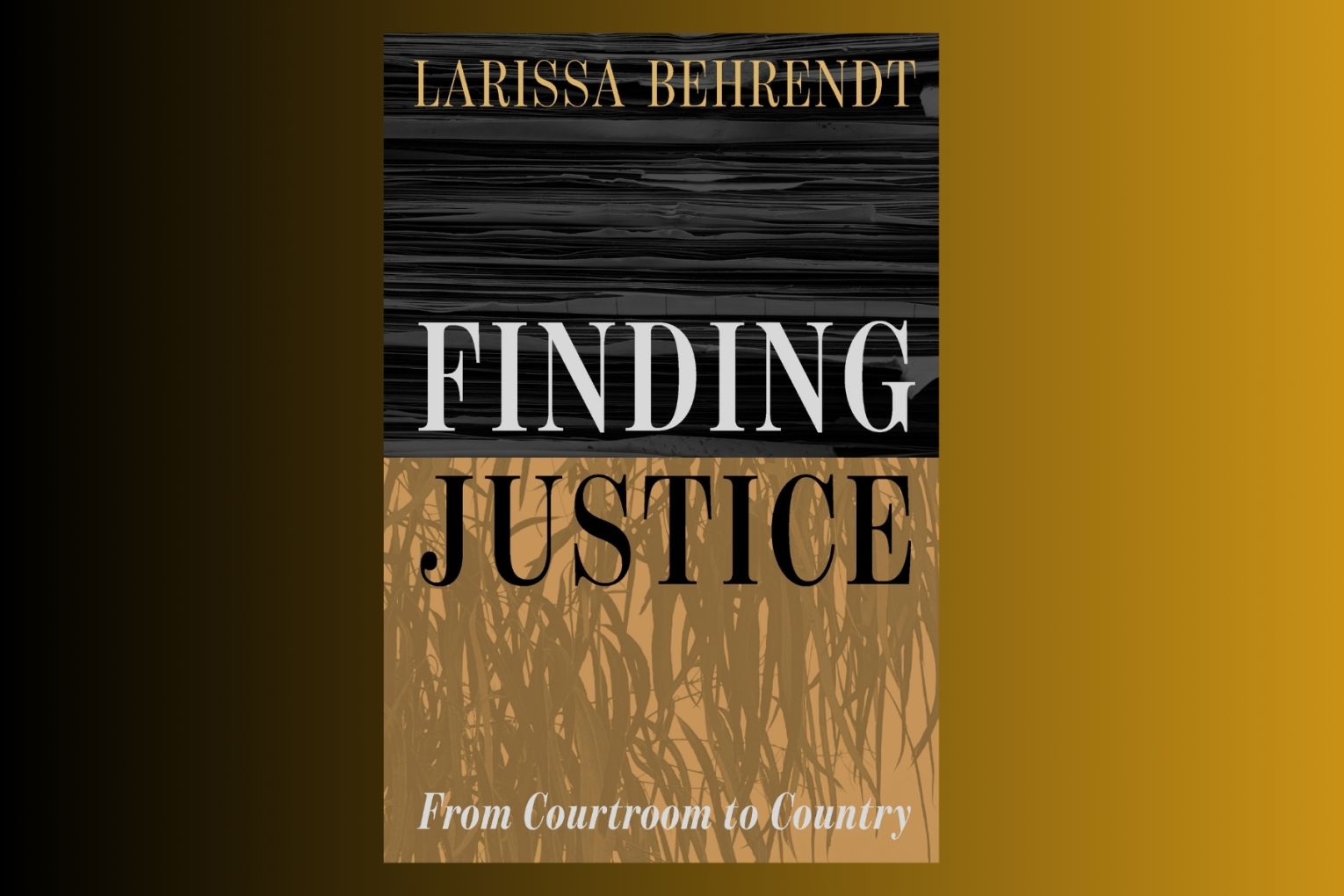
In her latest book, Finding Justice: From Courtroom to Country, Behrendt invites readers into a deeply personal and philosophical exploration of law, responsibility and healing, revealing how her understanding of justice continues to evolve beyond the courtroom.
“I’m closer to the end of my career than I am to the start of it,” Behrendt tells me during what she informs me is her first interview for Finding Justice.
It is a disarmingly modest way for a Euahlayi and Kamilaroi woman with such an expansive career to introduce a book of this ambition. Rather than simply recounting her accomplishments, she examines what experience has taught her and, more provocatively, how it continues to compel her to question.
“It is really a story of how I evolved in my career and as a person,” she says.
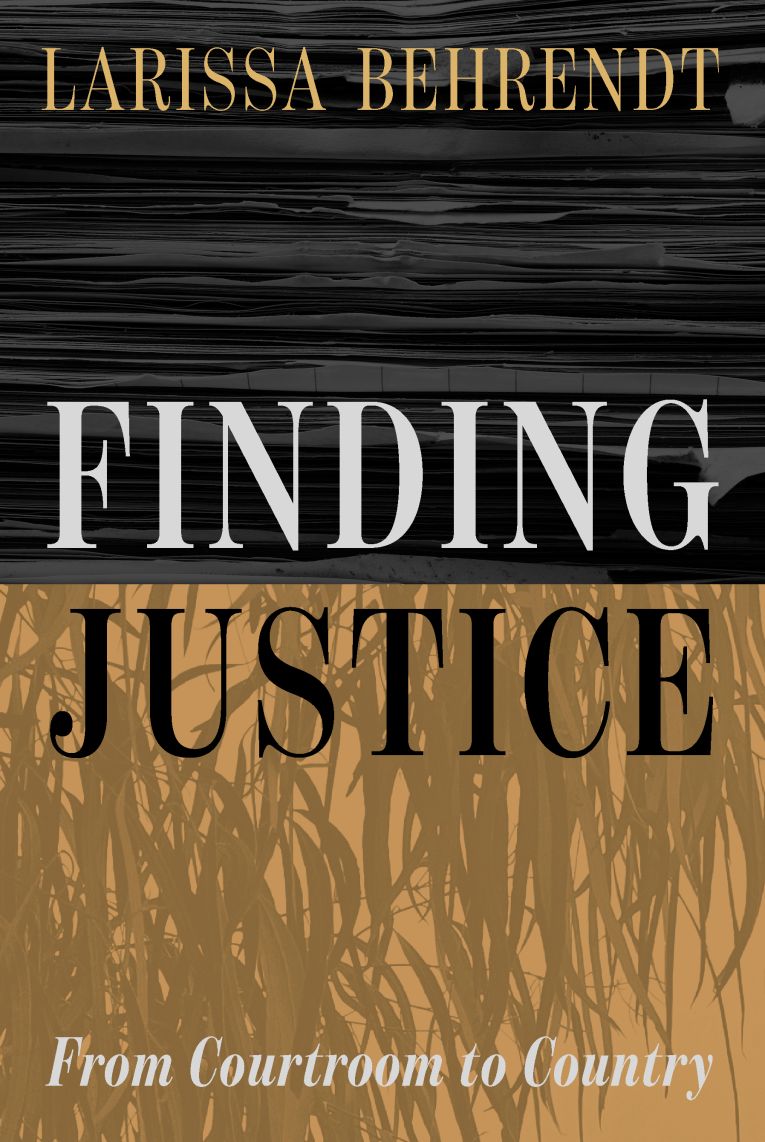 Finding Justice is neither a conventional memoir nor a legal textbook dressed up for general readers. Published by University of Queensland Press, the work travels between childhood memories, landmark legal struggles and First Nations philosophies with cultural law.
Its two-part structure moves from the architecture of institutional power towards practices through which a different understanding of justice might emerge. The detail is substantial, but its invitation is simple: look again at what we think the law is for.
There is a delightful irony in hearing Behrendt discuss the range of writing she pursues. Three novels, reflective nonfiction, documentaries and serious legal books all belong to her repertoire. The latter, she laughs, are “more serious”.
You might like


That small admission reveals a lot about Behrendt. She approaches weighty material not as a detached authority handing down instructions, but as someone still interested in finding the right story to tell – “always trying to create that space for others to speak” – and in her book those who have shaped her ideologies.
In the book’s early pages, the schoolgirl who loves reading encounters versions of Australian history that classrooms choose to teach and those they leave out.
“I grew up with the Redfern community (in northern NSW),” she says, adding that her connection to the South-East Queensland Aboriginal community provided an education of another kind, shaped by people practising self-determination rather than simply discussing it.
Legal victories matter, but the book asks readers to examine the foundations beneath them
That contrast becomes one of the book’s most absorbing threads. What happens when the knowledge that shapes your life is absent from the institutions claiming to educate you?
Behrendt’s reflections on the law are equally personal. She recalls once imagining that a principled advocate could change the world by arguing persuasively enough. The story that follows complicates that youthful confidence without ridiculing it. Legal victories matter, but the book asks readers to examine the foundations beneath them.
“Originally I thought being in the courtroom would allow me to contribute, but it wasn’t enough I found,” reflects Behrendt.
In a particularly sharp passage in the book, she considers how one system can recognise a form of Aboriginal law while refusing to give it the same legal standing as its own. The contradiction is uncomfortable, more so because Behrendt makes it clear why.
One of my favourite connections in Finding Justice arrives through art. Behrendt opens her chapter on colonial architecture with Fiona Foley’s Witnessing to Silence outside Brisbane’s Magistrates Court. The artwork’s quiet beauty meets an institution associated with formal judgement, creating a tension more affecting than a lecture could be.

It reminds me that Behrendt’s thinking does not stop at the courtroom door. Art, like testimony, asks us to notice what we have learned not to see.
The same instinct shapes her creative career. Behrendt has directed films including After the Apology and Innocence Betrayed, and she speaks to me about making space for other people’s stories.
Subscribe for updates
In the book, she explains how the practices of sovereignty reshape her approach to filmmaking, teaching and writing. This should interest young filmmakers and writers especially. First Nations perspectives are not simply subjects to portray, but ways of approaching the work itself.
Whose voice carries authority? Who gets to interpret a story, and who is trusted to tell it?
Behrendt is especially warm when discussing the people who teach her, including those whose wisdom is not decorated with a doctorate or professional title. Elsewhere, she considers how kinship makes responsibility personal.
Her own family remains central to this understanding, even after her father’s passing. She reflects on how her brother Jason assumes a quiet leadership within the family, guided not by hierarchy but by his knowledge of Country, culture and the Elders who have taught him.
Relationships matter not because someone holds a title, but because people understand their obligations to one another. During our conversation, Behrendt expresses her hope that the book reaches people beginning to think beyond their immediate work and towards larger responsibilities. I see another audience too: emerging lawyers, creatives and students looking for a personal connection between their careers and their values.
In the later chapters of Finding Justice, Winanga-li, Storywork, Standpoint, Self-determination and Baluwaa offer a different vocabulary for thinking about responsibility.
These practices challenge Behrendt to approach her work through relationships, cultural knowledge and deeper listening. It is a striking development from someone who has devoted so much of her life to law. These chapters can be demanding, particularly as legal history gives way to philosophy, but they reward readers willing to reconsider not only what they do, but how they might incorporate these philosophies into their own pursuits.
patience and gentleness should never be mistaken for passivity
What surprises me most is the mood Behrendt leaves me in. After so much determined examination of power, the conclusion makes room for gentleness. This takes root for so many of us, when we try to heal and reflect. Learning when to speak, when to listen and when to create space for others to be heard, even when silence is needed.
Yet patience and gentleness should never be mistaken for passivity. Sometimes change demands action, and sometimes it begins by making room for someone else. As Behrendt writes, “what is just must be lived”.
I can’t help but admire how the resolve of the young, determined woman who first entered the courtroom has never disappeared. Patience, says Behrendt, should not become an excuse to postpone reform.
Finding Justice leaves us not with the completion of her career but with the sense that we have been asking too little about the meaning of justice all along.
Finding Justice by Larissa Behrendt, UQP, $36.99.
uqp.com.au/books/finding-justice
This article was written as part of The Critical Writing Program, run in partnership with Queensland Writers Centre and InReview Queensland, supported by the Queensland Government through Arts Queensland, part of the Department of Education.
Want to see more stories from InDaily Qld in your Google search results?
- Click here to set InDaily Qld as a preferred source.
- Tick the box next to "InDaily Qld". That's it.
Free to share
This article may be shared online or in print under a Creative Commons licence