Get thee to Hamlet: Where dance transcends words
Croatian choreographer Leo Mujic’s condensed reimagining of Hamlet for Queensland Ballet combines poetic eloquence and visceral power in a world-class production.
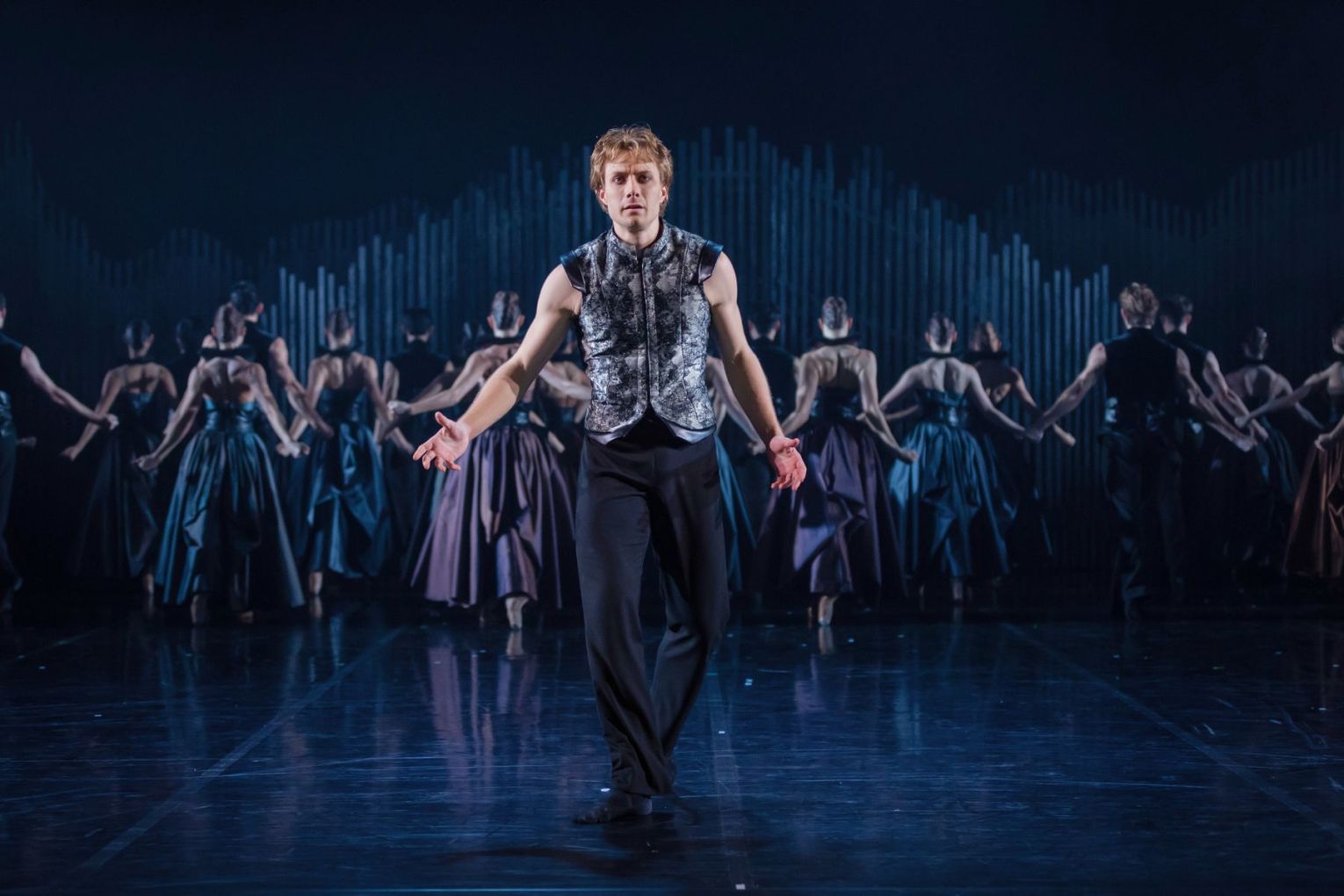
Hamlet is celebrated as one of the world’s great tragedies for good reason. It remains so, more than four centuries after William Shakespeare penned it, because its story encompasses so many of life’s existential emotional, psychological and moral cornerstones and philosophical quandaries – while providing no clear answers.
Hamlet is also Shakespeare’s longest play, which makes capturing the depth and complexity conveyed across four hours and distilling it into an unspoken art form seem a tall order, let alone in a length palatable to modern audiences.
But Queensland Ballet’s Australian premiere of Croatian choreographer Leo Mujic’s 2014 imagining exemplifies dance’s alchemic facility to transcend words. Condensing the narrative to 100 minutes (broken by an interval), Mujic’s inspired original movement combines poetic eloquence and visceral power to convey Hamlet’s core contemplative profundity.
Of course, central to this is the quality of Queensland Ballet in executing Mujic’s vision with technical aplomb and dramatic veracity. The result is a world-class production.
You might like
Set to familiar and lesser-known pieces by Tchaikovsky and Saint-Saens, Mujic’s wide-ranging aesthetic vocabulary is masterful. He uses elongated and sweeping classical lines contrastingly, generating uplifting propulsive vibrancy, collective force and order, and delicate tenderness and reflection.
The contemporary movement elements are strongly symbolic, featuring tensed, angular arm lines and hands that conjure both claws and crowns. Gestural motifs and contortions mirror Hamlet’s internal dynamic.
Hamlet’s striking costume, set and lighting design are intrinsic to defining and emphasising the work’s exterior and internal states, especially the theatrical devices depicting the tale’s pivotal spiritual components.
Mujic’s artistic boldness is coupled with selective restraint
Subscribe for updates
The appearance of the ghost of Hamlet’s father (Joshua Ostermann) is literally surprising – although it probably shouldn’t be. He’s depicted as a Nordic wraith with long white hair and a godlike presence.
There is also a chorus of masked spirits with nebulous identities that manifest in different planes. They represent the fierce struggle of Hamlet (Edison Manuel) with his duality and create a hauntingly beautiful depiction of Ophelia’s drowning.
Mujic’s artistic boldness is coupled with selective restraint. The addition of one small physical detail to that imaginative scene carrying Ophelia (Libby-Rose Niederer) on the current, captures lingering poignancy.
reading the program synopsis is essential to follow the … plot’s machinations and characters across 23 scenes
Another example is empowering ballet’s traditionally mute vessels to emit sporadic singular vocalisations – a scream or an exhaled “ha!” piercingly accentuate their humanity.
However, even if you already know the story, reading the program synopsis is essential to follow the detail of the plot’s machinations and characters across 23 scenes and be able to enjoy the ballet’s full impact informed by understanding. (A voiceover does explain one critical plot detail though, to wry effect.)
My only reservation on opening night was the casting of ballerina Kaho Kato as Hamlet’s best friend Horatio, despite her excellent dancing. While donning a moustache and male clothing she performed in pointe shoes, and with audiences lacking any insight as to a character reinterpretation, Horatio lacking the masculine strength he is known for was off-putting.
In toto. though, this production ticks all the boxes as entertaining art. It is a compelling advertisement for what contemporary narrative ballets can offer to attract young audiences, alongside existing ones, to ballet as a vibrant living art form. Timothee Chalamet really needs to get out more.
Get thee to a performance.
Hamlet continues at the Talbot Theatre, Thomas Dixon Centre, West End, until July 18.
Want to see more stories from InDaily Qld in your Google search results?
- Click here to set InDaily Qld as a preferred source.
- Tick the box next to "InDaily Qld". That's it.
Free to share
This article may be shared online or in print under a Creative Commons licence