Shel We dance? Welcome to the playful world from over the ditch
When trees, ghosts and deer combine in a mischievous mix from one of Aotearoa’s most ingenious dancers, storytellers and choreographers, you’ll find yourself in the offbeat world of Shel We.
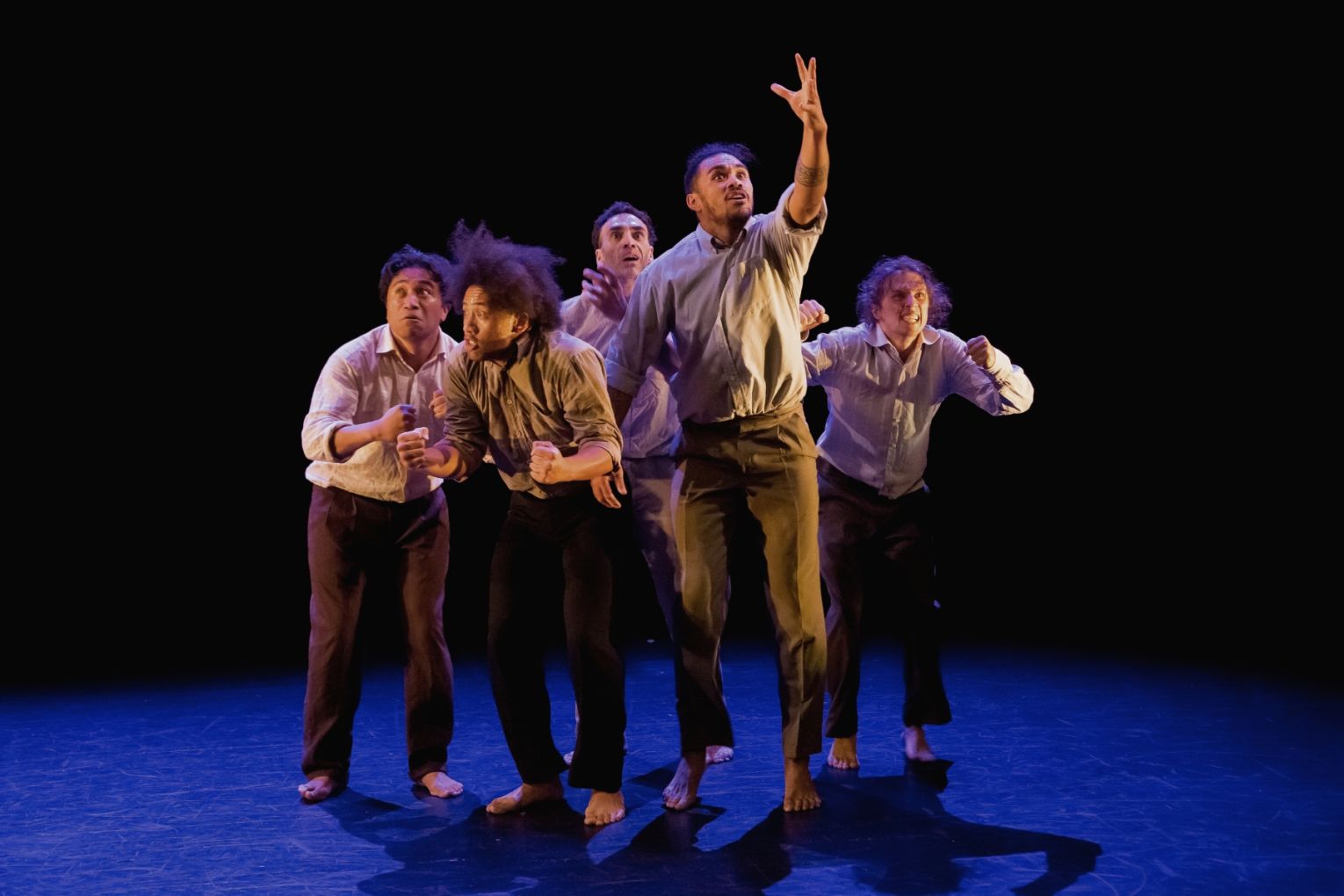
There is a good chance that the title of New Zealand contemporary dance production Shel We lands more humorously in Australia than its other destinations around the world.
The Antipodean in-joke referencing the Kiwi pronunciation of “shall we” reflects the playful, lighthearted charm of award-winning Samoan choreographer Tupua Tigafua’s work for New Zealand-based arts organisation Le Moana, which makes its formal Australian premiere, September 10 to 13, at QPAC’s Cremorne Theatre, presented by Brisbane Festival.
But it’s specifically a pun on the piece’s inspiration – American author, cartoonist, poet and songwriter Shel Silverstein, whose whimsical style aligns directly with Tigafua’s. Even if you don’t recognise Silverstein’s name, you might know some of his work, such as the lyrics of Johnny Cash’s A Boy Named Sue, children’s book The Giving Tree or the Dr Hook songs Sylvia’s Mother and The Cover of Rolling Stone.
A father of four children, aged six to 15, Tigafua initially created Shel We as a solo in 2012 after discovering Silverstein’s children’s books. He says Silverstein’s ability to capture both kids’ and adult perspectives in the text “blew me away”. This “playful way of looking at the world” appealed to his creative quirkiness, although Shel We’s contemplation of life is strictly for adults.
Its themes are universal, ranging from the personal – his migrant parents and family – to the environment and society. He references drug and alcohol abuse subtly, wanting to “portray it as something that’s not perfect, but just human”.
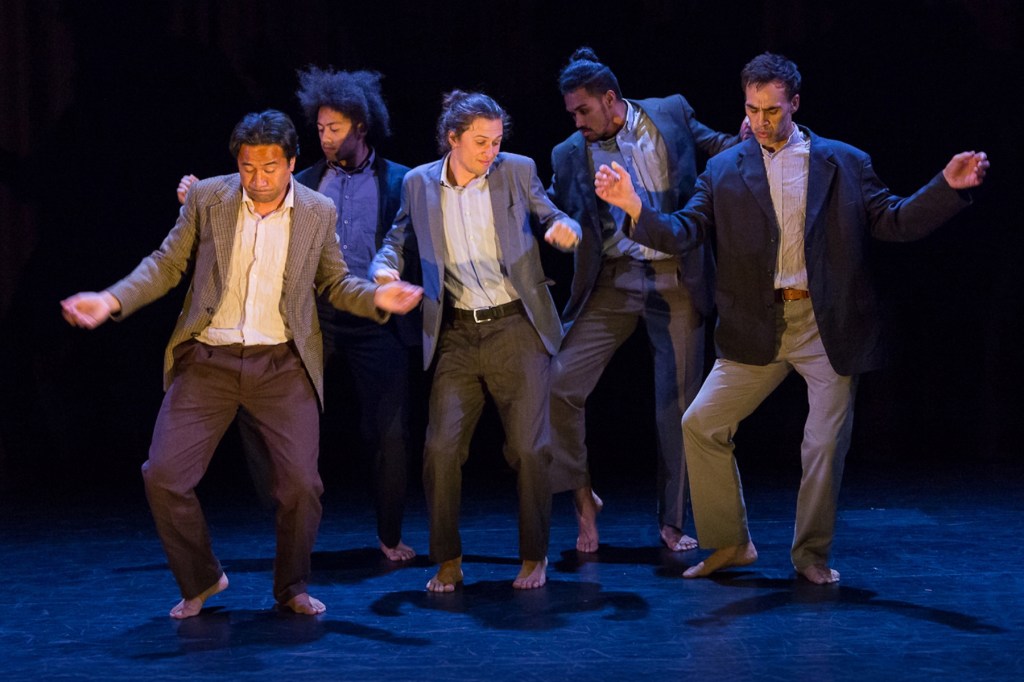
“It’s (about) existing in an urban world and trying to figure out what to do,” Tigafua says. “The costumes are all oversized suits, and they don’t fit quite right, and it’s that idea of trying to fit in as an adult when it’s not quite right.
You might like
its strong but simple imagery, but his intent is thoughtful reflection rather than making statements
“Imagery is so important to me. It’s all the small details that are important. I like to have a feeling of something that is quite beautiful and simple, but also underneath it, a sadness.
“It’s just like normal life – things are a bit funny and sad, and you have to kind of try to balance that.”
The choreographer’s dual layer approach allows audiences to find their own meaning from the presentation and its strong but simple imagery, but his intent is thoughtful reflection rather than making statements.
Tigafua describes a scene from Shel We featuring an unlit toy boat travelling around the stage while the performers wearing tea lights on their heads bop up and down to a gentle old Samoan song.
After a performance in Gisborne, New Zealand, he spoke to a group of women who had interpreted it as the Europeans coming to New Zealand.
Subscribe for updates
“I was just like, whoa, whoa, whoa, no – it’s just like dreaming. I made that scene about my parents migrating.”
So, it’s worth remembering that sometimes simple images are just that.
What I gleaned from speaking with Tigafua is that this isn’t contemporary dance that wants to make you think too hard. In this instance, the mantra of “just let it wash over you” probably does actually apply.
Coming to dance training late in his teens, Tigafua adopted an organic, unforced, less-is-more movement style.
“The way I look at dance is basically just movement and stillness,” he says. “I like architecturally spacing things. The movement has to look unaffected. It has to just come out. And it’s not about (everyone) doing it at the same time, but all being a part of the same moment, like waiting in a line at McDonald’s for your order. Everyone’s waiting but in a different way.”
The same attitude applies to the music, which also features Vivaldi and Silverstein’s Ickle Me, Pickle Me, Tickle Me Too.
“I feel you can never beat music or never beat space. You can never out dance it, you know? You have to be part of it. There is something about just surrendering or just appreciating what it is. They’re the main thing, and we are just kind of sharing a little bit of it before we move on.”
There’s that dual meaning again.
The 43-year-old still performs the piece, but it now has a cast of six men (“it just worked out that way”) and has become the first part of a trilogy – and it is still continuing to evolve.
“It’s like childhood memories and new perspectives now we’ve all grown up,” Tigafua explains. “So, the timing changes sometimes, and also movement, but (you’re) trying to make it feel like the same work and keep it alive.”
Shel We plays the Cremorne Theatre, QPAC, September 10 to 13.
Want to see more stories from InDaily Qld in your Google search results?
- Click here to set InDaily Qld as a preferred source.
- Tick the box next to "InDaily Qld". That's it.
Free to share
This article may be shared online or in print under a Creative Commons licence