A reboot for Das Boot … and other German Flick Fest gems
See the director’s cut of Das Boot and Fatih Akin’s latest film Amrum – plus so much more – at this year’s German Film Festival.
The 2026 German Film Festival is about to begin, offering a wide array of films from the region and opening with Berlin Hero, the final film by the late Wolfgang Becker.
Like his most famous film, 2003’s Goodbye Lenin!, the comedy has a GDR (German Democratic Republic) theme, telling of a hero who emerges 30 years after the fall of the Berlin Wall. Daniel Brühl, who rose to fame after Goodbye Lenin!, co-stars.
The festival also pays tribute to daring German actor Udo Kier, who died late last year, with a screening of Paul Morrisey’s 1974 film Blood for Dracula, which released in some markets as Andy Warhol’s Dracula and co-stars Joe Dallesandro.

Closing the festival and celebrating its 45th anniversary is Wolfgang Petersen’s classic anti-war U-boat epic Das Boot – Director’s Cut, starring Jürgen Prochnow, who like Petersen made his mark in Hollywood.
Also worth seeing is last year’s Cannes Jury Prize winner, Sound of Falling, which follows four girls across four generations experiencing their youth on the same farm in northern Germany; and Hello Betty, a comedy drama about Swiss advertising icon Betti Bossi.
Most prominent, though, is the German-Turkish Hamburg-born director Fatih Akin, whose latest film Amrum, which was hugely successful at the German box office and is now the centrepiece of the festival, which will also screen his previous films Head-On, The Edge of Heaven and Goodbye Berlin.
The classically filmed Amrum came as a surprise in Cannes last year, as the celebrated director and sometime DJ is known for his edgier work. As it happened, the touching sentimental film wasn’t his idea at all. The screenplay was written by his friend and mentor, octogenarian Hark Bohm, who had intended to direct the film but became ill. So Akin agreed to take over.
You might like


“For me, Hark was the best of the German New Wave when everyone focussed on Fassbinder, Wenders and Herzog,” Akin, 52, says of the director, writer and actor who appeared in many of Fassbinder’s films (as did Udo Kier). “Hark was always on the outside, because he made films with children and was not taken seriously.”
When Bohm died last November, Akin paid a loving tribute, noting that with his films Moritz, Dear Moritz and Yasemin, Bohm “wrote film history”. At least Bohm was able to see his very personal story, based on his autobiographically inspired novel, translated into a film before he passed. Akin calls Amrum “a Hark Bohm film by Fatih Akin”.

Amrum, where the film was shot, is an idyllic windswept German North Sea Frisian island where Hamburg-born Bohm grew up. Initially, Akin’s interest had been tweaked to come on as a producer after Bohm told him about having nothing to eat at the end of World War Two and how his mother was a Nazi.
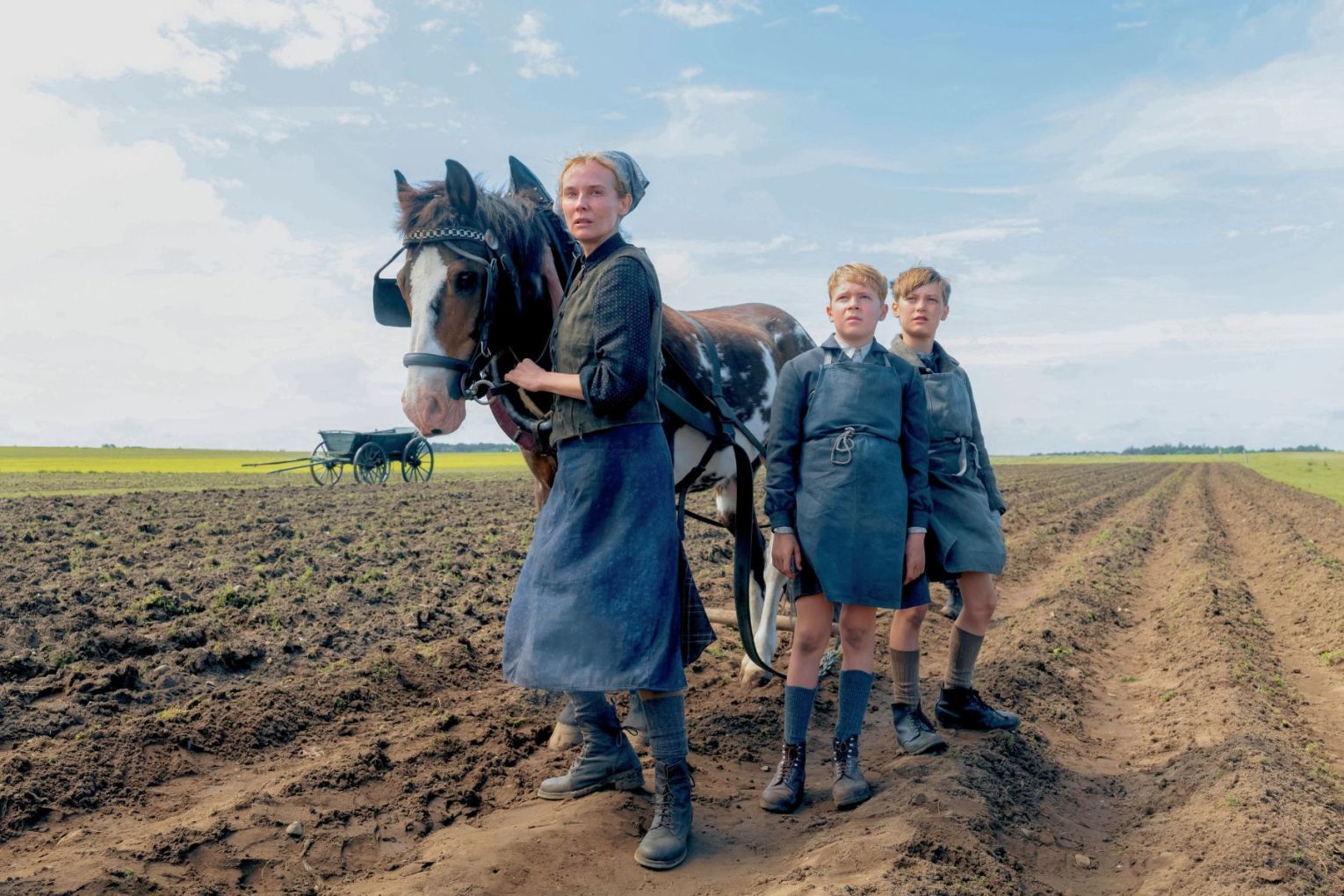
Set in 1945, Amrum follows resourceful 12-year-old Nanning, a member of the Hitler youth, who must contend with his mother’s depression after Hitler’s death. She has just given birth and refuses to eat anything other than white bread with butter and honey. Nanning sets his mind on finding all three food items, which are in short supply, and embarks on an epic adventure including helping a local fisherman to trap a seal to earn some money. He also hunts for rabbits.
Akin wanted to make a coming-of-age story, a human story and did not want to dwell on the politics of the time. “I wanted to make an adventure film in the tradition of Stand By Me and drawing on Mark Twain from literature,” he says.
Nevertheless, we see the politics through the mournful eyes of Nanning, who is trapped as he comes to know what is happening and realises that his Nazi parents are not who he thought they were. Jasper Ole Billerbeck is exceptional in the demanding role of Nanning. He had never acted before.
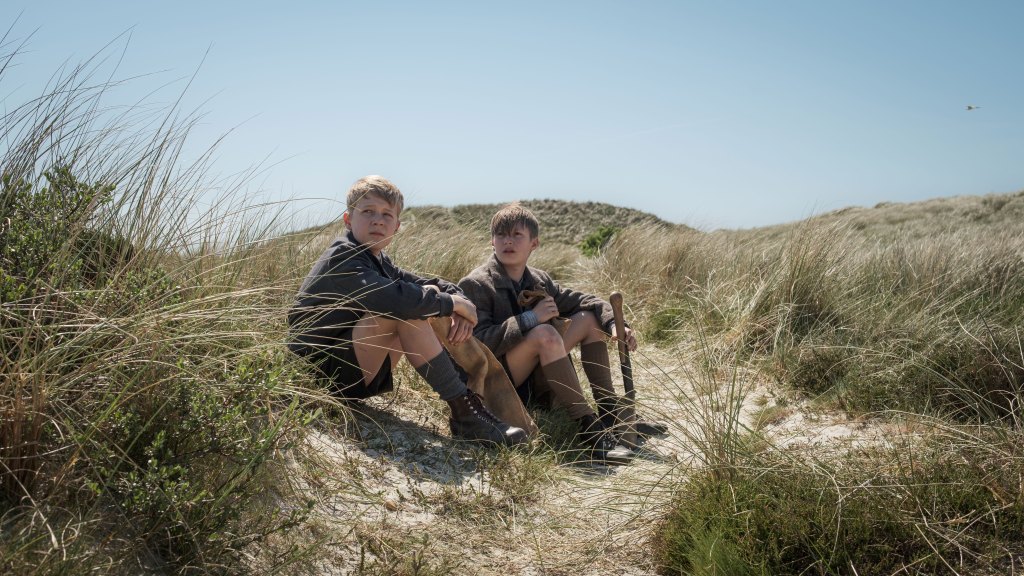
“We needed kids who were not afraid of nature,” Akin notes. “All the German actor kids are big-city kids and if they see a spider or a bee they freak out. We needed kids who don’t freak out.”
His casting director found Jasper Ole Billerbeck in a north German village where he was sailing boats. So, could he kill and skin a rabbit?
Subscribe for updates
“He was not afraid to cut it, and he did it again and again. He didn’t feel like he was going to vomit, even if I did!”
Akin added the scene where Nanning is bullied for being an outsider, something he knows too well as the son of Turkish immigrants in Hamburg.
“I wrote that when he’s getting the fish and he’s passing the kids in the schoolyard. They steal the fish and start beating him. This is a big-city thing, because I’m a big-city kid, and I was growing up like that. If you’re in the wrong neighbourhood, if you have the wrong jacket … bam! This is more my personality, something I know better, and Hark said, ‘Of course, kids do that. They are hungry, you know. The gangs of Amrum’.”
German actor Diane Kruger, who had won the Cannes Festival’s best actress award for Akin’s 2017 film In the Fade (which Bohn co-wrote as he did with Goodbye Berlin), plays Tessa, a vocally Hitler-hating potato farmer. She is considerably de-glamourised as a hard-working peasant with a limp.
“Tessa’s become political as she’s fed up with the war,” Akin notes. “I’m also tired of wars. Aren’t we all?”
Other Akin films showing at the festival:
Goodbye Berlin Of all Akin’s films this 2016 coming-of-age story is closest to Amrum, though its concerns are more contemporary. Two 14-year-old boys with difficult home lives aren’t fitting in at school, so they steal a car and go on a road trip.

Head-On Akin’s 2004 breakthrough film won the Berlin Festival’s top prize, the Golden Bear. A gritty, violent love story set in Hamburg, it follows a young German-Turkish woman (Sibel Kekilli) as she tries to break free from her restrictive, religious family by entering into a marriage of convenience with a Turkish-born drug-using alcoholic widower (the award-winning Birol Ünel, who went on to star in Akin’s 2009 film, Soul Kitchen, after which his career declined due to his alcoholism. He died from cancer at the age of 59).
The Edge of Heaven The winner of the Cannes Festival’s best screenplay award in 2007, this carefully orchestrated story is complex in its inter-weaving of six characters in Bremen and Istanbul, a deliberate ploy by Akin who wanted to add more intrigue to his repertoire after Head-On’s success. It’s no surprise that the film features Hanna Schygulla, the muse of Fassbinder, whose films influenced Akin and Bohm.
The 2026 HSBC German Film Festival runs nationally, May 6 to 27, before Amrum’s national release on May 28. Sound of Falling releases on June 4.
Helen Barlow is a Paris-based Australian freelance journalist and critic. In 2019 she received the La Plume d’Or for her services to French cinema. She is a voting member of the Lumiere Awards.
Want to see more stories from InDaily Qld in your Google search results?
- Click here to set InDaily Qld as a preferred source.
- Tick the box next to "InDaily Qld". That's it.
Free to share
This article may be shared online or in print under a Creative Commons licence