Why we’re hungry for docs on the headliners of OZ rock
With Crowded House and Sweat It Out hitting cinemas later this year, Aussies have never been hungrier for a good rock doc. Stephen Vagg examines why.
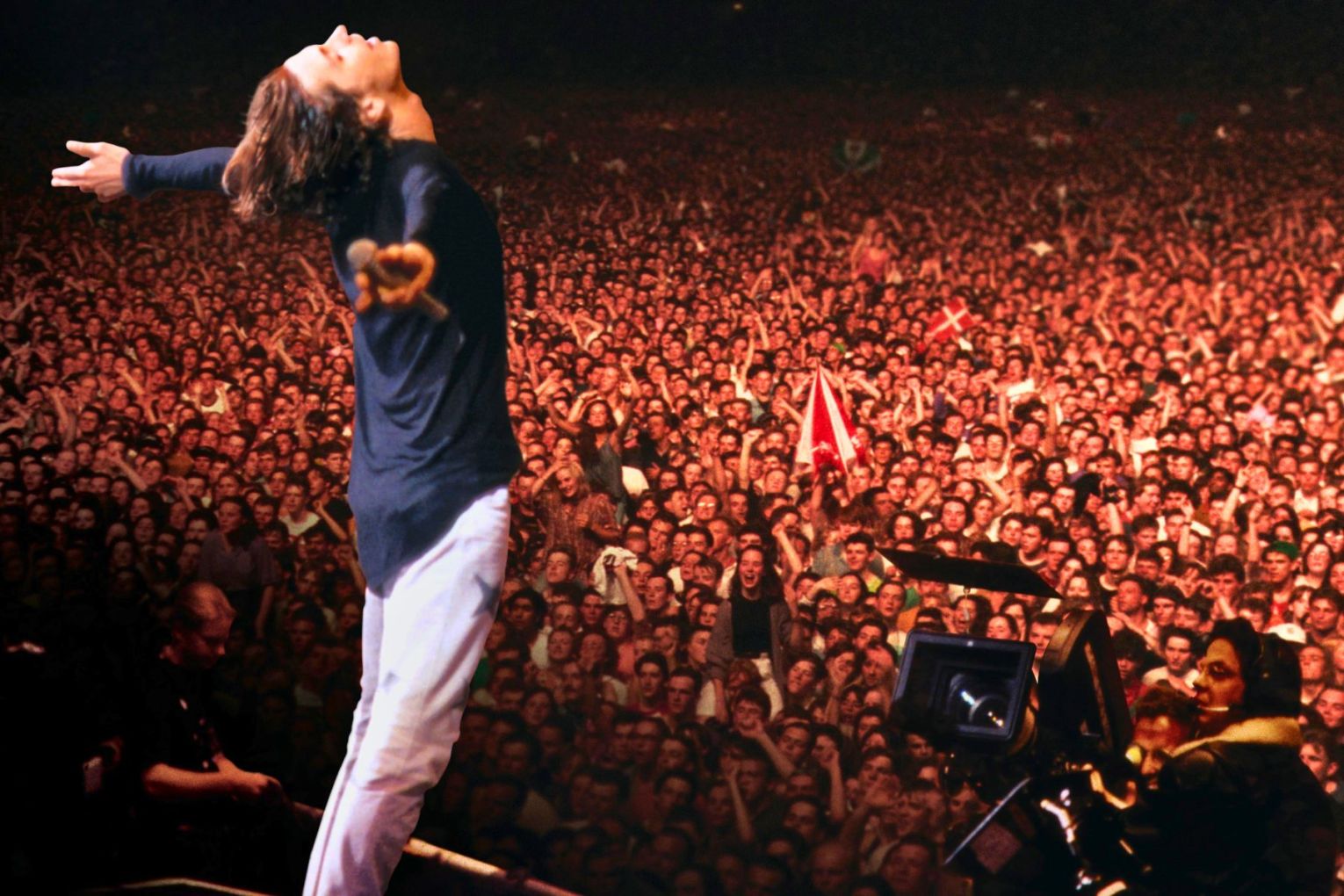
Famed author William Goldman once wrote that when it comes to movies, no one knows anything – and that’s certainly true when you consider the recent popularity of Australian rock documentaries.
You might think in this era of YouTube, streaming and illegal downloading that there wouldn’t be any sort of market for rock documentaries – after all, can’t you just get it for free? But in 2023, John Farnham: Finding The Voice became the highest-grossing feature-length Australian documentary of all time, pulling in more than $3 million at the box office.
Certainly, the makers of Finding The Voice were fortunate, if we may say that, in that their film’s release coincided with Farnham’s cancer diagnosis. The latter unleashed a torrent of affection from the already-singer’s huge fan base: seeing the movie in cinemas was a way for many people to communally express their love for Farnham.
But that does not explain the popularity of other recent Australian rock documentaries such as EPiC: Elvis Presley in Concert; Mystify: Michael Hutchence; and Gurrumul, which all clocked more than $1 million in cinemas, exclusive of DVD, streaming and television.
Indeed, over the past two decades the rock documentary has quietly become one of Australia’s most prolific genres. There have been docos made about The Go-Betweens, Screamfeeder, Lee Kernaghan, Midnight Oil, Rowland S. Howard, The Birthday Party, Mental As Anything, Parkway Drive, Weddings Parties Anything, Sarah Blasko, Jimmy Barnes, The Hard Ons, Paul Kelly, Kylie Minogue, Hillsong United, The Triffids, Nick Cave, Albert Music and Michael Gudkinski.
You might like

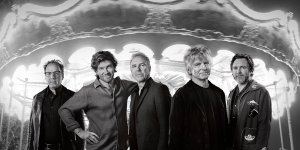
And if you want to expand your definition of “rock” there have also been documentaries on Slim Dusty, Harold Blair, the University of Sydney music department, and private school music teachers. Coming out in cinemas later this year is Crowded House, about the eponymous Australian-New Zealand band, as well as Sweat it Out, an epic history of Australian live music.
The boom dates back, it would seem, to the ABC’s 2001 TV series Long Way to the Top. This was not only a ratings success, but it also sold a pile of DVDs and inspired a slew of real-life rock concerts.
Of course, there were Australian rock documentaries before then, although they were predominantly concert films: Australian Made (1987); Cold Chisel’s The Last Stand (1984); AC/DC: Let There Be Rock (1981); Sunbury (1972); and Rock ‘n’ Roll (1959).
You also had hybrids like the mockumentary Abba: The Movie (1977) – a Swedish Australian production, partly financed by Reg Grundy – and the documentary-like-fiction Wrong Side of the Road (1981). And there were numerous fictionalised biopics on everyone from Olivia Newton-John and INXS to Johnny O’Keefe and Slim Dusty (again).
What’s the appeal of such movies?
Well, for starters, the popularity of the film’s subject ensures a solid core market. Investors know that even if a rock documentary is bad, they will be able to get something back from the fans. If you cannot figure out what to buy dad for Christmas and he likes Jimmy Barnes, you can always get him a Blu-Ray of Working Class Man down at JB Hi-Fi.
Subscribe for updates

Also, the films almost always tell an interesting story. Rock stars tend to lead colourful lives, full of, yes, sex, drugs,and rock’n’roll, but also adversity, triumph, and tragedy. They exemplify an era, their story is a way to address the social issues of the day, the performers are typically charismatic.
If a filmmaker picks an interesting subject, their documentary only has to be half-competent to hold interest, and most Australian rock docos are very well done. This is in part because many Australian filmmakers cut their teeth directing video clips for rock artists – Mark Hartley, Andrew Dominik, Kriv Stenders, Richard Lowenstein – and are comfortable in that world. (It should be noted the world of rock documentaries have, like Oz rock itself, been traditionally “blokey” and White, but there are exceptions.)
Rock documentaries offer the opportunity to exploit new and new-ish technologies – immersive technology, 3D, Imax. If done correctly, and are devised for cinemas, they give the audience a specific reason to watch them theatrically. This is crucial in an increasingly challenging environment for cinemas.
Documentaries are cheaper to make than biopics. However, they are more expensive than you might think – in particular, music and film clearances can be complicated to track down, hugely expensive and/or political to navigate.
If you ever wonder “why hasn’t [insert name of that famous band you like] had a documentary made about them” or “why don’t they release footage of [insert name of that famous concert] as a movie”, the answer is almost always “the people who hold the rights to the music/footage are squabbling and/or asking for too much money”.
But people will keep making rock documentaries because there is a market, and that market exists because these movies have a raw primeval appeal. For a few dollars you can sit in a cinema and get transported back to a sweaty dingy pub or nightclub or festival of your youth’
That is why if there are bands with a decent story to tell and a back catalogue of songs to exploit, the rock documentary will never die.
Mystify is streaming on Netflix.
Crowded House and Sweat It Out open in cinemas later this year.
Want to see more stories from InDaily Qld in your Google search results?
- Click here to set InDaily Qld as a preferred source.
- Tick the box next to "InDaily Qld". That's it.
Free to share
This article may be shared online or in print under a Creative Commons licence