The lost world of an orphan’s cantata, handwritten in the time of Vivaldi
Sometimes a story turns up that just has to be told and Catherine Hunter has done just that with the documentary, Agatha’s Story.
Making documentaries is not for the fainthearted. Funding is almost as hard to find as timeslots on free-to-air television. Yet the compulsion remains, especially when a story that has never been told before turns up. Your instinct is to turn away and take less risky work, but Agatha’s story was so extraordinary, I had to commit.
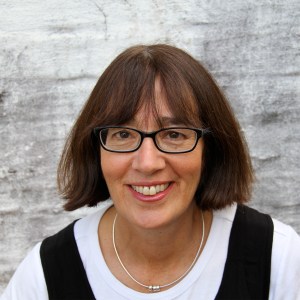
This story came to me via long-time collaborator, cameraman and editor Bruce Inglis. He had gone to a school reunion and met up with his third-grade teacher Douglas Lawrence. It was the only class Lawrence ever taught as he became a celebrated organist (who played at the opening of Sydney Opera House). Lawrence is now artistic director of the Melbourne-based Australian Chamber Choir.
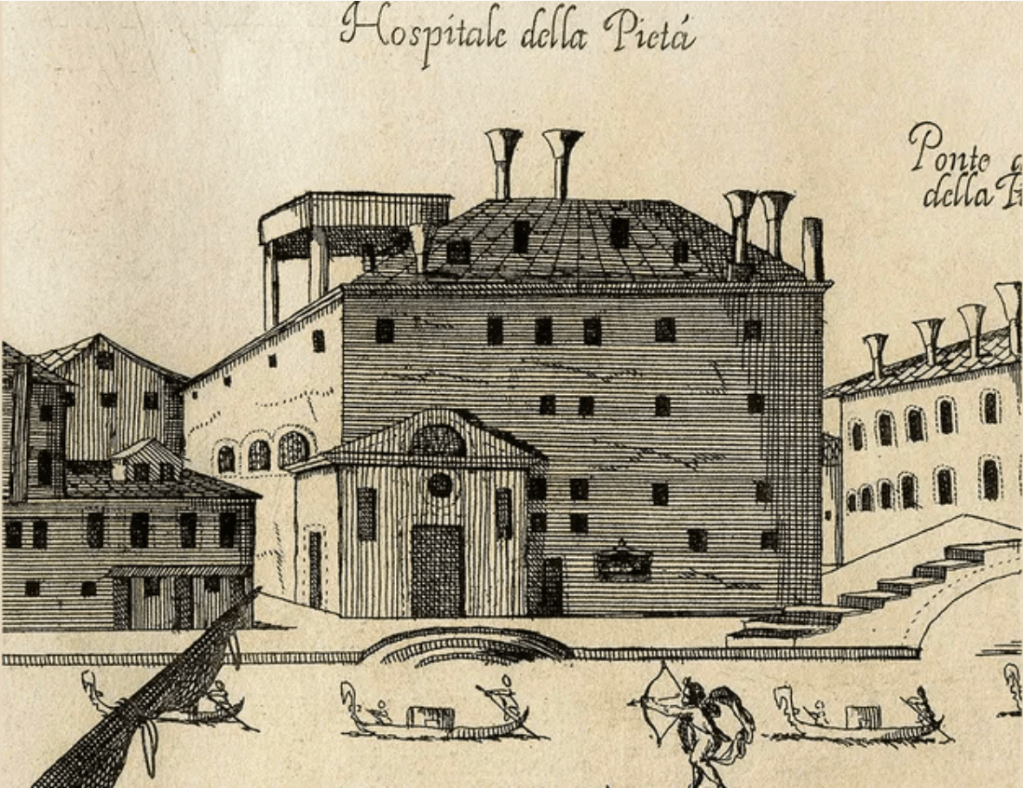
It was Lawrence who told Inglis about his wife Elizabeth Anderson’s discovery of an 18th composition written by one of the Venetian orphans who lived at the Ospedale della Pietà during Antonio Vivaldi’s 40-year tenure there. He added that the choir had been invited to perform the work, Agatha’s Cantata, in Venice. What emerged was a remarkable story.
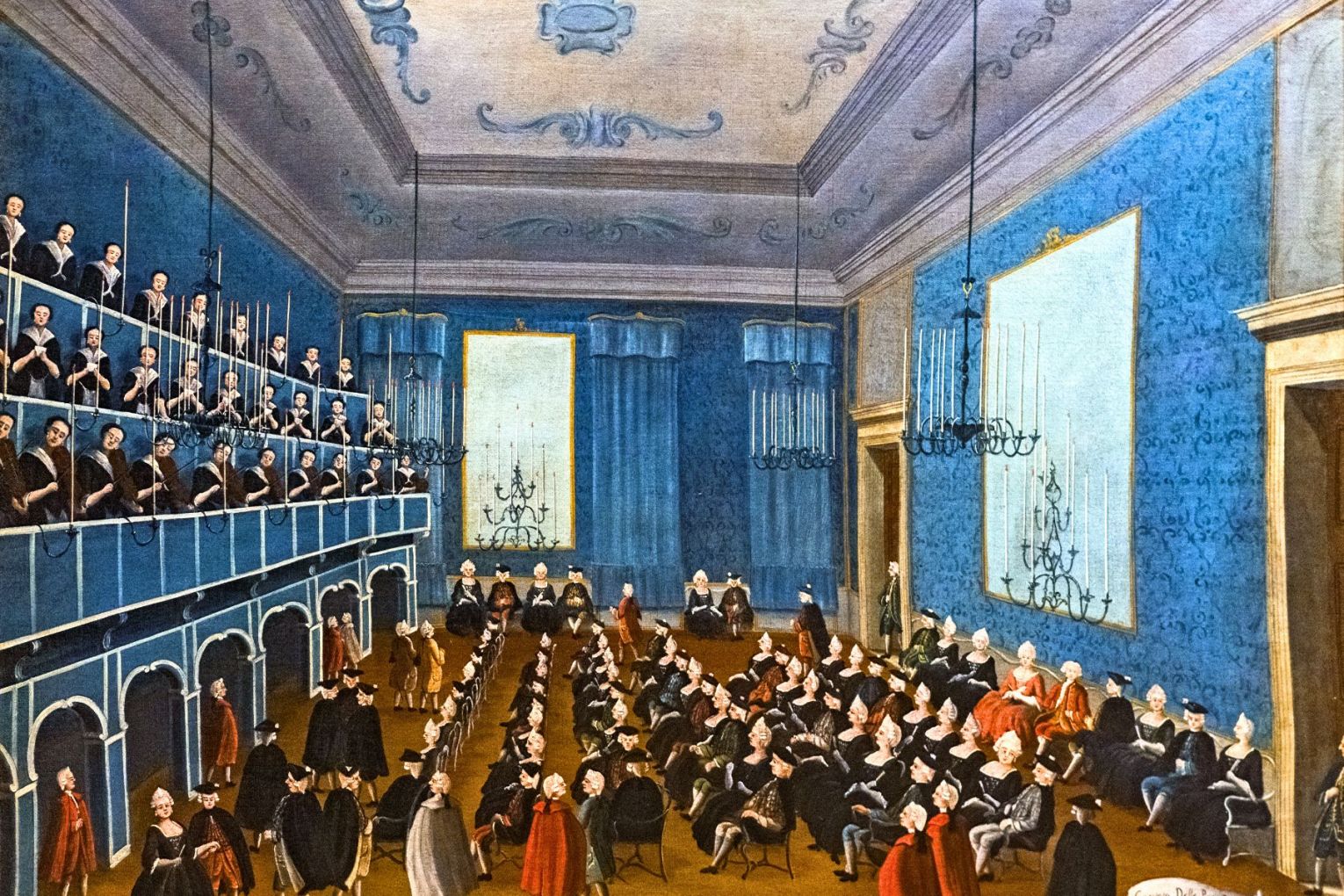
In the early 1700s, Vivaldi had been employed at the orphanage to help develop an elite music education program. The result was effectively one of the world’s first conservatoriums. The all-female orchestra and choir of the Pietà became famous throughout Europe for its excellent performances.
You might like
Anderson, assistant artistic director of the ACC, first became interested in this chapter of musical history during a high school music appreciation class. She was fascinated by the fact that at a time when professional orchestras were exclusively a men’s domain, an orphanage in Venice should have flown in the face of societal norms and included disabled girls and women in its elite all-female ensemble. She spent the rest of the class wondering about this and whether any compositions by those orphans might have survived.
Forty years later, looking for a piece of music to complement Vivaldi’s Gloria in a concert program, Anderson reached out to the Benedetto Marcello library in Venice in search of any surviving music written by the orphans.
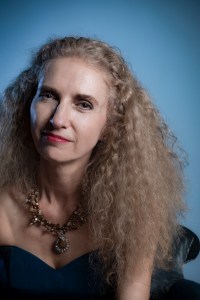
The response from librarian Silvia Urbani was immediate and electrifying. Urbani sent an incomplete set of manuscripts for a cantata, Ecce Nunc, by one of the orphans, Agatha.
“The images of the manuscript parts that I received from the library showed them to be in excellent condition and the handwriting was very clear. Two of the four voice parts and two of the four instrumental parts had been lost, so my completion reinstated those missing parts,” explains Anderson.
“But the completion exercise wasn’t as extensive or as creative as you might think. There is a simple animation in the documentary that explains why and how.”
Agatha’s position as musical director and manager granted her the privileges she needed to compose
Subscribe for updates
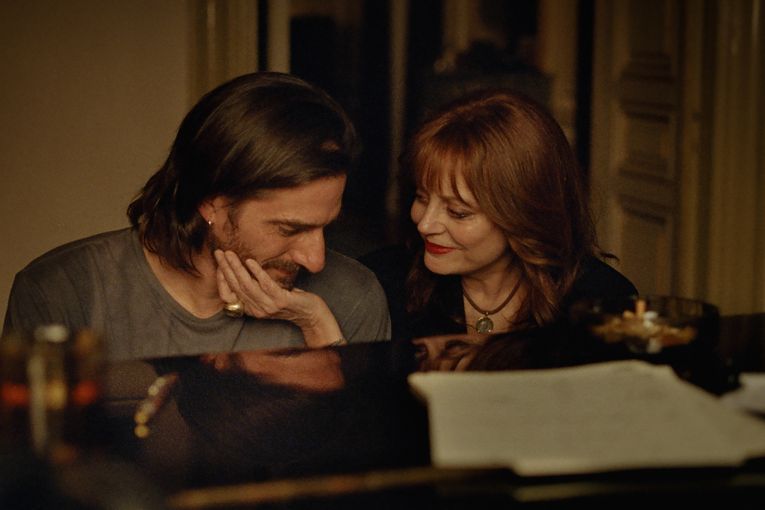
Hearing about Anderson’s discovery, American musicologist Vanessa Tonelli made contact and helped Anderson learn more about the composer.
Agatha, born with only one finger on her left hand, had been left at the orphanage on the day of her birth in 1712. A gifted soprano, Agatha joined the choir at the age of 11 and rose in the ranks to run the whole institution. Her position as musical director and manager granted her the privileges she needed to compose.
Tonelli was in Venice in early 2020 when COVID effectively shut down much of the world. She chose to stay in Venice, which was virtually locked down, and Tonelli had unfettered access to the libraries.
Tonelli’s academic life has long been focussed on “interactions between music, gender and disability studies in the early modern era”. Her research led her to the story of the orphaned female musicians of Venice’s charitable homes and ultimately to Agatha.
‘If we look at the music of Agatha, we see that it is the equivalent of any literate musician of that time’
“I strongly believe that this is a part of history that has been overlooked. That is, how much these women contributed to music,” says Tonelli.
“If we look at the music of Agatha, we see that it is the equivalent of any literate musician of that time. She knew what she was doing. She had the skills to be able to compose. It’s a very beautiful piece of music that demonstrates her knowledge of the musical techniques of that day.”
There was another lucky element to the story. Cameraman Bruce Inglis just happened to be in Europe when the choir premiered the cantata, so the moment was captured for the documentary. A London-based director Linda Brusasco joined Inglis on the shoot.
The first ever performance of the only surviving work written by an orphan of the Pietà. How could you ever regret taking on such a story?
Agatha’s Story airs on SBS on August 11 at 3.35pm and can also be seen on SBS On Demand. See the trailer here: vimeo.com/1211575048/f92347e533
Agatha’s Story documents the discovery of the manuscripts, the reconstruction of the Cantata and its European premiere with the Australian Chamber Choir in Venice. Agatha’s Cantata will be performed by the Australian Chamber Choir at Dunkeld, Victoria, on September 5 and in Melbourne on September 12 (To book, go to auschoir.org).
Catherine Hunter has for 40 years worked in the arts as a writer, producer and director. She was the arts producer on the Nine Network’s Sunday program from 1986 to 2006 and has since worked as a freelance director and producer. Recent films include Bronwyn Oliver: The Shadows Within, Jeffrey Smart and Australia’s Lost Impressionist: John Russell.
Want to see more stories from InDaily Qld in your Google search results?
- Click here to set InDaily Qld as a preferred source.
- Tick the box next to "InDaily Qld". That's it.
Free to share
This article may be shared online or in print under a Creative Commons licence