Young hearts run free … with Queensland Youth Symphony
Celebrating its 60th year, Queensland Youth Orchestras has inspired hundreds of young musicians like Queensland Youth Symphony clarinettist Annabelle Freeman to reach for the stars.
Attention is immediately drawn towards Queensland Youth Symphony’s (QYS) rehearsal in The Old Museum at Bowen Hills. Just one week before their major performance, Queensland Youth Orchestra’s director of music and conductor of QYS, Simon Hewett, is shaping Gustav Mahler’s Seventh Symphony, Song of the Night, finely tuning the orchestra and asking his musicians to reconsider how they approach passages in the lead up to the first of eight orchestral performances, starting this weekend and continuing to the end of October.
The brass suddenly deepens into a rich, resonant, register, its force creating an almost immediate sense of place and story. The sound seems to pull listeners beyond the rehearsal room and into the world Mahler has constructed. What initially feels like one enormous body of sound begins to reveal its individual parts.
For those unfamiliar with Queensland Youth Orchestras (QYO), it is Queensland’s major orchestral training organisation for young musicians aged 7 to 25. Founded in 1966, the organisation is now celebrating its 60th anniversary and brings together eight ensembles, from Junior Strings through to its senior QYS.
It is the relationships between instruments that makes the QYS rehearsal so compelling. These musicians are still developing the skills that will carry them into their future careers. Some are teenagers while others are young adults, with the orchestra bringing together musicians at different stages of their musical development.
On August 29, QYS will bring Nocturnal Visions and Mahler’s Seventh Symphony, Song of the Night, to Queensland Conservatorium Griffith University’s Conservatorium Theatre in South Brisbane. For many in the audience, it will be an opportunity to experience one of Mahler’s more enigmatic works performed by an orchestra of young Queensland musicians. For Hewett, the choice of Mahler’s work was not made lightly.
“I haven’t dared program it for QYS until this year,” explains Hewett. “In many respects, it is one of the hardest of Gustav Mahler’s symphonies.”
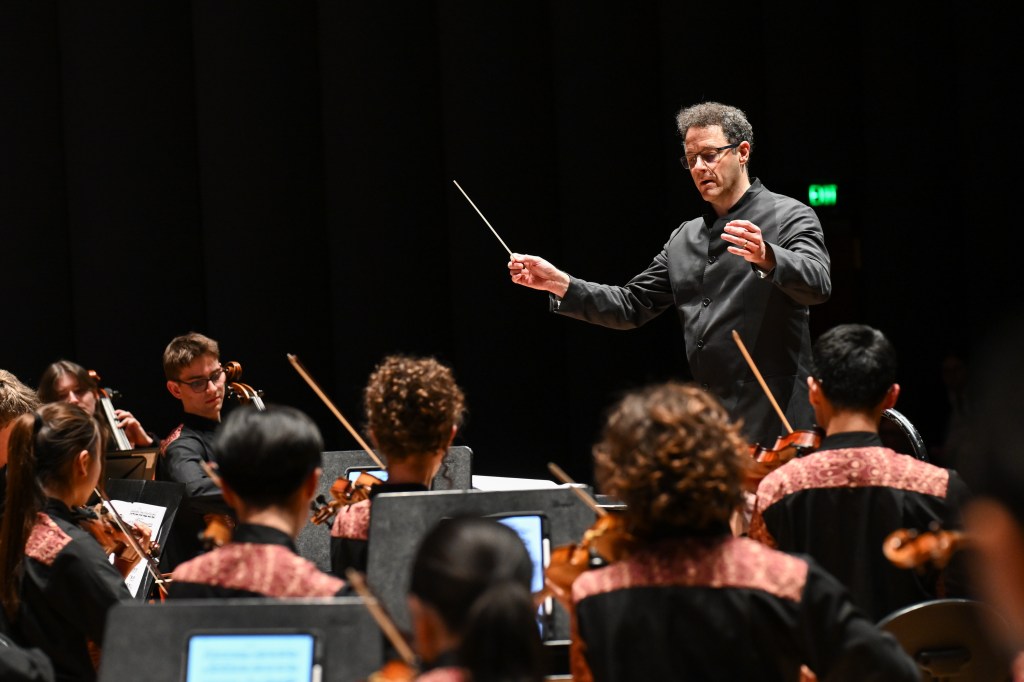
Rather than following a straightforward journey from darkness towards triumph, Hewett sees the Seventh as more cryptic in its association with night time – “the time when really all of us are perhaps at our most private moments”.
You might like


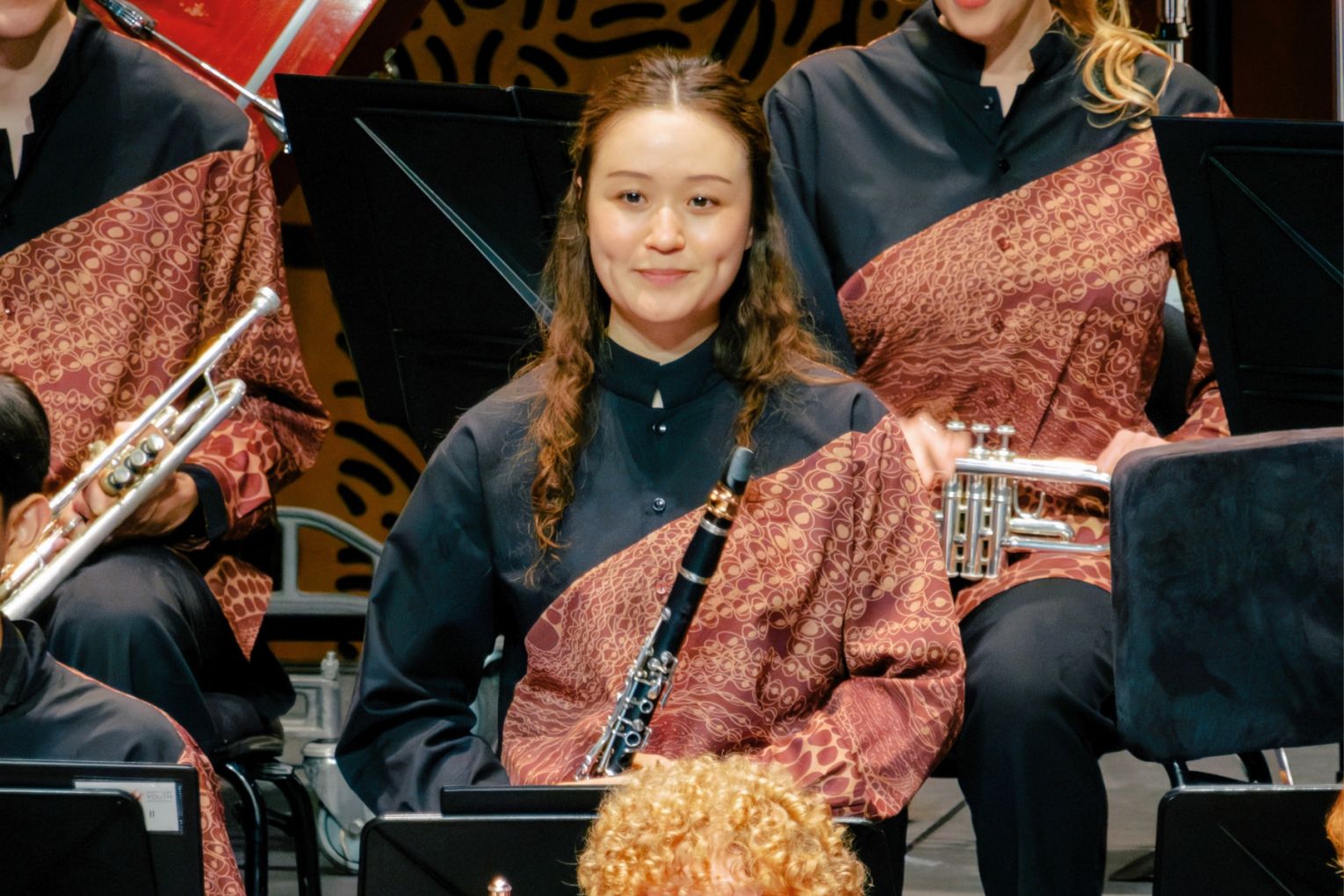
That interpretation becomes particularly apparent during rehearsal. Annabelle Freeman’s clarinet motif cuts through the orchestra, intricate and deceptively clever, threading itself through the heavier symphonic architecture around it.
‘It takes a lot of stamina and, at the end of it, I’m pretty puffed’
Freeman, 20, is a third-year University of Queensland music student who is set to graduate this year. She first joined QYO in 2018 on cello with QYO3, progressed to QYO2 in 2019 and later returned to QYO2 on clarinet. This year, she won the principal seat in QYS. Taking on Mahler’s Seventh has not been without its challenges.
“It was quite intimidating at first,” Freeman says after rehearsal. “It takes a lot of stamina and, at the end of it, I’m pretty puffed.”
QYS and QYO provide an experience that complements Freeman’s university studies. Although she is studying music at university, she says there are limits to how much orchestral experience she can gain through university alone.
“Doing this (with QYS) every week I have consistently been learning new things,” she says
The experience has also changed the way Freeman approaches making music with others. From learning how to play within an orchestra to sharing ideas and listening to those around her, she has found a sense of comfort in the familiarity of rehearsing together.
“It’s very wind focused,” she says. “I enjoy a lot of the brass heavy and loud moments in this movement. It’s an important reprieve and it’s really fun to play that little motif.”
The upcoming performance of Nocturnal Visions also carries personal significance. Her family will be in the audience, hearing Mahler’s Seventh for the first time.
“A lot of people probably haven’t heard it before, so I think it’s really cool to share that with people.”
Subscribe for updates
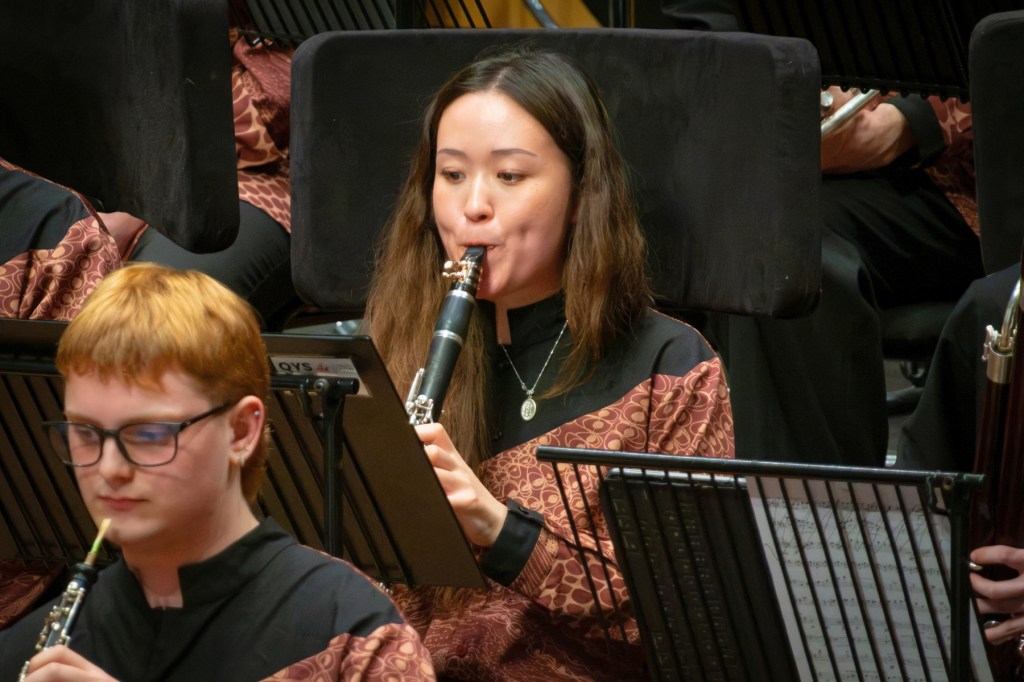
That ambition to share music extends beyond QYS. Freeman is also part of JATZ, a small chamber ensemble with a flute player and a bassoonist she has connected with through the same musical community. The group is set to perform at St Andrew’s Church on August 28, the day before Nocturnal Visions, another example of how musical relationships continue beyond the rehearsal room at QYO.
Freeman hopes those opportunities will continue after university. Her dream is to secure a position in a professional orchestra while continuing to teach privately and in schools. Looking ahead, she also hopes to continue studying clarinet in master’s programs in Australia or overseas, while performing with JATZ and pursuing other chamber music projects.
Behind QYO is a wide organisation of eight ensembles, each offering young musicians a different stage of musical development. In another rehearsal room, the Junior String Ensemble 2, conducted by Cherie Deacon, presents a very different atmosphere. The musicians are much younger, the energy is lighter and their eagerness fills the space.
As they work through their piece, the harmony between the lower bass instruments and the pitched violins becomes particularly noticeable. Even at this earlier stage, the musicians are learning that an orchestra is not simply a collection of individual performers. Each instrument has a role in shaping what the audience ultimately hears.
Simon Hewett adds that while QYO may help shape future professional musicians, producing professional performers is not the organisation’s primary purpose. For him, the greater value lies in what music gives young people along the way, from confidence and discipline to listening, empathy and a sense of belonging. The professional musicians who emerge from QYO are one outcome of a much broader musical community.
Hewett recalls the experience of young musicians discovering their place within the organisation and thinking, “Oh, I found my tribe.”
The organisation’s 60th anniversary year brings its ensembles together through a broad series of performances. Following Nocturnal Visions, audiences can see QYO concerts QYO Solo! on September 5, followed by Wind Ensemble on September 6.
On October 11, String Sensations – the John Curro National Youth Concerto Competition Finals Concert is on at The Old Museum Concert Hall before all eight ensembles of QYO come together on October 31 for the 60th anniversary concert, FINALE, at QPAC’s Concert Hall.
The breadth of the program reflects the growth young musicians can experience when they are given opportunities to perform at every stage. The younger musicians watch the senior orchestra and imagine themselves there.
This is what makes Queensland Youth Orchestras so compelling – across its concerts, rehearsals and ensembles, young musicians are being challenged to listen, respond, collaborate and discover. The real story is already being strung, plucked and breathed into tune — one symphony at a time.
Nocturnal Visions – Mahler 7 Song of the Night, Conservatorium Theatre, Queensland Conservatorium Griffith University, August 29, 7pm.
String Sensations – three outstanding finalists in the 51st John Curro National Youth Concerto Competition perform their chosen concertos with QYS, The Old Museum Concert Hall, Bowen Hills, October 11, 3pm.
FINALE – All eight QYO orchestras and ensembles perform highlights from their 2026 repertoire, QPAC Concert Hall, October 31.
This article was written as part of The Critical Writing Program, run in partnership with Queensland Writers Centre and InReview Queensland, supported by the Queensland Government through Arts Queensland, part of the Department of Education.
Want to see more stories from InDaily Qld in your Google search results?
- Click here to set InDaily Qld as a preferred source.
- Tick the box next to "InDaily Qld". That's it.
Free to share
This article may be shared online or in print under a Creative Commons licence