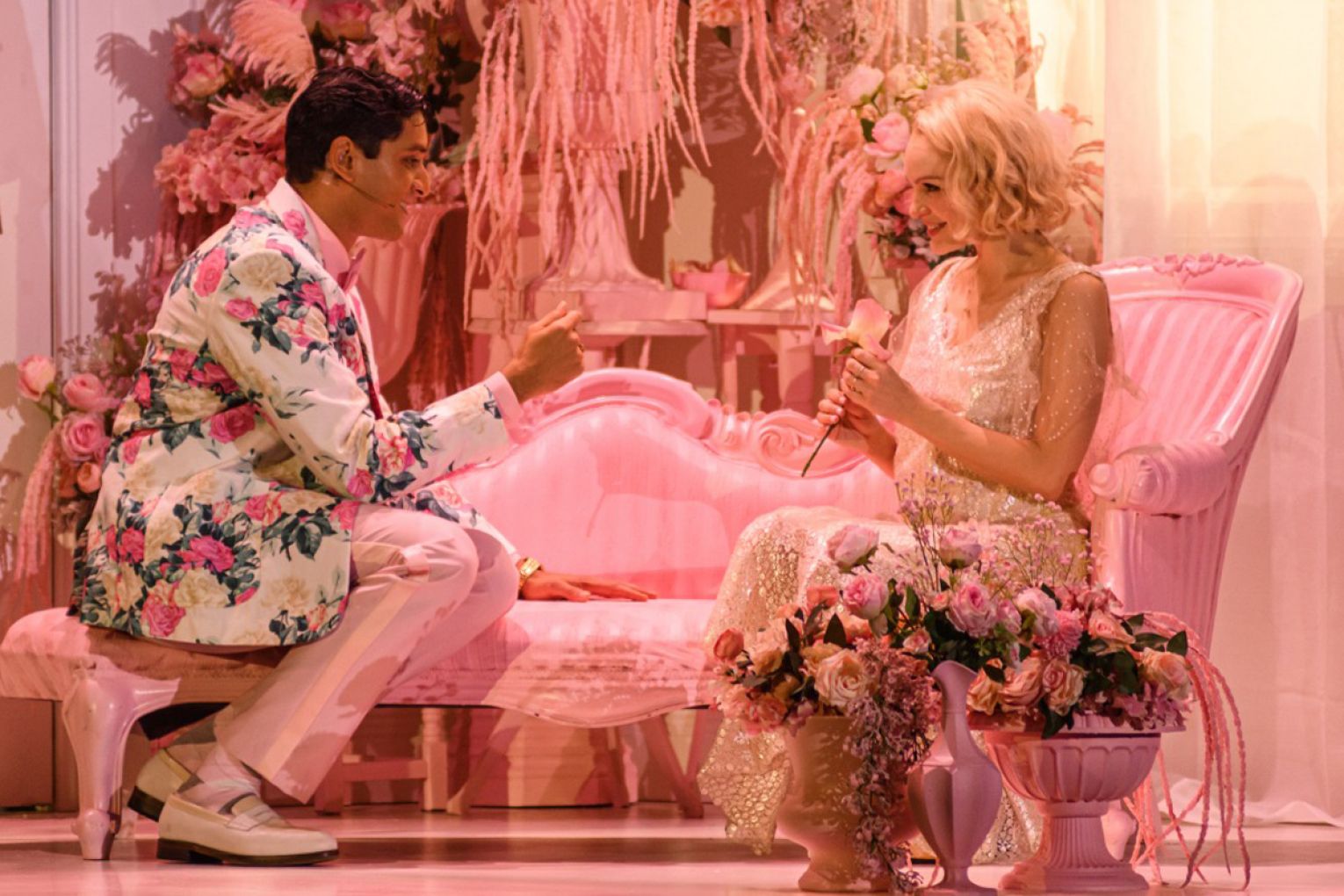
How to describe Queensland Theatre Company and Shake & Stir theatre Co’s adaptation of The Great Gatsby? Well, in a word … ambitious.
That word can be used as a double-edged sword – as I am doing here. Ambition means reaching for the stars or, in this case, reaching for the mysterious green light mentioned in F. Scott Fitzgerald’s iconic Jazz Age novel.
That green light does turn up in this stage version, but it’s a little unclear exactly what it means.
In the novel’s final lines, we read: “Gatsby believed in the green light, the orgastic future that year by year recedes before us. It eluded us then, but that’s no matter – tomorrow we will run faster stretch our arms out … And one fine morning – ”
I guess it’s all to do with hope.
And I hoped this production would be good and thankfully I wasn’t disappointed. It is excellent. It’s a new adaptation by Shake & Stir’s Nelle Lee and QTC’s Daniel Evans. With some fine tuning it would be perfect. But I don’t want to be too critical because I love what they are doing here.
The Great Gatsby was, and is, an important book and it has been given various treatments before.
You might like

As I said, it’s ambitious to tackle such an iconic book but Shake & Stir are masters of adapting classics. This collaboration makes sense for that reason. The play is directed by Evans and Shake & Stir’s Nick Skubij, who knows a thing or two about putting classic literature on stage.
I was hoping they would be true to the book and they are. I have a copy of The Cambridge Centennial Edition of The Great Gatsby on my desk (2025 was, after all, its centenary year) and I could not help checking the opening and closing lines of the book to see how true the production is to the text. Yep, all good there.
I mean, it’s not The Bible, but the text is sacred in its own way. This production honours that while it does stray a bit from the Jazz Age along the way.
Some of the music and dancing at Gatsby’s infamous parties, for example, was a bit modern for me and much as I love Hoagy Carmichael’s I Get Along Without You Very Well, it was written in 1939 which puts it well beyond the Jazz Age. Still, it was sung so beautifully by Loren Hunter that I can forgive that little deviation. It’s a gorgeous song and there’s some great music in the show.
It starts brilliantly with aspiring writer Nick Carraway (Ryan Hodson) at his typewriter reflecting on what is to come and what has been. It’s a gorgeous smoky vignette that sets things up beautifully.
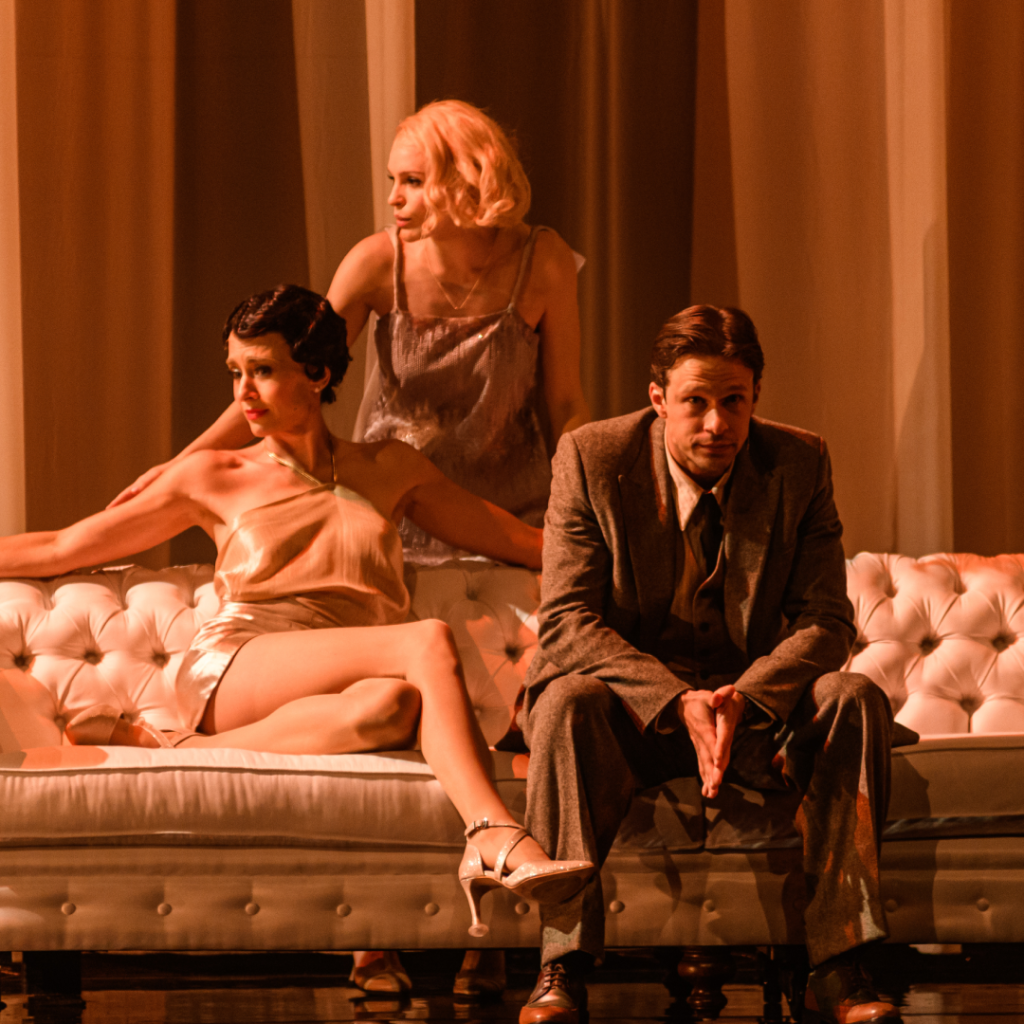
Hodson is excellent as the F. Scott Fitzgerald-ish narrator. The somewhat mysterious Jay Gatsby (is he a tycoon or a crook?) is played by Shiv Palekar, an actor of Indian descent. So, it’s a bit of Bridgerton casting here and it works a treat.
Palekar is a terrific Gatsby with class and sensitivity, and Jess Vickers is Daisy, the woman he loved, still loves and (spoiler alert) never attains completely.
Subscribe for updates
Her husband Tom is played by Jeremiah Wray, who is terrific as the insufferable and sometimes sympathetic cuckolded hubby. The rest of the cast is also excellent and Libby Munro’s turn as the thoroughly modern Jordan Baker is a standout. All class.
This stage version is a compelling retelling of the tale
The word Gatsby is a byword for glitz and glamour and Gatsby’s Long Island parties in the novel are legendary, but The Great Gatsby is not really a glamorous story – it’s actually more of a Jazz Age Greek tragedy and (spoiler alert) it doesn’t really have a happy ending.
It’s a metaphor for the morality and immorality of the age of prohibition and jazz. The blurb for the play says it brings the book “roaring to the stage in a stylish and scintillating adaptation where dreams shimmer then shatter, hearts beat achingly out of time and everyone’s chasing their own green light.”
There’s that bloody green light again.
In her introduction to the Cambridge Centennial Edition of the book Sarah Churchwell points out that the book wasn’t a success at the time. But “after the Great Depression and the Second World War, the novel’s elegiac sense that America kept betraying its own ideals seemed considerably more persuasive”.
Now we recognise it as one of the greatest novels ever written.
This stage version pays special attention to the lingering effects of the First World War in which Carraway and Gatsby both served. How could that experience not shape them?
Of course, Gatsby’s glamorous world is an illusion – one that Sarah Churchwell writes “he has created to impress Daisy”, the lover he lost when he went away to war. Now he’s trying to win her back and he almost does, until tragedy intervenes.
This stage version is a compelling retelling of the tale with brilliant sets and costume design by Christina Smith. It will make you want to read the book again and maybe watch Baz Luhrmann’s film again too, but this is not Luhrmann’s film on stage.
This is a new take that honours the original and presents it for a 21st century audience who lapped it up on opening night. You should see it. It’s important and edifying but perhaps most importantly, very entertaining. The green light means go.
The Great Gatsby continues at the Playhouse, QPAC, until March 8.
qpac.com.au/whats-on/2026/queensland-theatre-company-the-great-gatsby
Want to see more stories from InDaily Qld in your Google search results?
- Click here to set InDaily Qld as a preferred source.
- Tick the box next to "InDaily Qld". That's it.
Free to share
This article may be shared online or in print under a Creative Commons licence