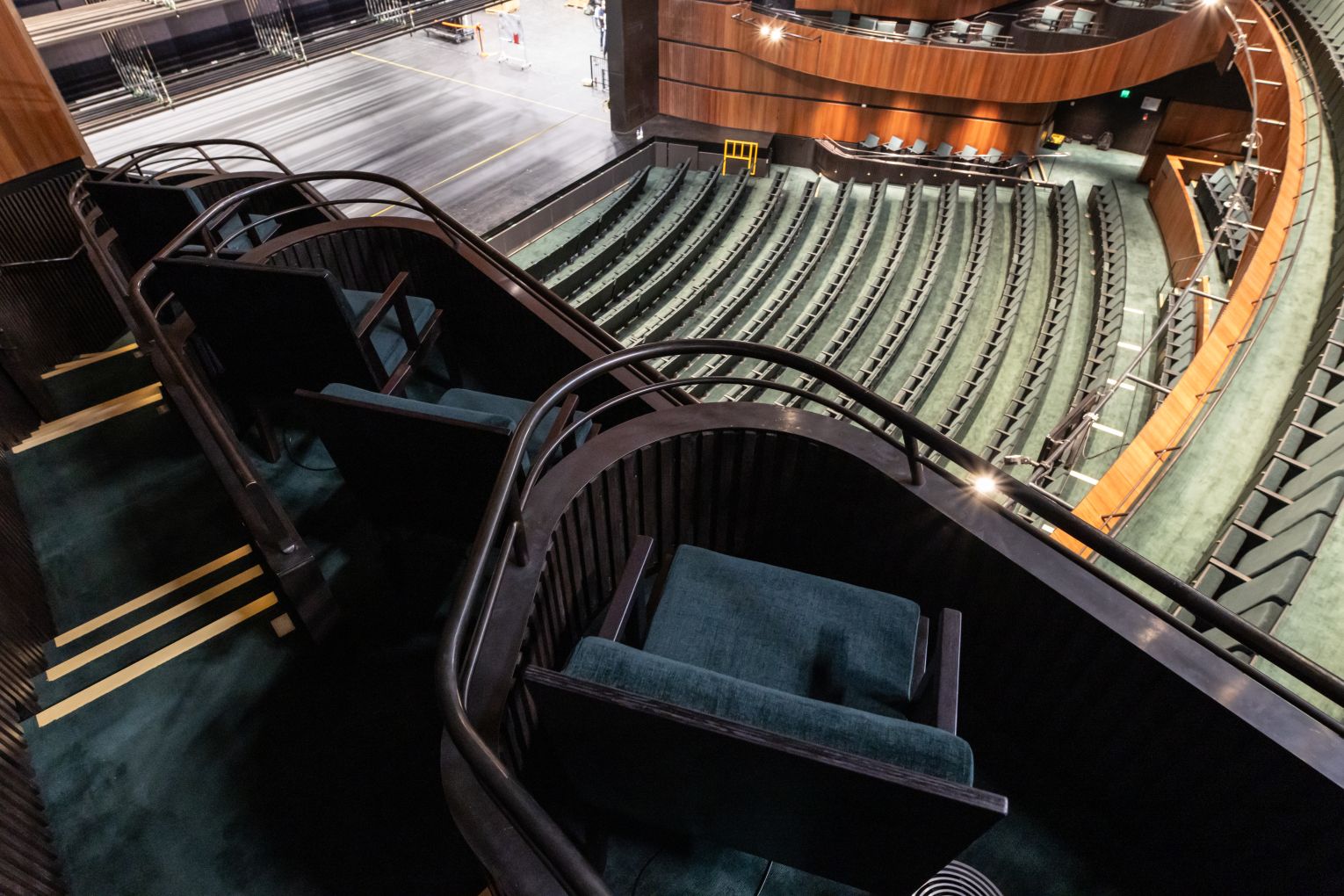
I have seen the future of QPAC. It looks good, smells great (that smell of newness pervades) and apparently there are no bad seats. That’s a big call, but on a tour inside the swanky new Glasshouse Theatre it seems to be true.
Our tour guide is executive director venue infrastructure and production services Bill Jessop. He is, as they say, the man. A fellow executive assures me that this $184 million addition to QPAC, built on what looked to be a far too small patch of green grass on the corner of Grey and Russell streets, South Brisbane, would not be what it is without Jessop, who has four decades experience in running QPAC’s theatres and ironing out kinks.
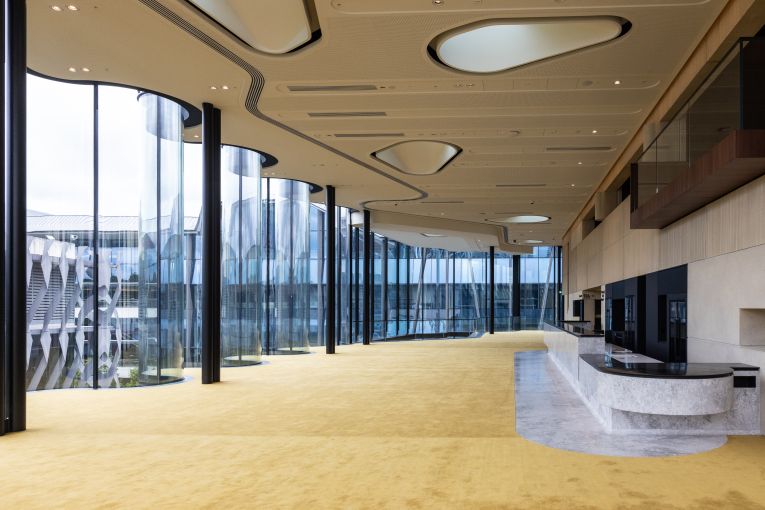
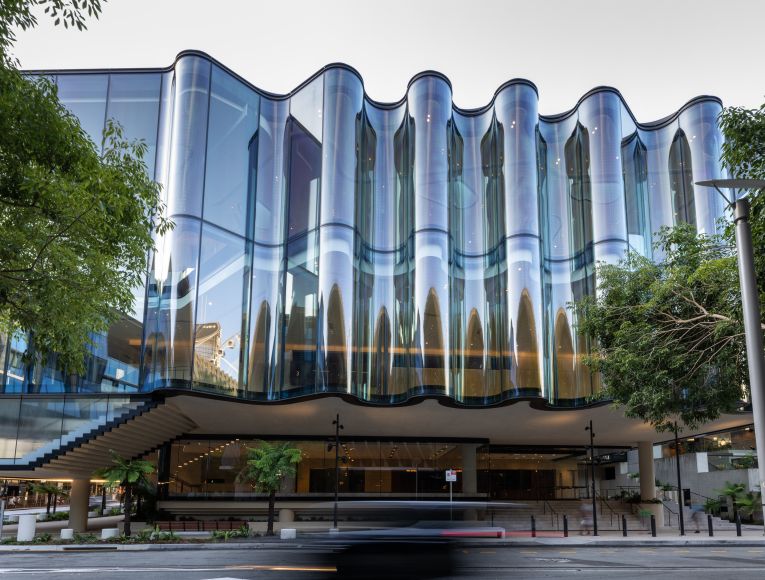
He seems immensely proud of this amazing building with its wavy glass facade. Designed by Brisbane-based architects Blight Rayner, in collaboration with Snohetta in Oslo, it is a masterpiece.
That already iconic curved glass façade, which is unprecedented in scale and sophistication, is transparent in order to amplify a sense of welcoming. The waves and ripples in the glass symbolise the Brisbane River nearby and is also a nod to the flowing lines of theatre drapes and stage curtains.
 Inside it feels warm and welcoming and surprisingly spacious, considering how small that patch of greenery appeared. It certainly seemed too small for a new theatre and there were many naysayers, but Jessop and former QPAC chief executive John Kotzas were determined and over more than a decade it was brought to fruition. It was a couple of years late, but all that is forgotten as we wander, awe-struck, inside.
As for that bit about there being no bad seats, Jessop takes our small group to the nosebleed section up the back of the balcony and from here there is an uninterrupted view of the stage, which seems close enough to touch.
You might like
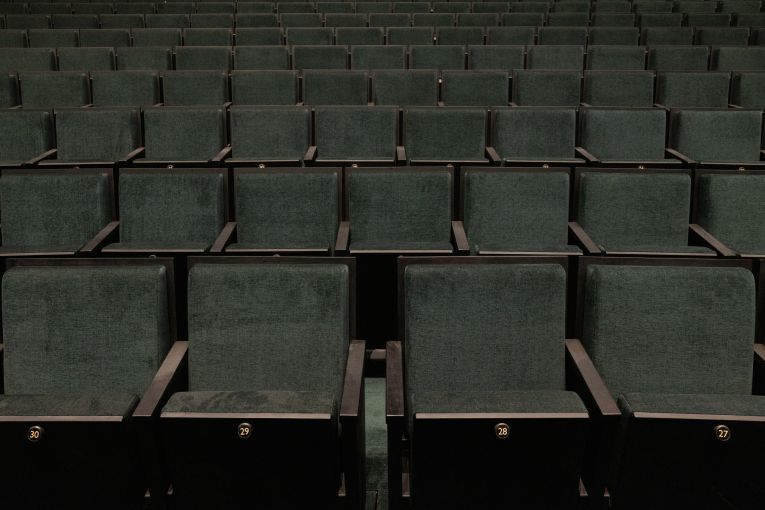
Intimacy was a main aim, even with 1500 seats. And those seats are comfortable. We are surprised to learn that after a global search Bogota was chosen as the place that would supply them. No jokes about cocaine, please – although we did make some jokes on the tour.
More than 3000 square metres of carpet has been laid in front of house, foyer and auditorium. The carpet colour is custom dark green, developed specially for the project, and is a reference to the Queensland rainforests.
The seats are a slightly lighter green. When you sit on them, do not be surprised to feel cool air emanating from below. Displacement airconditioning (flowing from under seats rather than overhead) allows for greater efficiency and control, further assisted by digital lighting.
 Jessop and Kotzas were very thorough working out what they wanted and scoured the world for ideas. As Jessop points out, they went to London to consult Sir Cameron Mackintosh, who owns a swag of theatres and knows a thing or two about making them work.
He advised wrapping audience seating around the stage and bringing the back wall of the auditorium closer to ensure an intimate experience for both audiences and artists.
Gazing down into the orchestra pit, Jessop explains that it is state-of-the-art and features full surround-absorbent panels, allowing for better sound control and protection for musicians. A reduced overhang of the stage creates better sound travel and visibility of the orchestra. Maybe we will not have to crane our necks quite so much to get a glimpse of them when they take their bows.
Back of house is as impressive as front of house and artists performing here have spacious dressing rooms and they can move comfortably around in their own special spaces.
Subscribe for updates
In a previous article I did highlight the fact that there are more women’s loos – 40 per cent more than the Lyric Theatre which, considering the queues there, is a good thing. The loos will soon be stress-tested by being all flushed together – an event that is being described as The Great Flush. Stay tuned and we will tell you how it goes.
And, in case you think I am being superficial or flippant by focussing on the loos, let me tell you that the increase in loos is integral to an enjoyable night at the theatre.
Inside the theatre the timber finishing makes for a relaxing ambience. Locally sourced sustainable materials have been used including Queensland Grey Ironbark and cross-laminate timber flooring throughout the auditorium.
Respect for the site design and the vision of the original Queensland Cultural Precinct architect Robin Gibson means the adoption of cubic forms, retention of existing fabric, continuation of the established grid and spatial hierarchies and a minimal palette of materials. In other words – respect.
The 1500-seat auditorium has the potential to host an additional 300,000 visitors annually, increasing QPAC’s visitation to 1.6 million visitors per annum.
Some of us will get our first experience of what it’s like to watch a performance here at a Gala Opening on March 12, with an evening of performances from some of our major companies, led by Queensland Theatre Company’s artistic director Daniel Evans.
But you can have a gander inside before then at a free Community Day on Saturday, March 7, from 9am to 4.30pm. Community Day visitors are invited to explore Australia’s newest theatre with a limited number of guided tours also on offer. Audiences will also be treated to pop-up performances and the Glasshouse Theatre’s two bars will be open. (The bars are spacious and swish.)
Following the Community Day, Glasshouse Theatre’s opening season will showcase the best local, national and international talent and comprises Queensland Ballet’s Messa da Requiem (March 27 to April 4); the Australian exclusive season of The Last Ship, composed by and starring Sting (April 9 to May 3); and the world premiere of The Drover’s Wife – The Opera (May 13 to 22), directed by Leah Purcell, composed by George Palmer with libretto by Purcell with George Palmer.
And when you arrive you will not miss Queensland artist Brian Robinson’s massive sculpture Floriate, a 4m-high bronze inspired by Queensland’s native flora and its connection to First Nations People. (Robinson has Torres Strait Islander heritage.)
So, that’s your new theatre folks – what do you think?
Want to see more stories from InDaily Qld in your Google search results?
- Click here to set InDaily Qld as a preferred source.
- Tick the box next to "InDaily Qld". That's it.
Free to share
This article may be shared online or in print under a Creative Commons licence