The shape of things: When mess, memory and meaning is by Law
In an entertaining essay, author and screenwriter Benjamin Law explains his exploration of family, legacy and the things we hold onto — literally – that influenced the Queenslander’s breakout stage comedy, Torch the Place.

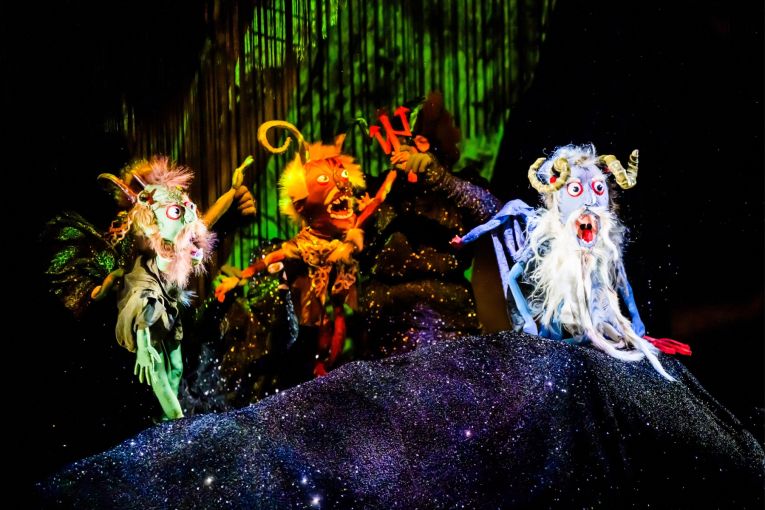
Benjamin Law is one of Australia’s sharpest and funniest social commentators, acclaimed for his bestselling books The Family Law and Gaysia and TV creations The Family Law and Wellmania. When he turned his gaze to the stage for his first mainstage play, Torch the Place, Law brought the same wit, empathy and cultural insight to a story inspired by his family’s experiences with compulsive hoarding. In this personal essay, he traces the roots of that inspiration and how mess, memory and meaning can shape the stories we tell.
As a kid on the Sunshine Coast, I was incapable of letting physical objects go. If I made a masterpiece out of playdough, my triumph was quickly replaced by panic. How could I keep this forever?
When I got my school’s Aussie of the Month award – a golden badge we got to wear for a month, then pass onto the next winner – I cried when I had to relinquish it.
 I anthropomorphised plush animals – my Keroppi doll from Hong Kong; my plush killer whale from Sea World – and slept with them until they took over my bed (well into my teens). Maybe it was a childhood response to the fear of oblivion. Because if something can’t be kept or preserved forever, what’s the point of existence? Look, I was a pretty intense kid.
Eventually I grew out of it, but then I was growing up with it. Like so many migrant Australians, my parents struggled to let things go, too. In my memoir, The Family Law, I wrote about living with compulsive hoarding before I knew how to name it.
You might like

“We were sentimental to the point where it became pathological,” I wrote. “We kept everything: every book we ever read, all the tennis trophies and tenpin bowling medals we won. Things accumulated like plaque, growing out ramshackle from the walls. As we grew, the house contracted. We found ourselves tiptoeing around piles of ancient magazines and shoeboxes of old school projects, and I became too embarrassed to have friends sleep over.”
In adulthood, I discovered this was small fry compared to some of my friends’ experiences. One friend’s parents’ hoarding got so bad, the parents began to smell. Another’s parents hoarded living animals.
Even if you’re not one of the estimated 1.2 million (not a typo) Australians living with compulsive hoarding, you’ve probably witnessed it. The local house with trolleys and rusted car shells in the yard. All the TV specials, from Oprah to Marie Kondo. (Admission: I really like Marie Kondo.)
Shock reality TV horrors like Hoarders (YouTube link below), Buried Alive, Britain’s Biggest Hoarders, The Hoarder Next Door, Hoarders: Family Secrets … you get the idea. There’s ghoulish delight in seeing how bad things can get, replaced with a prim satisfaction at seeing epic messes so promptly cleaned up.
Subscribe for updates
But for many hoarders, swift clean-outs are dangerous. Some report emotional distress at similar levels to those who’ve experienced sexual assault. Suicides happen in the aftermath. Yet, at the same time, it’s also paramount these people live with hygiene, safety and dignity. It’s a diabolical catch-22.
In order to help, we must understand. In their 2010 book, Stuff: Compulsive Hoarding and the Meaning of Things, Dr Gail Steketee and Dr Randy O. Frost wrote that, until recently, we didn’t know what led to compulsive hoarding, let alone avenues for treatment. This has led to false assumptions taking hold, like the idea hoarders must come from lives of deprivation: a response to a mindset of frugality in a world of abundance. (Not true. There are plenty of rich hoarders.)
We assume hoarders are untidy and slovenly. But hoarders have almost medical-level concerns about hygiene and tidiness, though obviously to their own unique criteria. What is true is that the root cause of compulsive hoarding is usually trauma. People who hoard don’t have broken minds. They have broken hearts.
There’s also another way of looking at compulsive hoarding: that the mind of a compulsive hoarder has its own magnificence. Those who hoard imbue objects with meaning others simply miss. In objects that would be considered useless to anyone else – mundane items others would regard as trash – hoarders can see a million different uses, myriad reasons why they’re special, and have countless stories behind their origin.
“Hoarders do appear to think in more complex ways,” Steketee and Frost write. “In particular, their minds seem flooded with details about possessions that the rest of us overlook.”
Which is why I can’t judge. Full admission: I’m still a hoarder, too. All writers are. Not of physical objects anymore, but of collected stories, anecdotes and details. Writers obsessively file and archive and stow away notes – just in case – which is classic hoarding behaviour, when you think about it. All of us working in a similar pursuit, of finding some meaning in this grand mess that is life.
Torch the Place plays the Bille Brown Theatre, South Brisbane, March 10 to 29.
Want to see more stories from InDaily Qld in your Google search results?
- Click here to set InDaily Qld as a preferred source.
- Tick the box next to "InDaily Qld". That's it.
Free to share
This article may be shared online or in print under a Creative Commons licence