The majesty of the master continues to resonate
The landscapes of William Robinson are a wonderful legacy and an exhibition at Philp Bacon Galleries celebrates that.
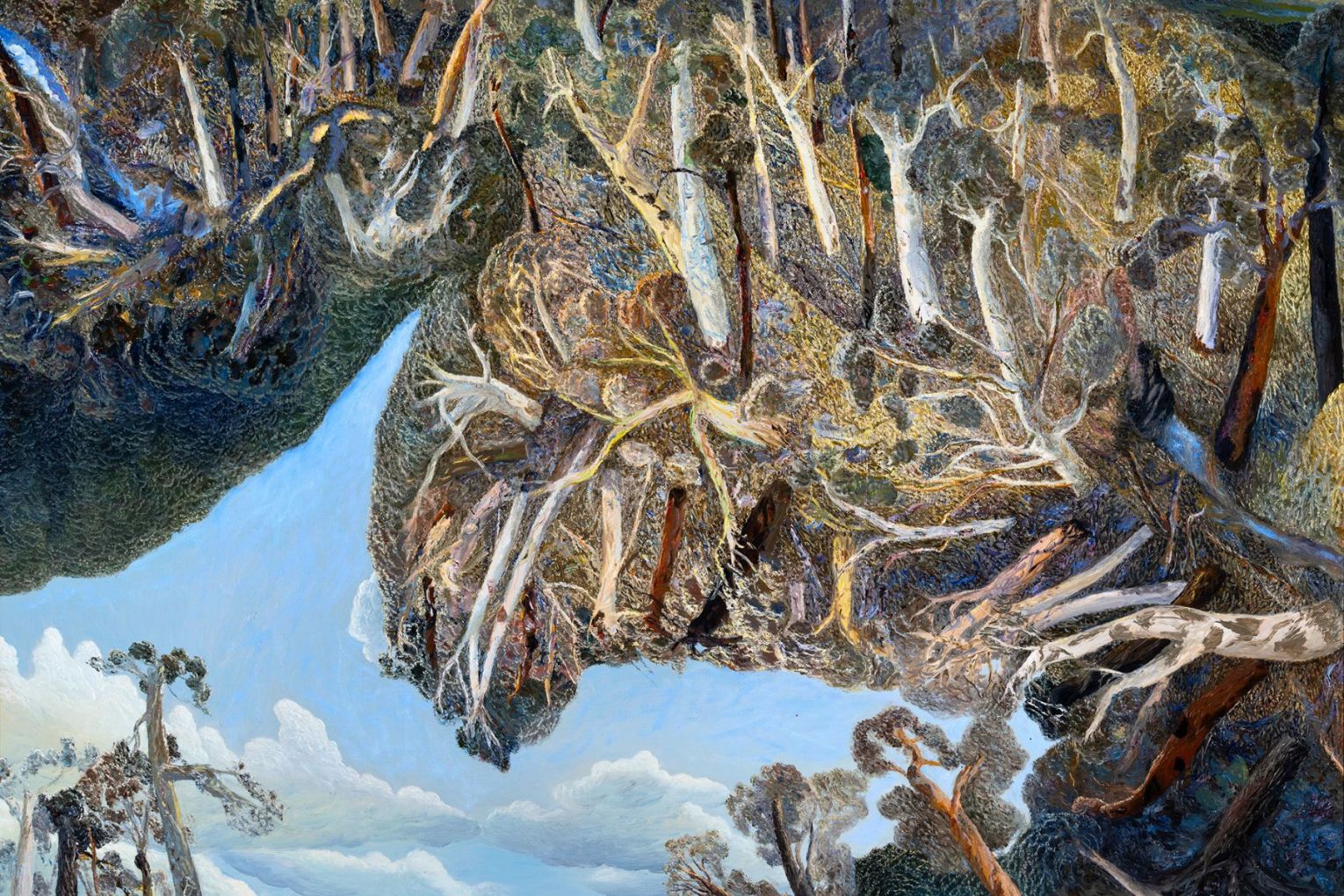
When art critic Giles Auty declared Queensland artist William Robinson a genius a couple of decades or so ago, some people greeted that declaration with raised eyebrows.
Writing in The Australian about one of Robinson’s magnificent Creation Landscapes, Auty made what some thought was a big call. One that went against the dominant paradigm, which insisted that all the talented artists lived south of the border.
Turns out that Auty was right, of course, and over the course of the following decades the genius of William Robinson has been recognised widely. Not that it is something the artist, who died last year at the age of 89, would have worried too much about.
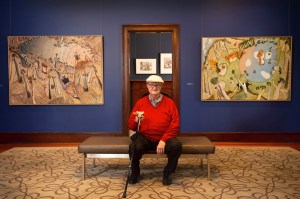
Robinson was never one for the art limelight or the salon – he was a family man primarily and an artist who dedicated himself to his art in the same way the masters have always done.
He was not just a landscape painter – he was a two-time winner of the Archibald Prize for Portraiture – but his landscapes hold a special place in his oeuvre. And right now, you can see a majestic exhibition of them at Philip Bacon Galleries, where William Robinson: Landscapes celebrates his legacy.
You might like
I was lucky enough to get to know Bill, as his friends knew him, over the past couple of decades, and I treasure the memory of our conversations. Bill was a quiet, thoughtful man who eschewed the art world, to a degree to concentrate on his work.
In the catalogue for this exhibition Louise Martin-Chew points out that he was too busy teaching, raising a family and painting to travel overseas, which was once a rite of passage for any Australian artist.
the environments in which he lived were sufficient, inspiring the innovative viewpoints within his landscape paintings
But why would he have had to travel, anyway, when he had everything he needed close to hand, including the landscapes of the Border Ranges that have made him famous?
“While he died in August 2025, his achievements continue to echo in the spaces created across his canvases,” Martin-Chew writes. “Yet for Robinson, who did not travel overseas until he retired from a teaching role at Queensland College of Art (aged 53 in 1989) the environments in which he lived were sufficient, inspiring the innovative viewpoints within his landscape paintings.
“They become journeys which conduct memory, time, and knowledge alongside his close personal observations. In them we experience the spiritual qualities of these environments; Robinson’s detailed assays become a quietly passionate paen for nature. They frame a vision which is both personal and universal, with the potential ‘to configure might be’.” (That phrase is taken from a poem by David Malouf.)
Subscribe for updates
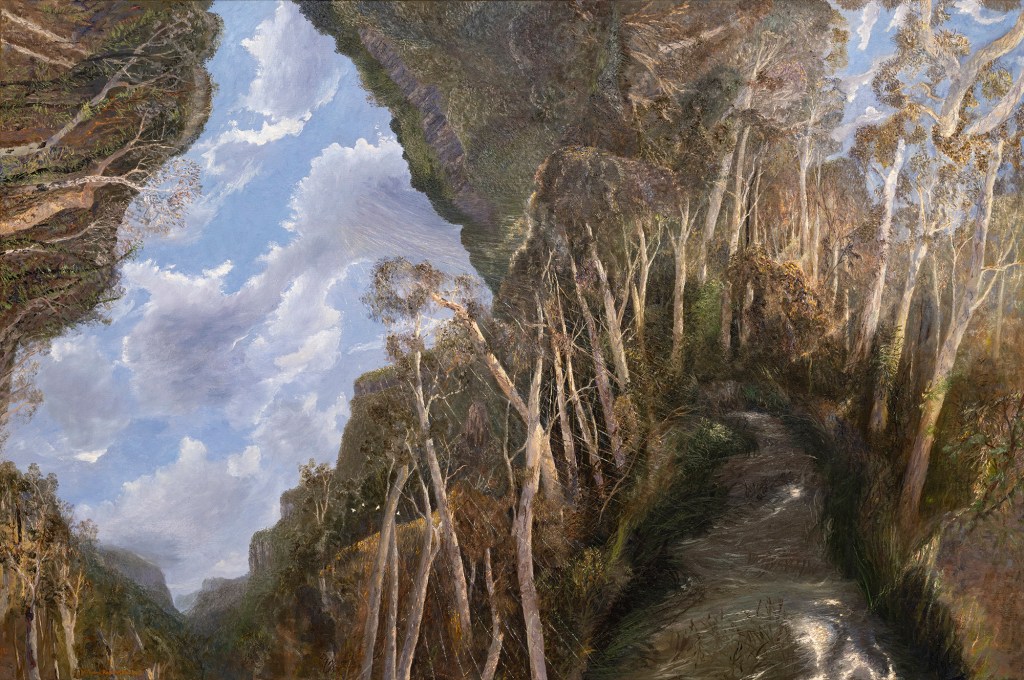
His vertiginous vision of those landscapes is unique. As for the spiritual aspect … yes, that is there but not in any insipid New Age fashion.
Robinson unabashedly painted creation as a homage to the creator. We are talking about the rainforest area of Beechmont in the Gold Coast hinterland and the coast around Kingscliff, in particular, although this exhibition also includes Carnarvon Gorge. Earlier on he recorded life on acreage at Birkdale with his famous farmyard paintings.
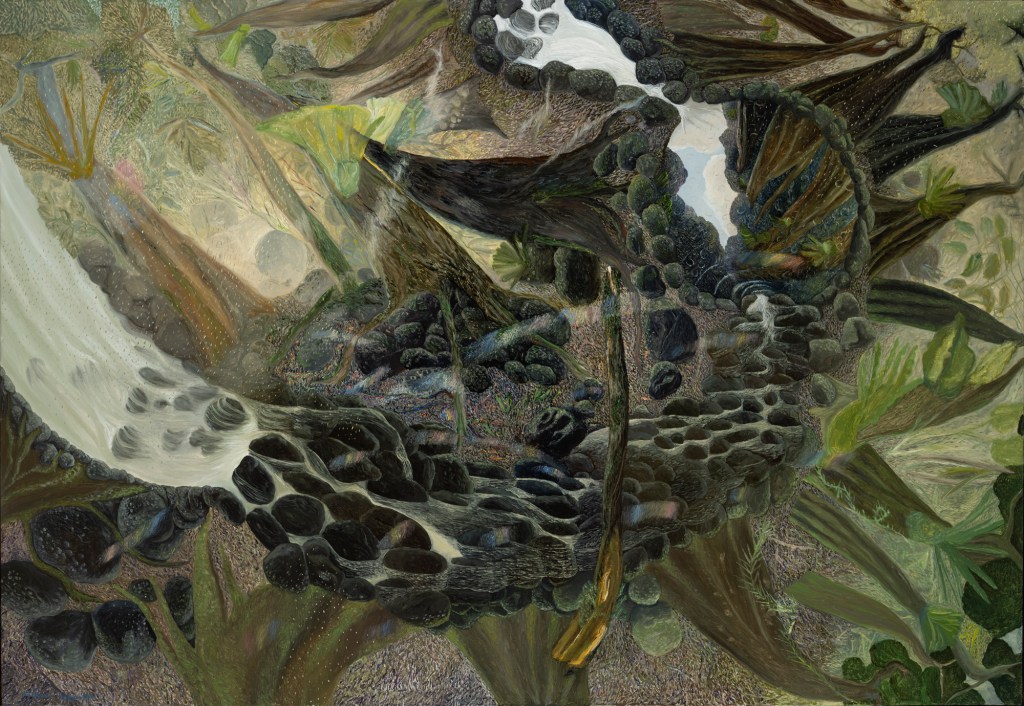
But this current exhibition is all about landscapes. In Nerang River, after rain, painted in 2003, we see the rushing river, the forest, the mountains and a patch of sky – all seen in a perspective that subverted traditional landscape painting while honouring it too.
Everyday landscape, Beechmont, is anything but. No-one saw that landscape the way Robinson did.
There are 16 works in this show – 15 oil paintings and one pastel.
It’s incredibly special to experience these works so soon after the artists’ death. He holds a special place in the world of art and in the hearts of all who knew him. And he has left us with these magisterial landscapes that transcend time and space and go way beyond a mere record of what he saw.
“The breadth and ramifications of Robinson’s legacy are yet to be fully explored,” Martin-Chew writes.
So, let’s continue that exploration and celebrate his genius. And enjoy this exhibition … it will take your breath away.
William Robinson: Landscapes continues at Philip Bacon Galleries, Fortitude Valley, until May 16.
Want to see more stories from InDaily Qld in your Google search results?
- Click here to set InDaily Qld as a preferred source.
- Tick the box next to "InDaily Qld". That's it.
Free to share
This article may be shared online or in print under a Creative Commons licence