Strange bedfellows make for perfect harmony
Two artists with very different approaches seem strangely simpatico at Jan Murphy Gallery.
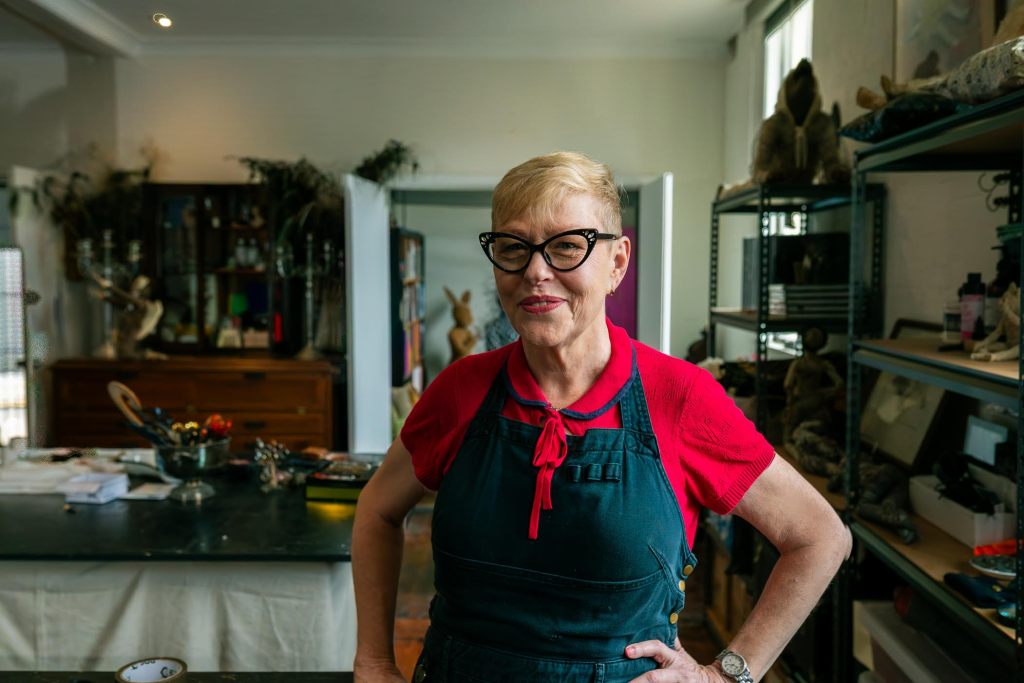
Linde Ivimey uses physical remains – bones (largely from chicken), teeth, hair, fabric and other discarded materials – to construct figures that venerate “the ordinary and the disposable”.
In her hands these materials are recreated anew to exude the sensibility of small and gendered individuals, as though the experiences inherent in their material past is carried forward to express particular personalities.
“Boys and girls are different creatures … and they fight to be their own way,” she states in a video filmed about the exhibition.
This show remembers Ivimey’s mother Maureen whose recent death, at age 91, has inspired many of these works, along with a variation in her materials.
-
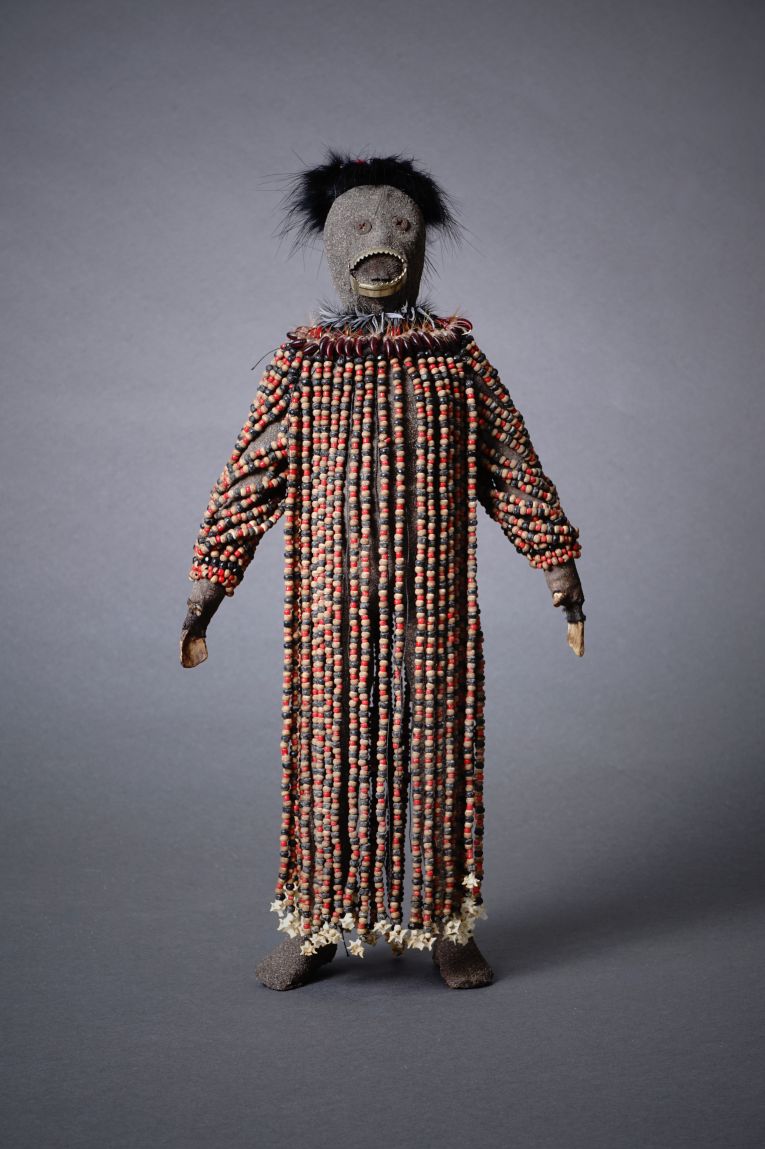 Linde Ivimey’s Brother One (steel armature, acrylic, resin, glass, feather, flies, bird and snake bones).
-
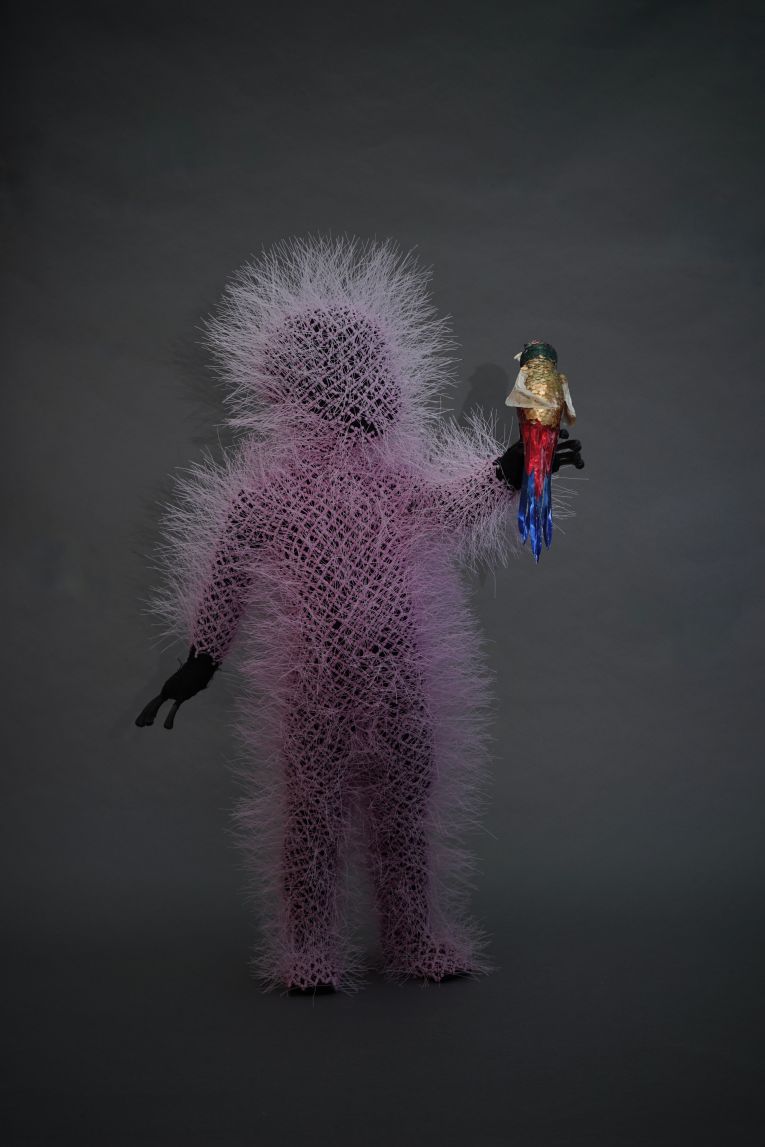 Linde Ivimey’s I will remember you (2026) made from acrylic, resin, cement, dyed cotton, bird and natural fish bones and dog teeth.
You might like
Maureen was involved in assisting Ivimey with preparation of materials throughout her sculptural career, notably the chicken bones, which she would meticulously clean and return to Ivimey. Ivimey says “her demise is one of the reasons I have changed materials a bit”.
“I have started using the tiny plastic zip ties, the type that attach clothing tags,” she says.
These are woven into the exoskeleton of her figures, which also include beetle wings, gems, animal gut and bones, sometimes cast in metal. In works such as I will remember you (2026), a small figure stands holding a sequinned macaw.
Plastic fibres extend from all over the figure like an aura, given a soft pink glow by their colour. For Ivimey, the plastic fibres create the “weave to be much finer”. “And it saves me time not spent cleaning bone,” she says.
Most of these works are small and allowed Ivimey to carry them with her when she was caring for her mother. In their poignant evocation of babies, children and the youth, Silver shot (2026), they also carry family memories, with the macaw a bird gifted through a friend.
Subscribe for updates
Feathers plucked from this bird by her brother became part of Ivimey’s earliest sculptural explorations. Dolore (2025) – Italian for pain – is an individual that’s 42cm high. She leans forward with a shower head cascading Austrian crystal beads all the way to the floor. Her fingers are entwined in the beads, as though seeking to slow their flow. On her back a red gas tap is centrally placed, like a mechanism for turning off the grief.
Twinning is a touchstone in Ivimey’s practice, often relating to the dualities in personal identity, but also health and fragility, and in this exhibition distinct doubles include Little Jo (2026) and Midnight (2026), similarly sized figures in white and black respectively.
Gemelli (2026) is two baby-sized figures, sitting on the floor face to face and hand to hand, their white auras locking together. Brother one (2025) and Brother two (2025) appear as though from a different register to much of the show. Although, inspired by saints Peter and Andrew, they continue themes central to her oeuvre – with exposed faces and open mouths constructed from snake bones. Their unsettling appearances perhaps acknowledge what Simone de Beauvoir described as the “unjustifiable violation” of death in her 1965 book, A Very Easy Death.
The resonance in these figures is gleaned from the history of their materials, invested with an almost alchemical sense of transformation and recreation.
“Almost everything I use has had a life before it reaches my hands,” Ivimey says. “This history becomes part of each sculpture’s character and, in their coming together, the works begin to operate as charms, shaped through accumulation, intuition and care.”
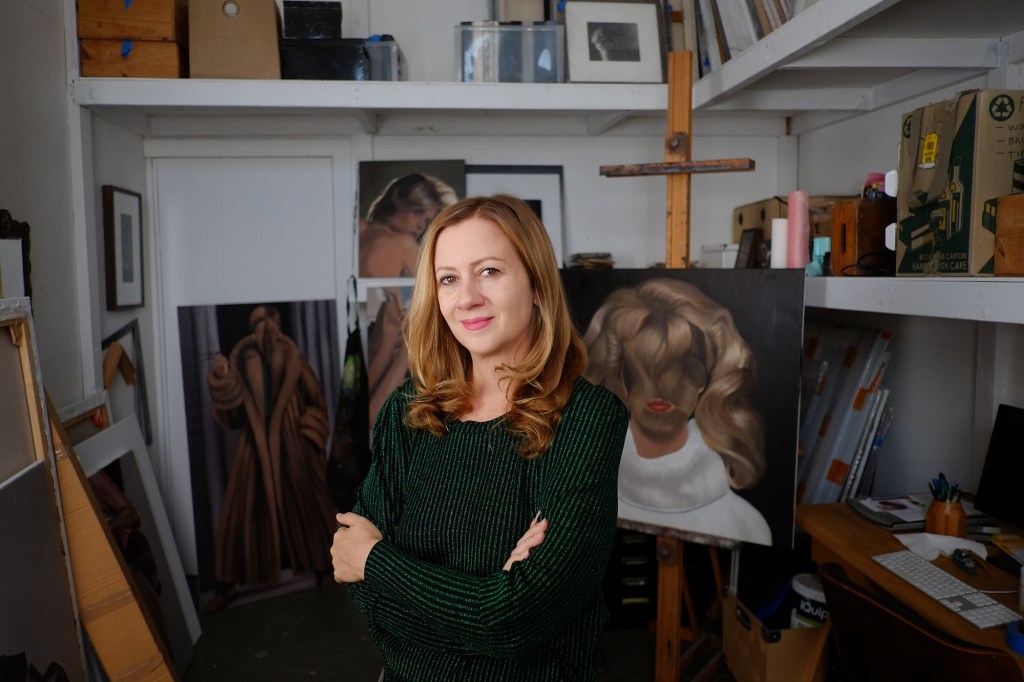
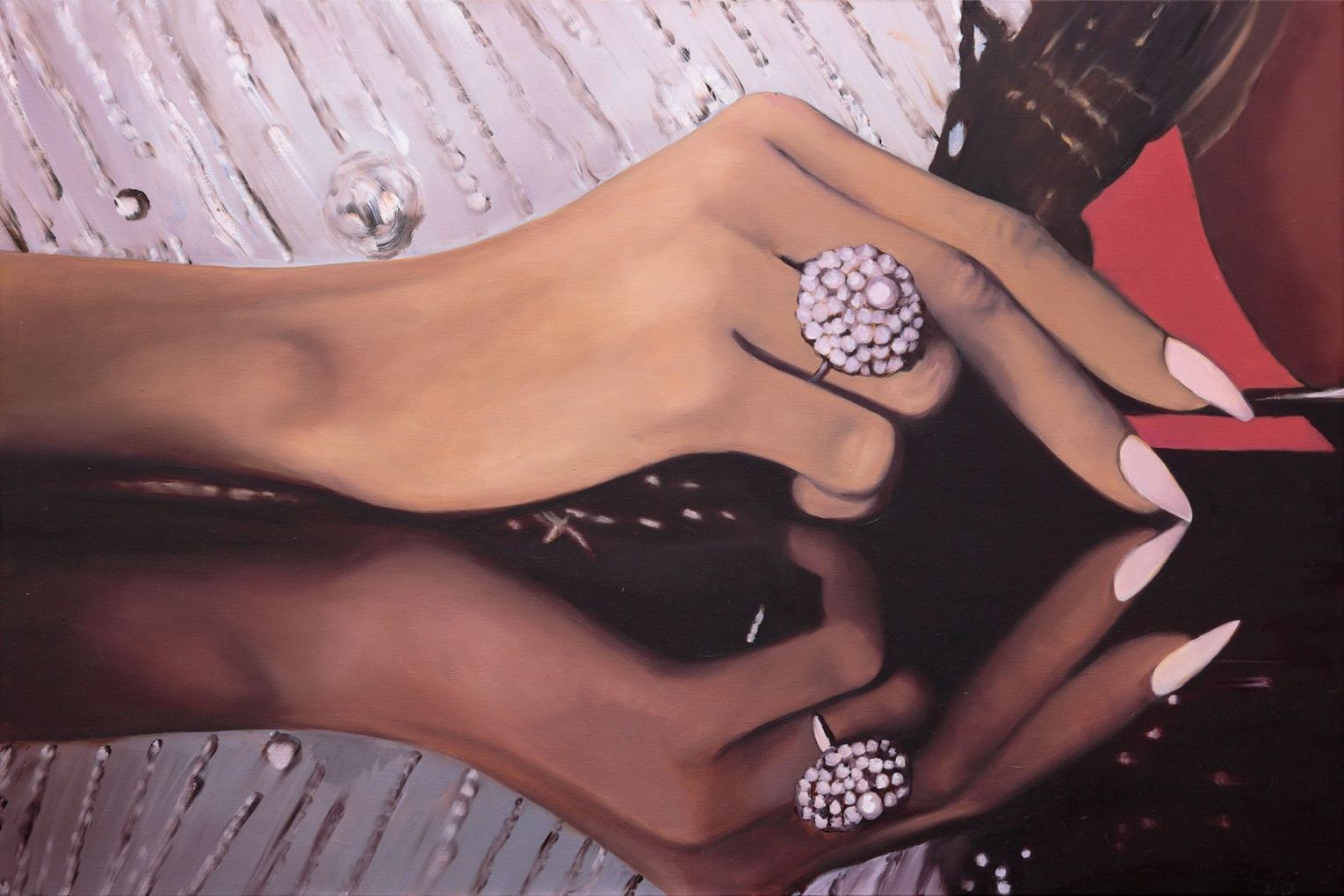
Murphy has paired Ivimey’s sculpture exhibition with paintings by Heidi Yardley, whose work is informed by the uncanny, images drawn from vintage magazines from the 1960s and 1970s.
Hair, hands and gloves feature prominently, with My favourite stranger (2022) casting a bluish light over a woman’s face, her mouth obscured by a red amorphous shape (like unconscious speech). Venus in furs (2025) depicts a woman wearing a coat with its many folds echoed in the curtains behind her. Her face is concealed with fur as though her body is possessed by the animal she wears.
These paintings Yardley describes as “emotional terrains…” Material from the 1970s is used, she says, “not to illustrate nostalgia but to unsettle it and expose the latent tensions, desires and anxieties embedded in images of glamour and femininity.”
Together these exhibitions become a powerfully intuitive exploration of potential forces beyond the conscious, the “brittle, uncanny and faintly menacing” sensibility in Yardley’s paintings a counterpoint to Ivimey’s evocatively emotional individuals that all but breathe with passionate intensity invested in their three dimensions.
Linde Ivimey’s I will remember you and Heidi Yardley’s Trick of the light are on show at Jan Murphy Gallery, Fortitude Valley, June 10 to July 4.
Want to see more stories from InDaily Qld in your Google search results?
- Click here to set InDaily Qld as a preferred source.
- Tick the box next to "InDaily Qld". That's it.
Free to share
This article may be shared online or in print under a Creative Commons licence