Chasing the possum’s tale to a better world
FireWorks Gallery director Michael Eather calls renowned First Nations artist Michael Nelson Jagamara a ‘bridge builder’, as a new retrospective of the artist’s work reveals.
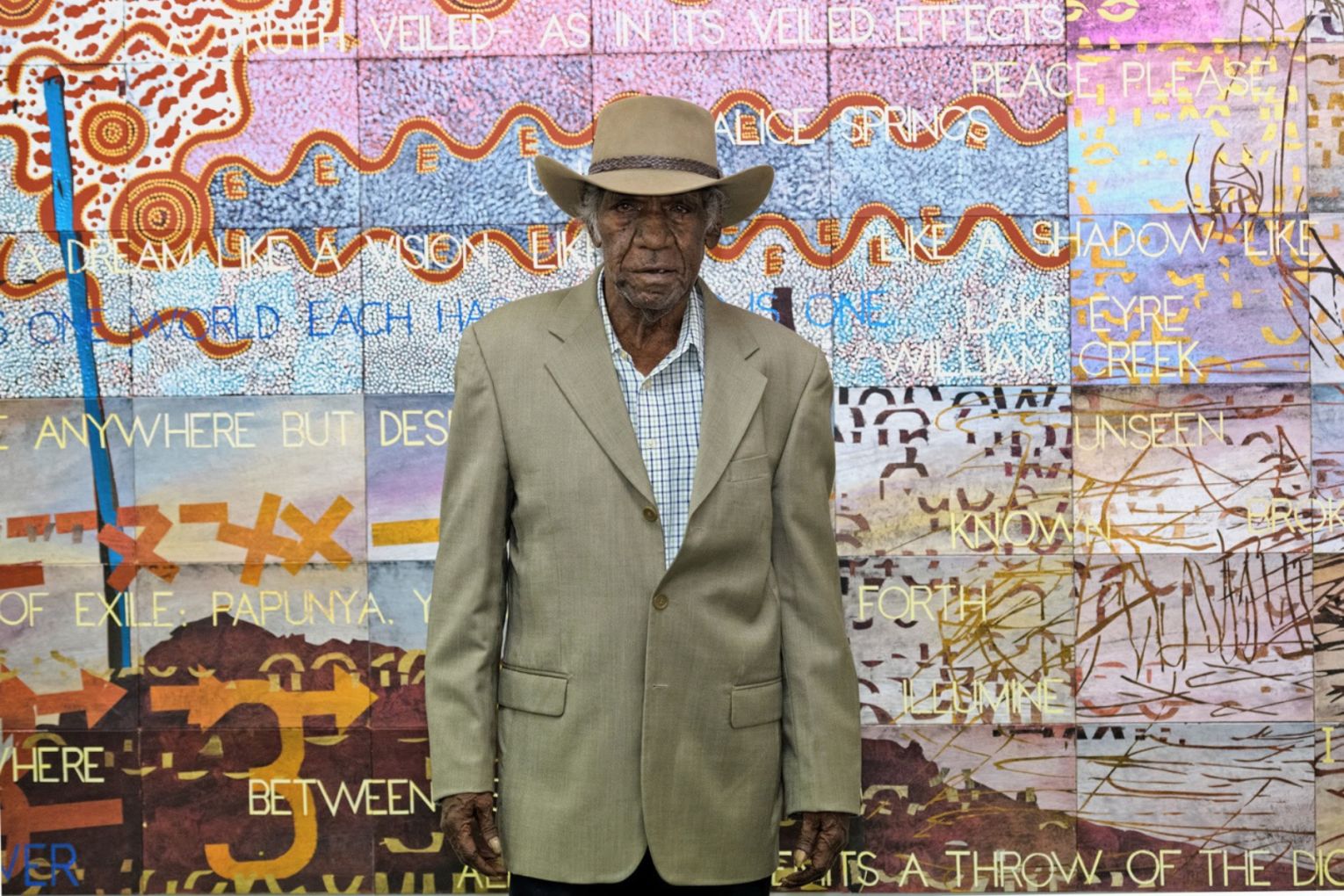
Follow the possums to FireWorks Gallery in Bowen Hills where new retrospective exhibition Michael Nelson Jagamara: Possum Stories leads visitors through Country, kinship and collaboration.
Gallery director Michael Eather, Jagamara’s close friend of more than 20 years, walked me through the artworks and shared how FireWorks began and how its spirit of exchange continues to shape the way the work of artists like Jagamara, one of the most significant proponents of the Western Desert art movement, is presented.
Tasmanian-born Eather’s own journey as an artist began in Hobart, where he studied painting and sculpture and completed an art teaching degree before travelling north at 21 to visit his sister in Maningrida. The journey left a lasting impression, with Eather later living between Maningrida and Brisbane, raising a young family while continuing his arts practice.
In Brisbane, his work with Indigenous artists led to Balance: 1990 Visions and Influences, an exhibition taken up by the Queensland Art Gallery in 1990.
FireWorks opened in the Brisbane CBD in 1993 – since 2018 it’s been located in Bowen Hills – and from the start followed an 80/20 principle, with about 80 per cent Indigenous artists and 20 per cent non-Indigenous artists in its exhibitions. This kept Indigenous artists at the centre while making room for artists from different backgrounds to meet and collaborate.
That spirit of exchange is present in the Jagamara exhibition, though the possums’ journey begins with the artist’s cultural story.
You might like
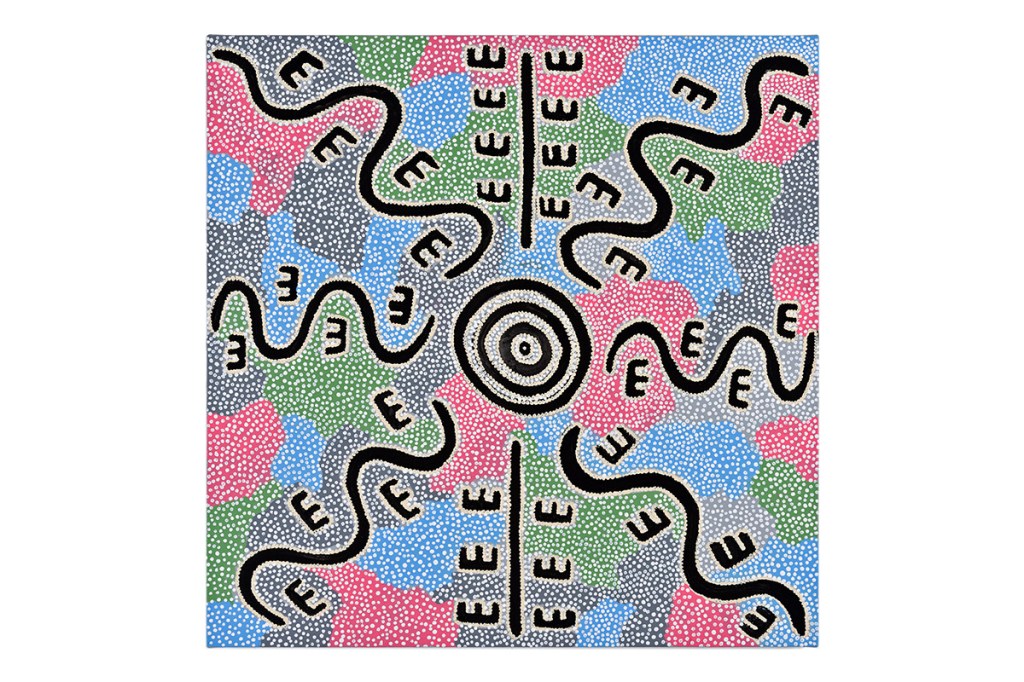
Eather explains the Possum Story: two young lovers form a relationship despite having the wrong skin names. They are pursued and killed, a warning about breaking the kinship system. The Possum Story is a Jukurrpa (Dreaming) and is central to Warlpiri kinship structures and law. The Possum People are spirit beings whose journeys carry knowledge of law, Country and ancestral history.
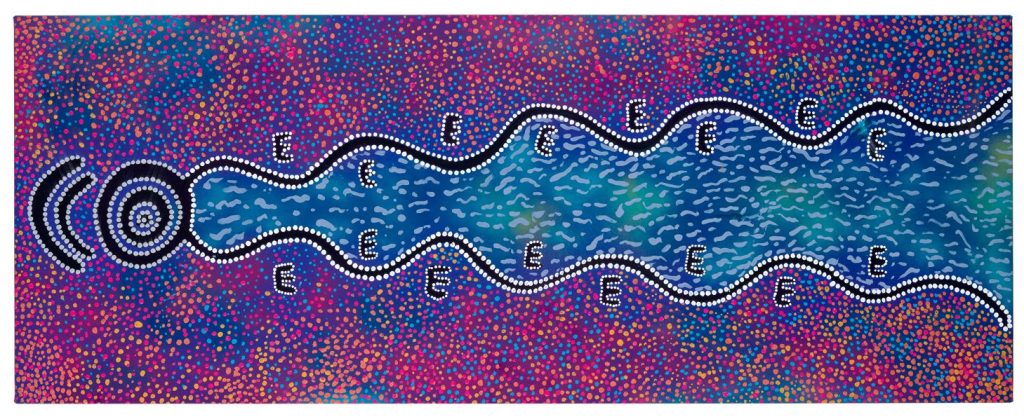
As we looked at one series, Eather pointed out the possum’s tail, a cave and tracks across the sand. Noted is the distinctive E-shaped footprint and winding tracks showing Possum People travelling east and west, day and night, between caves and campsites. The forms repeat while colours and arrangements shift. Each mark’s meaning is connected to the story and Country it comes from.
Jagamara’s collaborations with Australian artist Imants Tillers reveal how his stories could move into new forms. The artists began working together in 2001 and completed more than 30 works, while keeping their own artistic commitments and distinct practices. The exhibition includes four collaborations created between Brisbane, Papunya and Cooma using Tillers’ numbered canvas board system. Jagamara’s possum imagery meets Tillers’ layered imagery and text. Footprints and scattered colour echo the dotted patterns and repeated forms of Jagamara’s earlier paintings, reworked in a contemporary composition.
The Confused Possum story became an important point of connection between the artists. In Possum Love Story at Night, I felt as if I had lost my way in the dark. Five Stories pulled my eye in several directions at once: I followed brown snakes, possum tracks and shapes that seemed to hold other parts of the story, trying to keep multiple narratives in view.
Subscribe for updates
Although I bring my own First Nations background to these works, they reminded me that stories and symbols can hold different meanings across Nations. Eather’s explanations gave me a way into the paintings, but I encourage visitors to ask what the symbols mean and spend time finding their own connection to each composition: its open spaces, quieter or more vibrant colours and the ways these change as the possums travel.
Even though Jagamara’s earlier works and the collaborations look dramatically different, I found myself thinking about them days later. In the Confused Possum works with Tillers, the lines between canvases began to feel like more tracks left by the possums. The E-shaped footprints and letter forms seemed to point in different directions. I kept wondering where the confused possums thought they were going.
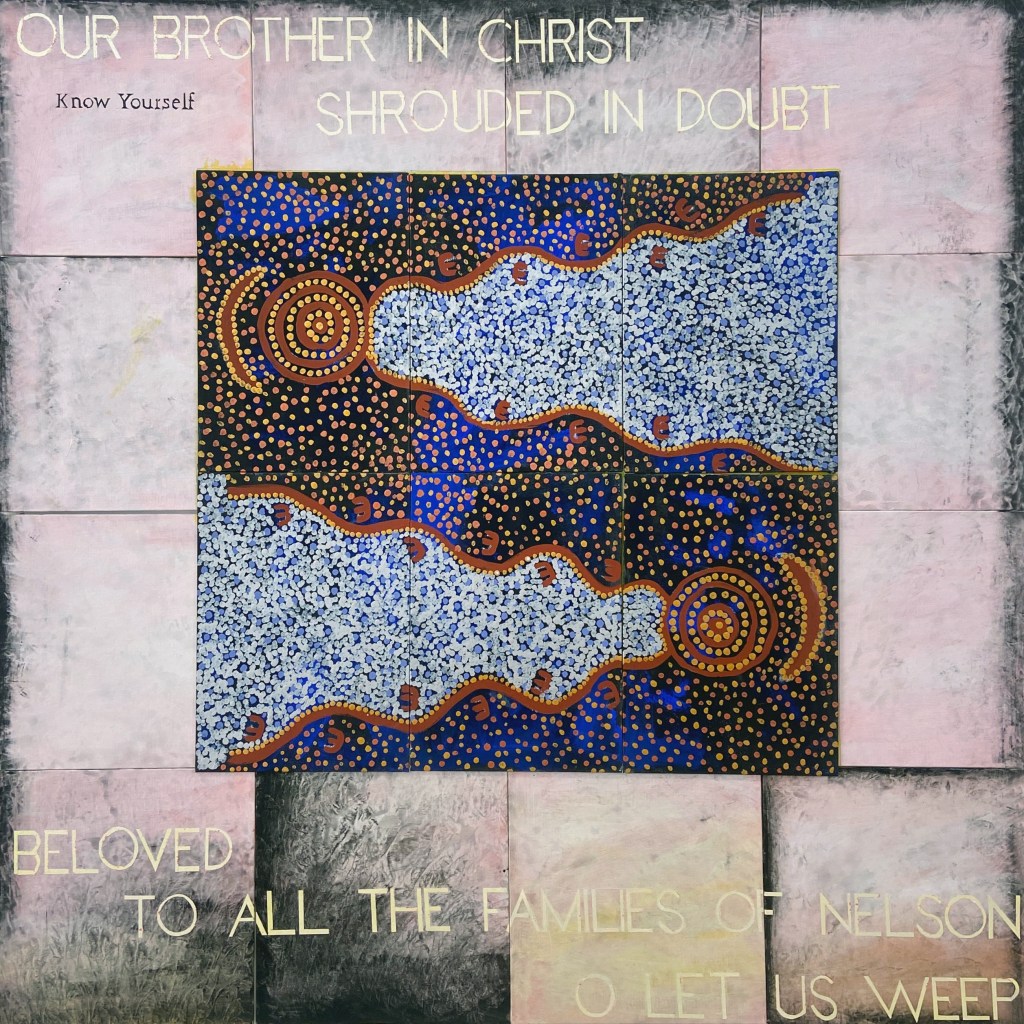
Know Yourself and Intuition 3, both begun in 2019, were completed by Tillers in 2024 after Jagamara’s passing. Know Yourself brings Jagamara’s central Possum motif together with Tillers’ layered imagery and text. Eather calls Jagamara a bridge builder, carrying deep cultural stories into contemporary art.
The exhibition includes Possum Classic (2013), which returns to the vibrant “gelati” colours of Jagamara’s earlier Sydney Opera House work, alongside Possum People, one of his final paintings, completed with assistance from family in 2019-21. His Possum Dreaming was commissioned for the Sydney Opera House for the Bicentenary and unveiled in 1988. Elements of the Possum story also appeared in the Meeting Place mosaic at Parliament House in Canberra.
One memory Eather shared was Jagamara’s rainstorm stories. Jagamara believed his stories could influence the weather and knew where rain was coming from. For Eather, they reflected how closely Jagamara’s art, cultural knowledge and relationship with Country were connected.
Following the possums is not about finding one fixed direction. It is about noticing different directions beside one another: cultural symbols, written language, paint and text. The tracks cross but continue to lead somewhere. This week, wind your way to FireWorks Gallery in Bowen Hills and follow the possum’s tale.
Also on at Fireworks is Remembering (Walala) Kumantjayi Tjapaltjarri, tracing the career of the artist who belonged to the group dubbed the Pintupi Nine (of the Pintupi community of Kiwirrkurra), and featuring sculptures, works on paper, paintings and collaborations.
Michael Nelson Jagamara: Possum Stories and Remembering (Walala) Kumantjayi Tjapaltjarri continue at FireWorks Gallery, Bowen Hills, until November 21. The Jagamara exhibition’s official opening is on October 17, 3pm-5pm, with a floor talk by Michael Eather at 2.30pm.
fireworksgallery.com.au/exhibition/michael-nelson-jagamara-possum-stories
This article was written as part of The Critical Writing Program, run in partnership with Queensland Writers Centre and InReview Queensland, supported by the Queensland Government through Arts Queensland, part of the Department of Education.
Want to see more stories from InDaily Qld in your Google search results?
- Click here to set InDaily Qld as a preferred source.
- Tick the box next to "InDaily Qld". That's it.
Free to share
This article may be shared online or in print under a Creative Commons licence