Seduced by beauty: Lawrence Daws’ journey of self-awareness and discovery
The works of Lawrence Daws have always intrigued and enchanted and an exhibition from his estate is a reminder of his artistic achievements.
Lawrence Daws is no longer with us, but the artist’s presence can be keenly felt now at Philip Bacon Galleries in an exhibition of works from Daws’ estate.
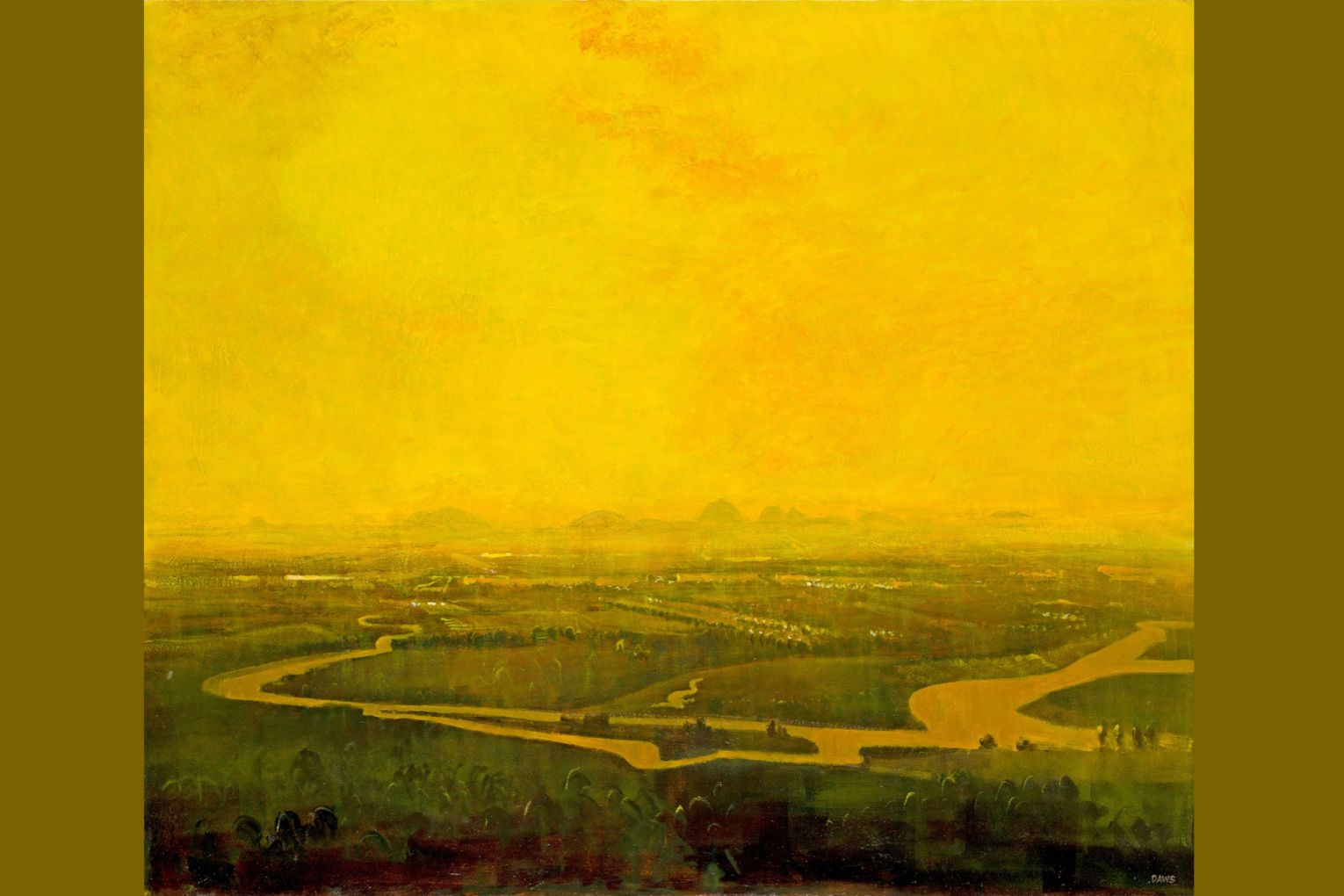
Exhibit A is his majestic work Golden summer. It’s the first thing you see when you enter the current exhibition of works by this renowned artist, who died a year ago at the age of 97.
I happened to know Daws through covering his shows over the years and always enjoyed our discussions. He was an intellectual of the artistic variety, happy discussing art, poetry or metaphysics. There’s definitely something metaphysical about his work.

Golden summer is magisterial and depicts a familiar subject of his, the landscape of the Glass House Mountains where he lived for many years at a property called Owl Creek.
This painting has the kind of light you expect from a late Lloyd Rees or JMW Turner at his most ethereal. I’m tempted to use the word numinous, which defines “something supernatural, mysterious, holy or deeply spiritual, evoking a strong sense of awe, wonder and the transcendent”. Indeed.
Daws was an avowed Jungian, at least at one stage of his life, and in Carl Jung’s psychology, the numinous is a non-rational, awe-inspiring experience of a powerful, mysterious and transcendent force that seizes human consciousness from outside the ego’s control. This can be seen in many of Daws’ paintings, which are as mysterious as they are beautiful.
You might like
A Daws painting is instantly recognisable, as his art dealer Philip Bacon points out.
“Margaret Olley used to say artists have their own visual handwriting,” Bacon says. “Even with an early Jeffrey Smart you can tell it’s him. The same goes for Brett Whiteley,.”
And for Lawrence Daws who was, as it happens, a good friend of Whiteley.
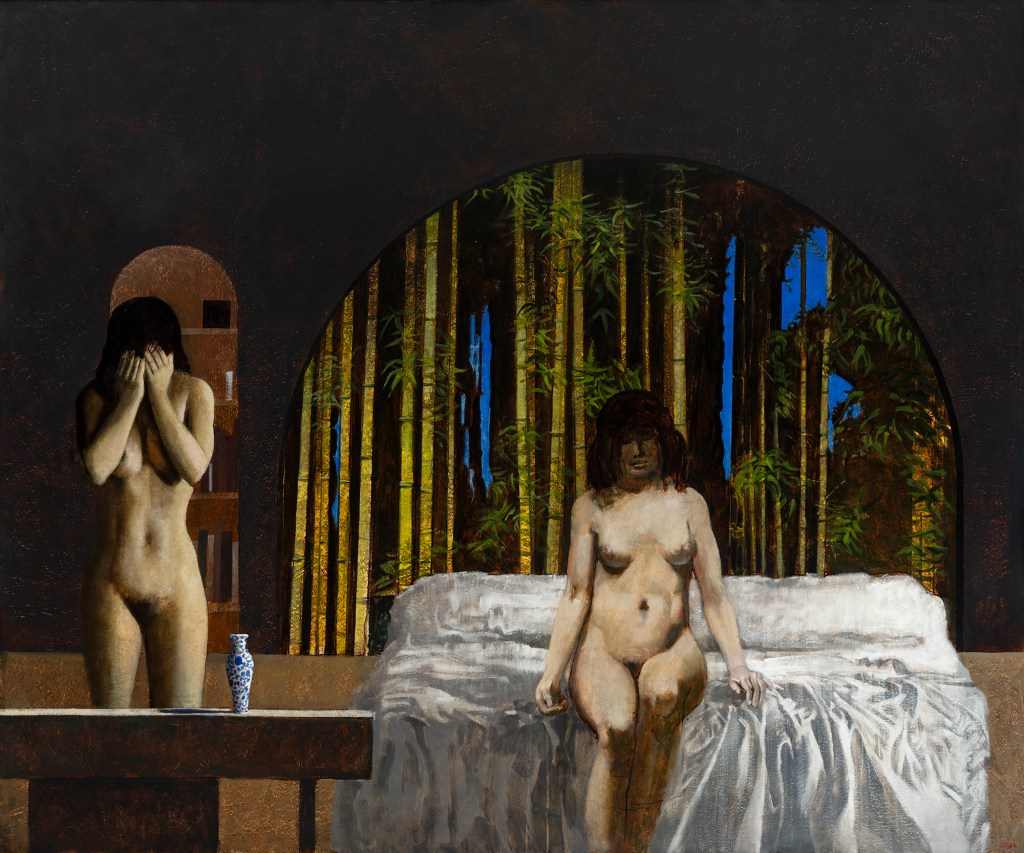
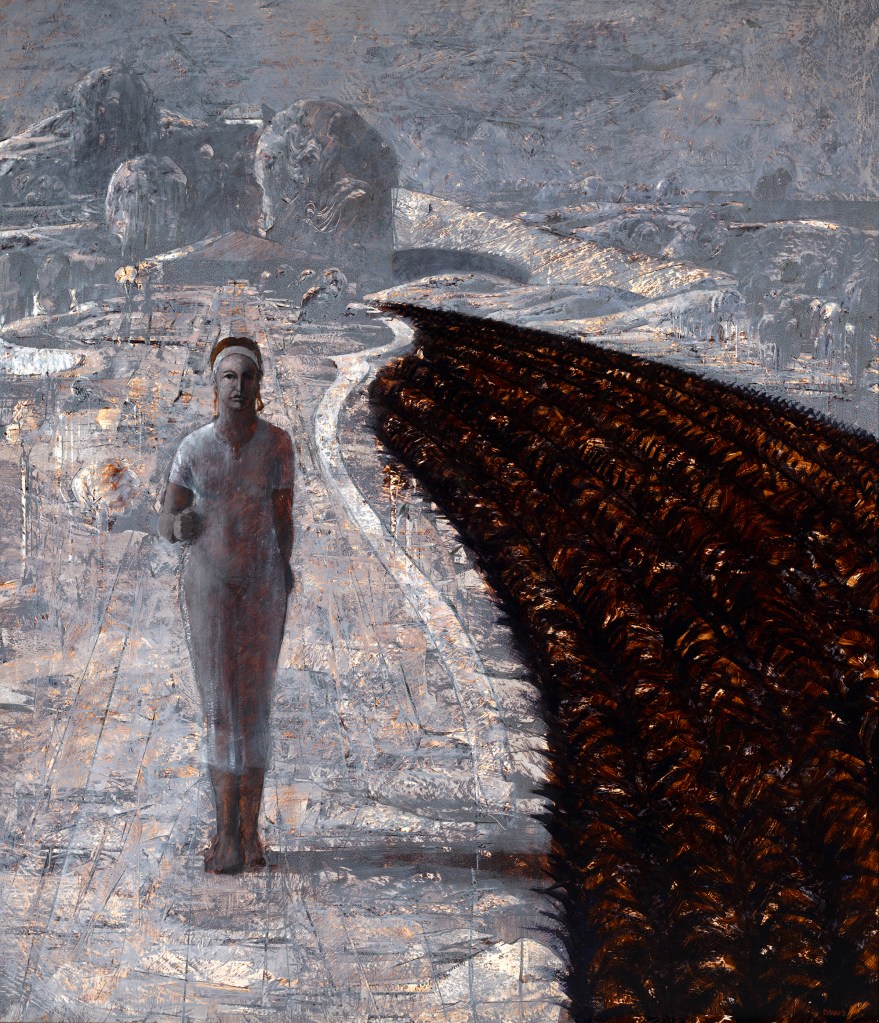
As pointed out in an obituary on QAGOMA’s website Daws “was an important figure in Australian art who forged a celebrated career over seven decades. He depicted diverse subjects — snake handlers, nudes, domestic interiors and landscapes — in enigmatic paintings that reveal his interest in psychology and self-discovery.
“Daws’s journeys into the unconscious were inspired by esoteric interests: he was fascinated by the psychoanalytic philosophies of Carl Jung, Taoism, the I Ching (Yijing) and the Tarot. Nevertheless, at the heart of his practice was an abiding interest in exploring the properties of paint and its expressive potential.”
Like Smart, Daws was from Adelaide. As a teenager, he met renowned landscape painter Hans Yesen, who encouraged him to pursue art.
Having first trained as an engineer, Daws began work as a geologist in New Guinea and it was there that he decided to become an artist. In 1950 he attended Melbourne’s National Gallery Art School (now the Victorian College of the Arts) and was awarded a scholarship that enabled him to travel to Italy, where he lived during 1958-59. The experience inspired a succession of trips through Europe, India, Mexico and the US.
While living in London through the 1960s Daws began reading about Carl Jung and developed an interest in his ideas on symbolism and the collective unconscious.
Subscribe for updates
In 1970, Daws returned to Australia, living first on Bribie Island — where he befriended resident painter Ian Fairweather – then moving in 1974 to a property called Owl Creek, near the Glass House Mountains. The view of the mountains from his backyard fascinated him and he featured their monolithic forms in haunting paintings that brought him critical acclaim.
Appointed to the Queensland Art Gallery Board of Trustees in 1977, Daws was later awarded honorary doctorates by Griffith University (1992) and the University of the Sunshine Coast (2000). His exceptional ability to capture the psychological resonance of the landscapes he encountered and his contribution to the cultural and intellectual life of Queensland form his ongoing legacy.
Philip Bacon describes him as an artist who was “difficult to categorise”.
“Early on his works are quite psychological studies,” says Bacon. “Then there’s all that Jungian symbolism, that’s always there. As he matured and became happier, he really started to paint the beauty of the landscape.”
Bacon describes those landscape paintings as “quite sublime” and “mystical”. He recalls meeting Daws when starting out as an art dealer.
“I used to drive up to Bribie Island where he was living at the time and we would have these boozy dinners and I would bring work back to Brisbane,” Bacon recalls. “He became friends with Ian Fairweather, who was also living there, and they played chess together. So, for me this exhibition is quite nostalgic.”
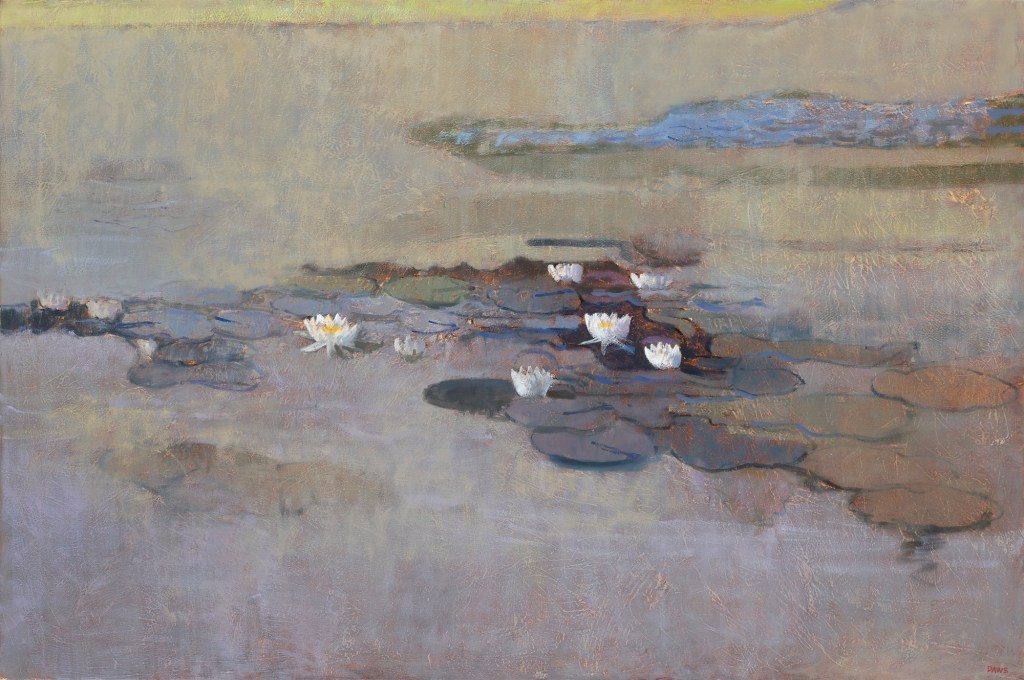
The earliest work in the exhibition, The cage, dates back to 1971, and we have works from across the intervening decades. There are those gorgeous works depicting waterlilies, as in Lily Pool I (2013) and those incredible landscapes with Golden summers exuding a magical glow in the gallery space. Asylum in Eden V features the dramatic Glass House Mountains landscape and that mysterious red cage.
Like Arthur Boyd and other major Australian artists, Daws also explored archetypes and mythology as in Leda and the swan (2002). Whatever his private preoccupations, the result for his fans was always paintings of great beauty and atmosphere. And now, just a year after his death, it’s worthwhile revisiting his oeuvre in all its majesty.
It seems appropriate that the exhibition running alongside this is ceramics by Kirsten Coelho. Her work also exudes a quiet but powerful presence.
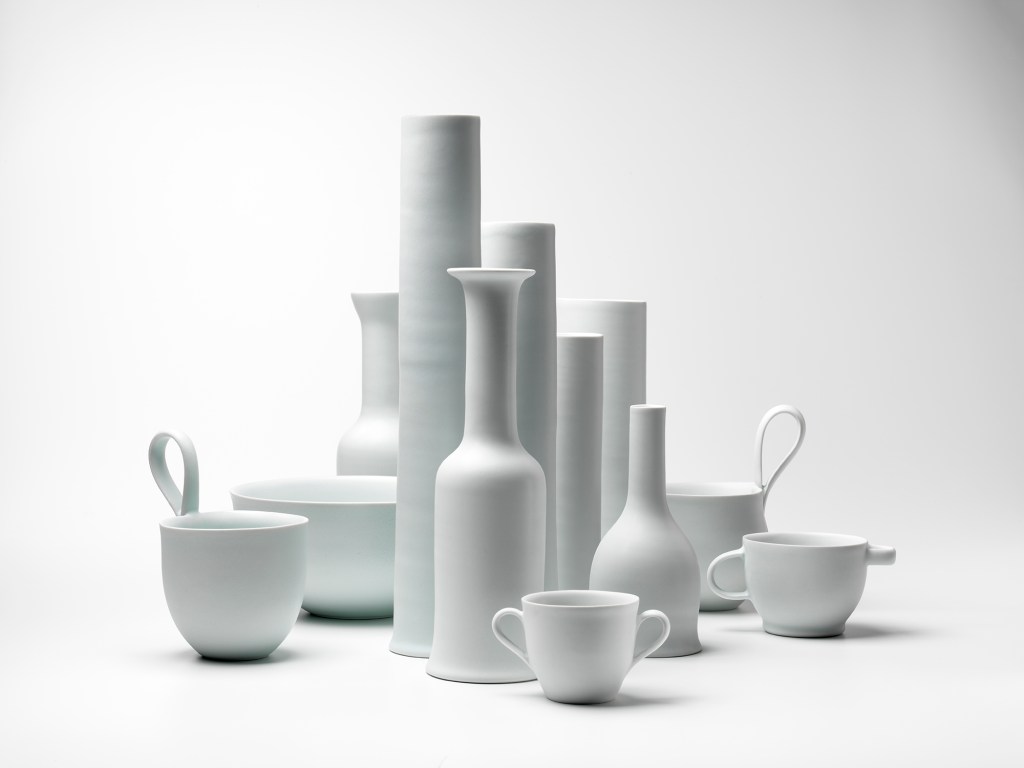
Coelho is a leading Australian contemporary ceramicist living and working in Adelaide … there is that South Australian connection again.
She works in porcelain, producing reduction fired works that attempt to fuse the formal and the abstract. Her work has been recently influenced by 19th and early 20th century enamel wares and the abstracted surface possibilities these objects can show as they begin to age.
Beauty and a sense of reverence pervade these works too – sometime singly, sometimes in small groupings. Quite exquisite.
Lawrence Daws: Works from the Artist’s Estate and Kirsten Coelho continue on show at Philip Bacon Galleries, Fortitude Valley, until October 31.
Want to see more stories from InDaily Qld in your Google search results?
- Click here to set InDaily Qld as a preferred source.
- Tick the box next to "InDaily Qld". That's it.
Free to share
This article may be shared online or in print under a Creative Commons licence