The man who wrote the book on America’s plunge from greatness
As the world bunkers down for the bare-knuckle brawl that is the presidential race, author Nick Bryant has plotted the demise of a once-great nation. Dennis Atkins reports
The world’s greatest democracy is having its ultimate expression of popular will in just one month from this weekend and it is bound to dominate discussion during those 30-odd days.
Even the people of Queensland, where a much less dramatic and consequential political contest is taking place, will often turn their minds and conversation to the United States of America.
In fact because this Queensland election heralds regular, fixed date four year terms ending on the last Saturday in October, we will always be in sync with US presidential elections.
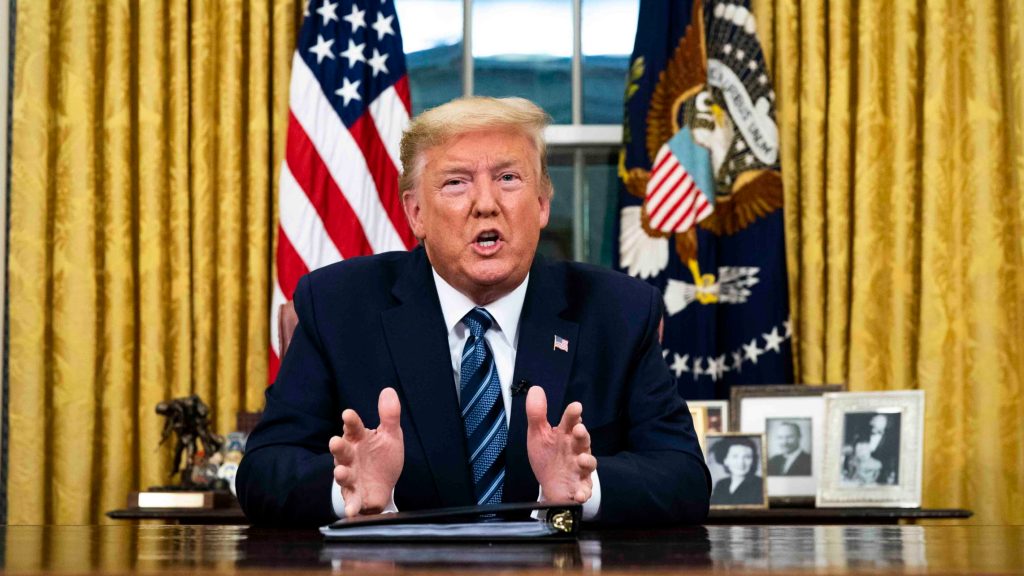
Stateside, the man almost everyone said could never be elected four years ago, Donald J. Trump is facing many of those same voters in a big time match-up with Democratic Party veteran and former vice-president Joe Biden.
It is a battle unlike any other, held against the backdrop of a presidential term the likes of which we have never seen and in a year with greater uncertainty and unpredictability than anyone could imagine.
You might like
For those watching these events unfold, a new book gives a long view of the historical perspective and some first hand insights into what has happened in the USA.
Nick Bryant, a BBC correspondent based in New York, is a writer and observer with the qualifications and journalistic skill to unpick this amazing story. Bryant is well known to Australians, having been Sydney based before he went to the US in 2014. He famously called Australia “the coup capital” of the democratic world after watching the Rudd/Gillard/Rudd revolving door in Canberra a decade ago.
In When America Stopped Being Great, Bryant traces the threads of modern America back to the post-World War II years “when an age of collaboration came to be supplanted by an age of confrontation”.
Anchored by the history and presidency of the last celebrity occupant of the White House, Ronald Reagan, this exploration of America’s political decline is an insightful and entertaining look at how win at any cost hardball and whiplash media reporting came together in the 1990s and it has been all downhill from there.
Bryant marks the impeachment of Bill Clinton, based on the tawdry Monica Lewinsky scandal, as the rise of “post truth” politics which he defines as “the appeal to feelings rather than the marshalling of facts”.
Stay informed, daily
After what the author calls “the three convulsions” – September 11, the Katrina devastation of New Orleans and the Iraq quagmire followed by the financial crisis of 2007/08 – there was a promise of a new beginning with Barack Obama but it was a false dawn.
A belligerent Republican Congress kept up the oppose-all-the-time strategy from the Clinton years and, as scandal and tumult replaced all else, the path to Trump’s presidency at the end of the Obama years became inevitable.
However, this notion of inevitability does not mean we should have seen it coming – indeed most didn’t. Bryant harks back to the great chronicler of American Democracy Alexis de Tocqueville who wrote in 1836 that the French Revolution was “inevitable but unforeseen”.
Regardless of the inevitability of Trump, who appeared in a society already in a downward spiral, we are left with him and, if the Republicans can manage another out-of-nowhere win in early November, we will have the bombastic braggart and demagogue around for another four years.
Bryant is like most observers of modern America pessimistic about the country he admires so much. “Alas, I fear more American carnage, regardless of who occupies the White House,” he concludes in genuine sorrow.
This a masterful work and an excellent companion to this gripping democratic contest that may well end badly. As with other catastrophes – from train wrecks to the disintegration of social norms – we cannot turn our eyes away from what is the biggest story of our times.
When America Stopped Being Great: A History of the Present, Nick Bryant, Viking, 432 pages, $43.99.
Want to see more stories from InDaily Qld in your Google search results?
- Click here to set InDaily Qld as a preferred source.
- Tick the box next to "InDaily Qld". That's it.