‘Massive turnaround’: Budget to reveal huge deficit drop as our recovery gains pace
Finance Minister Simon Birmingham has flagged a “profound improvement” in the nation’s budget bottom line as a massive turnaround in the deficit will be unveiled in the federal budget on Tuesday night.
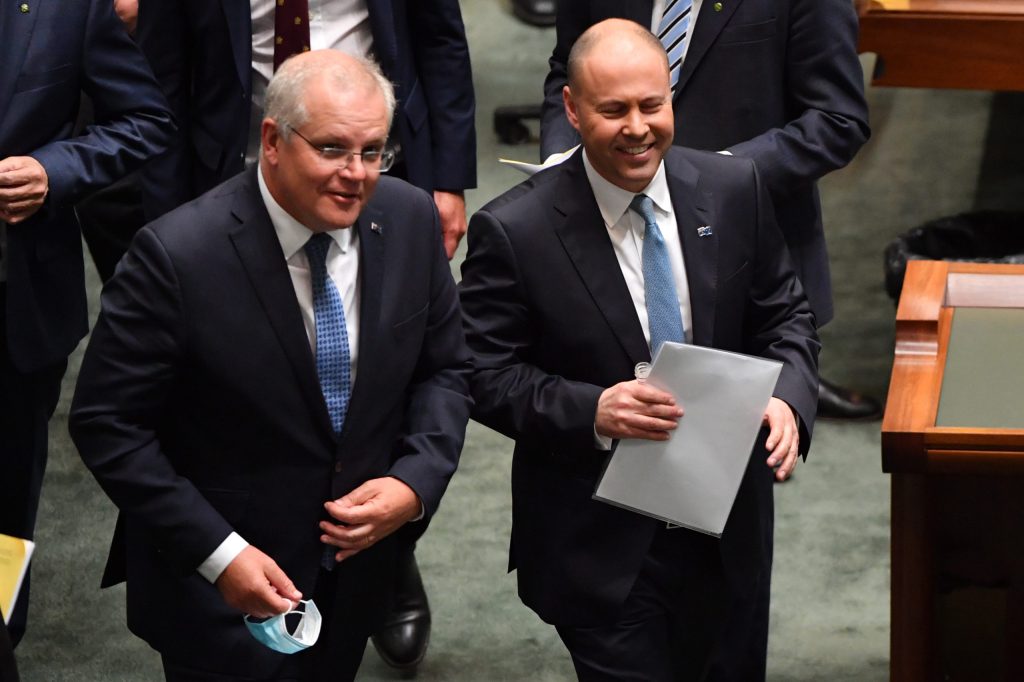
Economists are expecting a figure around $155 billion, which would be a vast improvement on the $198 billion shortfall estimated in December’s mid-year budget review.
Senator Birmingham has done little to temper expectations.
“We have seen a profound improvement in relation to this year’s budget bottom line,” he told the ABC.
“That is as a result of the fact that the economy has been performing more strongly, particularly more Australians back into jobs.
“We know that by getting more people back into jobs, we reduce the welfare wheel, we increase the taxation and the revenue coming in.”
Birmingham said having 200,000 fewer people on JobSeeker unemployment benefits had alone delivered a $5 billion turnaround.
You might like

“You get other dividends that flow through across the economy,” he said.
“That’s why at the heart of tonight’s budget, our focus is on how do we keep jobs growth continuing, because that is how we can make sure we can pay for essential services Australians want us to pay on.”
Large commitments will be made in aged care, health, and infrastructure, which Treasurer Josh Frydenberg says can be sustained because of a much-improved budget bottom line.
“The 2021 budget will mark the next phase of Australia’s economic recovery plan and our path forward,” he said.
The deficit for 2021/22 is expected to have shrunk to $80 billion.
“The massive improvement reflects the faster than expected recovery in the economy,” St George economist Matthew Bunny said.
Stay informed, daily
“The labour market has bounced back faster than expected, meaning the government has spent less than predicted on income support payments.
“Plus, commodity prices have surged much higher than expected back in December, boosting tax revenue.”
The iron ore price alone has rocketed to a record high of just over $US200 per tonne, when Treasury had forecast it falling to $US55 per tonne.
Marked changes are also expected in Treasury’s economic forecasts.
The Reserve Bank expects growth to be a speedy five per cent in the 2021/22 financial year.
That compares with the RBA’s previous forecast of 3.75 per cent and Treasury’s 3.5 per cent.
But all eyes will be on Treasury’s unemployment forecasts given Frydenberg has set a target of below five per cent before the process of budget repair begins.
In March the jobless rate was 5.6 per cent at a time when Treasury had previously expected it to be 7.5 per cent.
The RBA is predicting an unemployment rate of five per cent at the end of this year and 4.75 per cent by the middle of 2022.
However, the central bank believes an even lower jobless rate is needed before decent wage rises can be expected – the missing link in Australia’s economic performance, even before the pandemic.
Want to see more stories from InDaily Qld in your Google search results?
- Click here to set InDaily Qld as a preferred source.
- Tick the box next to "InDaily Qld". That's it.