The origin of fascination: childhood dream a reality for new ARCHE Director
It’s been a long and complex journey that has brought archaeologist Professor Michael Petraglia to a new understanding about human migration.
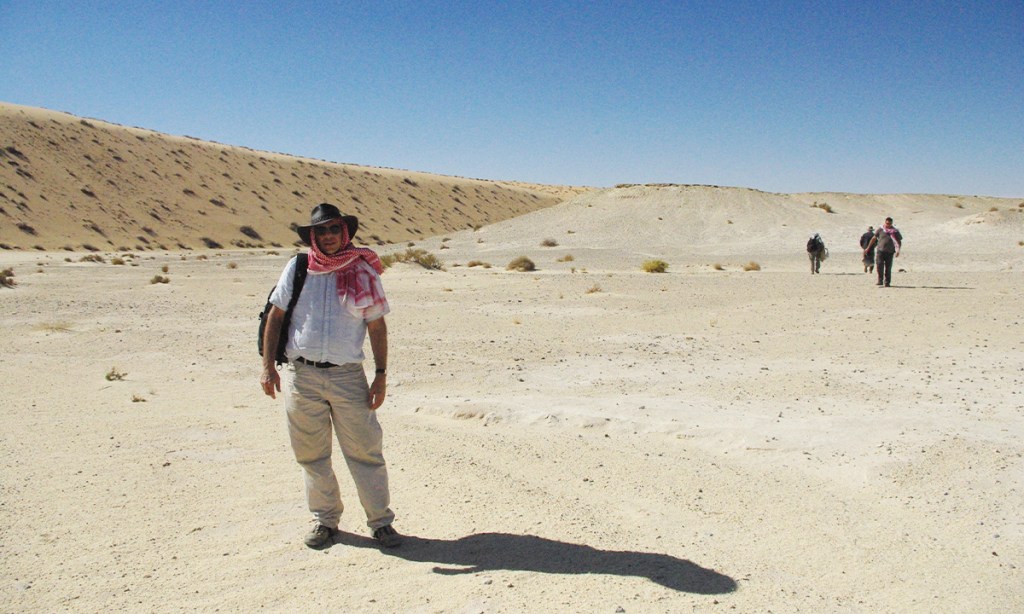

A childhood intrigue of Egyptian cultural history and the origins of our species has led archaeologist Petraglia on incredible journeys to captivating locations throughout his career.
“As long as I can remember, I wanted to be an archaeologist. At first I was obsessed with Egyptian cultural history, but in my teenage years I became increasingly interested in human evolution,” Petraglia said.
The enduring mission shared by many archaeologists to answer the many unsolved mysteries of human evolution is one shared by Professor Petraglia, and he’ll continue to do so in his new role as Director of Griffith’s Australian Research Centre for Human Evolution (ARCHE).
“My main goal is to create a supportive environment for ARCHE’s staff and students, providing us with the opportunity to expand our research in a healthy and productive way,” he said.
You might like

“As research in human evolution is highly interdisciplinary, it will be important for us to increase our scientific partnerships across Griffith, Australia and worldwide.
Lessons from the past
Going on to work for various institutions around the world – Cambridge University, Oxford University, the Human Origins Program at the Smithsonian Institution and the Max Planck Institute for the Science of Human History – has given Professor Petraglia a wealth of insights into ancient cultures and the conditions early humans faced in different parts of the world at different times.
“The world-wide migration of our species, Homo sapiens, is one of the most important events in human evolutionary history,” he said.
Stay informed, daily
“For the past 20 years, I have been examining the timing of out of Africa migrations and what happened along the way.
“My research is focused on Asia, particularly Arabia, India and China. The consensus view was that human populations migrated out of Africa once, 60,000 years ago, moving swiftly along the coastlines to eventually reach Australia.
“Thanks, in part, to our research, this model no longer holds sway, and instead has been replaced by a more complex model which indicates multiple migrations out of Africa, and over a longer period of time, stretching back to 200,000 years ago, including the mixing and mating with our close relatives, the Neanderthals and Denisovans.”
Vision for ARCHE
As Professor Petraglia takes the helm at ARCHE, he is already building stronger research and teaching relationships across Griffith and its researchers in various schools and centres, as well as making plans to bolster relations with colleagues at nearby institutions such as the University of Queensland and the Queensland Museum.
With plans to maintain his research affiliations with the Smithsonian Institution and the Max Planck Institute and existing partnerships with scientists in Europe, Africa and Asia, Professor Petraglia envisages an increase in ARCHE’s research collaborations.
“But the history of the Indigenous peoples of Australia has always fascinated me and I am looking forward to learning more about their cultures and their views about the archaeology of the continent,” he said.
Want to see more stories from InDaily Qld in your Google search results?
- Click here to set InDaily Qld as a preferred source.
- Tick the box next to "InDaily Qld". That's it.