A trailblazer from the Pacific confirms the changing face of Australian rugby
The Pacific Islander influence on both rugby codes in Australia is growing stronger. That is a good thing, writes Jim Tucker.
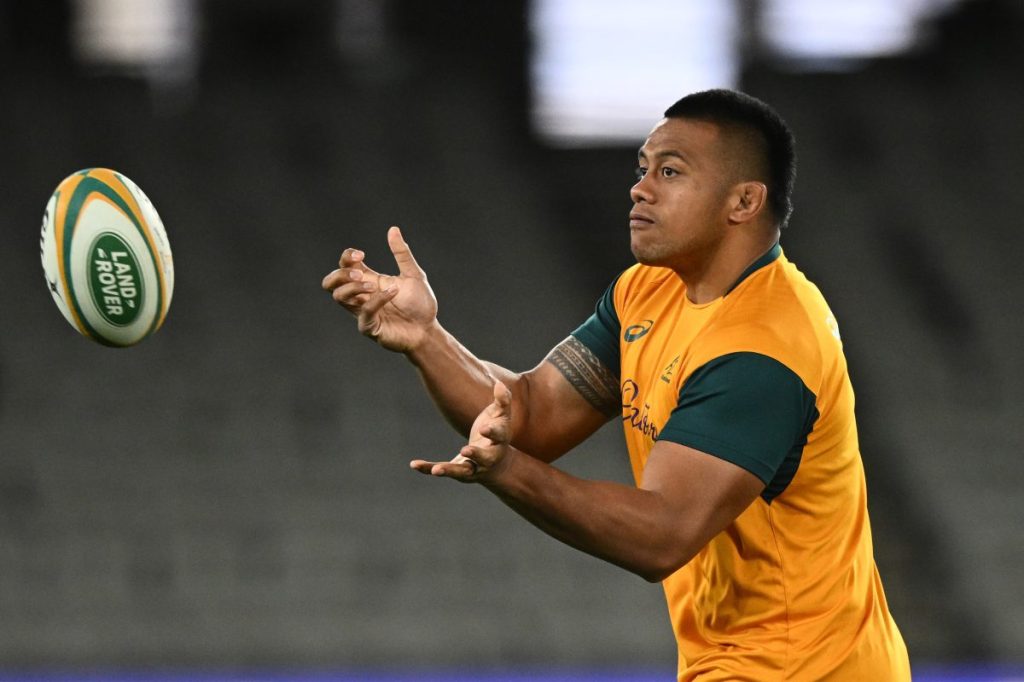
No Samoan had even represented the Wallabies until 15 years ago which makes the elevation of Allan Alaalatoa to the Australian captaincy all the more significant.
It is one of the ultimate signs of the changing face of Australian rugby that the top leadership position now reflects such a strong part of the overall player base.
The broad significance of Alaalatoa’s rise to a position once held by John Eales, John Thornett and Andrew Slack should not be missed when he leads the Wallabies against Italy in Florence at 11pm on Saturday (AEST).
Booming Pacific Islander playing numbers in Australia in both rugby and rugby league are translating into more leadership roles.
It’s part of the astonishing change to the face of Australian rugby since the code went professional to start the 1996 season.
When Super Rugby was born in 1996, Queensland Reds halfback Jacob Rauluni, a future captain of Fiji, was one of just four Pacific Islander starters in Australia’s three teams in opening week.
Today, more than 40 per cent of the playing numbers in Australia’s five Super Rugby sides have heritage linked to Fiji, Samoa, Tonga, Papua New Guinea, Nuie and the Maori of New Zealand.
The percentage is even higher amongst the player base in the Super W women’s rugby competition.
You might like
Sidelined centre Samu Kerevi saw the deeper significance of his rise from Fiji to Queensland Reds captain for the first time in 2017.
“Hopefully, you inspire some young Pacific islander players,” said Kerevi, who arrived in Brisbane on a refugee visa as a child.
“A lot of Pacific Islander players who are quiet and from humble beginnings may think they are not made for a leadership role.
“I’d say ‘express yourself, extend yourself’ and I don’t mean just footy but life in general to be a doctor, a teacher or whatever you want to be.”
They are insightful words and Kerevi barely knew of the inspiring story of the late Epi Bolawaqatabu. Queenslanders of the 1960s found his name too much of a tongue-twister so he was always just Epi Bola when the Fijian played rugby for Brothers and Queensland.
He was a young dentistry student who ran in the morning before lectures. He trained after them too but often returned to his college lodgings to find the meal set aside for him had been devoured by someone else. He was a cyclone of running and support play on the field and laughed when he described his own play: “You know the world ‘seagull’. I was a very famous seagull.”
He captained Fiji but devoted much of his working life to his adopted country with his dental work, through the Royal Flying Doctor Service and in Cairns.
Bola told me a wonderful story about a moment during his work in an Aboriginal settlement.
“I remember having someone in the chair who was under the influence. When he woke up, he had this strange look on his face,” Bola said.
“’You a dentist?’,” he asked.
Stay informed, daily
“’Why?’ I answered.
“’I thought dentists were white men.’ Seeing me with the same skin colour took away fear for a lot of people I worked with.”
Digby Ioane was the first Samoan picked by the Wallabies in 2005 when he played for the Australia A side against the French Barbarians in Bordeaux. He made his Test debut in 2007.
The changing face of rugby in this country over the past 15 years has already been reflected in the heritage of Wallaby greats George Smith (Tongan) and Will Genia (Papua New Guinea) leading the Wallabies. Zambian-born George Gregan held the record for leading Australia in the most Tests as captain until Michael Hooper’s reign.
It is 40 years this year since the mercurial Mark Ella was perhaps the greatest of trailblazers as the first Indigenous Australian to lead the Wallabies.
The identity of our national sporting teams, not just the Wallabies, is tied to all the multicultural links within them. Just look at the myriad origin stories to the Socceroos squad named this week for the football World Cup in Qatar.
Prop Alalaatoa was led the ACT Brumbies with distinction for several seasons. He was born in Sydney where father Vili settled after playing for Samoa at the 1991 Rugby World Cup.
So many Pacific islander families live the game of rugby. Governments at all levels pay too little regard to funding in this area for the great benefits of social cohesion.
Having the first player of proud Samoan background leading the nation in rugby should be a kick along to maximise the inspirational value within islander communities. Sadly, I feel not enough will be made of it.
Coach Dave Rennie has full respect for what Alaalatoa can offer a Wallabies side in need of a convincing display against Europe’s weakest top-tier team.
“Allan’s a great man and an exceptional leader. There was a massive roar in the team room when he was named captain this week and that shows the respect and standing he has within the group,” Rennie said.
His father was a devoted cricket fan. It has a beautiful symmetry that this new skipper of the Wallabies was named after Allan Border.
Jim Tucker has specialised in sport, the wider impacts and features for most of his 40 years writing in the media. He still regards witnessing tiny Samoa’s upset of Wales in Cardiff at the 1991 World Cup as one of rugby’s great moments.
Want to see more stories from InDaily Qld in your Google search results?
- Click here to set InDaily Qld as a preferred source.
- Tick the box next to "InDaily Qld". That's it.