Mr Moneybags: Chalmers finds savings to cover billions in new spending
The federal government’s mid-year review will show it has found budget savings to pay for new spending, such as the response to the robodebt royal commission.
Nearly $10 billion in savings have been clawed back as part of the review, which will be put to use covering new spending, including $22 million in funding for more face-to-face service support options and a raft of other reforms recommended by the investigation into the unlawful automated debt collection tool.
Other areas of new spending include $1.5 billion to wrap up the pandemic event visa, which was introduced during Covid-19 for temporary visa holders so they could stay in Australia and work while international borders were closed.
In the lead-up to the release of the mid-year economic and fiscal outlook, Finance Minister Senator Katy Gallagher said the work of identifying money that could be returned to the budget or redirected was ongoing and would fund $5.2 billion in unavoidable spending.
“It’s all about trying to get the budget in much better shape so that we can find room for other spending priorities,” Gallagher told ABC radio on Tuesday.
“Our focus is really on making sure we’re being fiscally responsible in this environment when inflation is high, and repairing the budget we inherited.”
You might like

In total, the Labor government says $49.6 billion in savings and reprioritisations have been delivered since the 2022 election.
Due for release on Wednesday, the mid-year update to the 2023/24 budget released in May is expected to reveal a substantially improved bottom line.
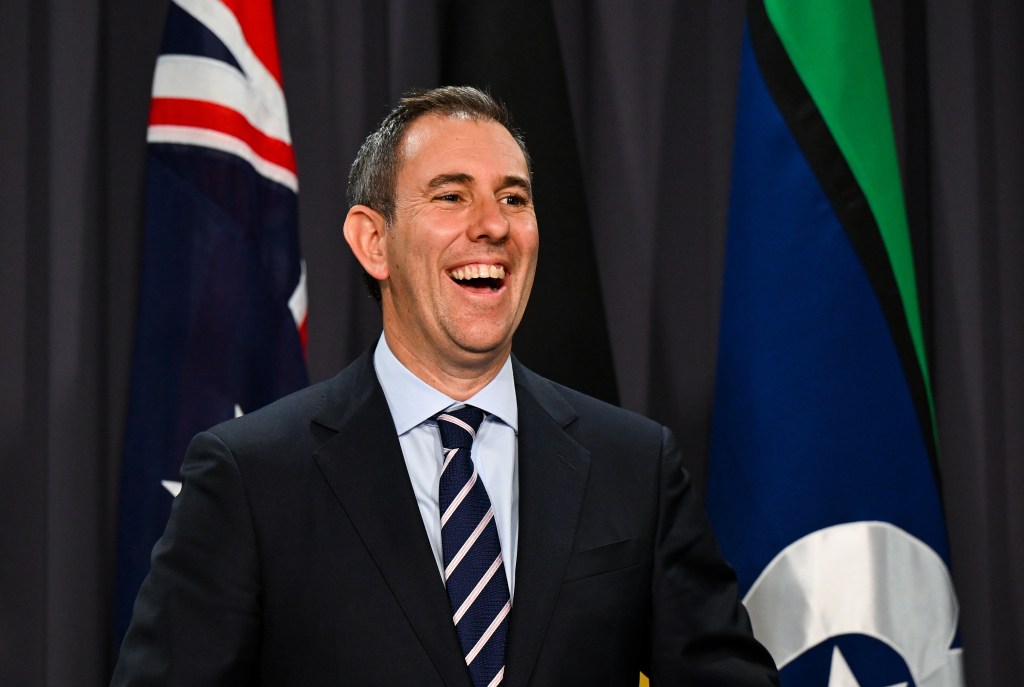
But Treasurer Jim Chalmers has played down the prospect of a second year in the black for the 2023/24 financial year, though a smaller deficit than the $13.9 billion predicted back in May can be expected.
In 2022/23, a $22.1 billion surplus was delivered – well above the $4.2 billion predicted in the budget – after sky-high commodity prices and a strong labour market beefed up revenues.
Stay informed, daily
Several economists, including the team at Westpac, expect the budget to remain in the black this financial year.
In a client note, the bank’s economists said revenue in October was $8.4 billion ahead of forecasts “on upsides to population, jobs, and commodity prices”.
On current policy and program costs, the bank’s economists are expecting another year in surplus, and note that Treasury’s cautious estimates on future commodity prices mean its predictions tend to be conservative.
Despite an improvement in the bottom line in the short to medium term, the federal budget still faces long-term structural pressures.
Interest payments are now the fastest-growing area of expenditure due to ballooning borrowing costs.
Other rapidly growing spending areas include the National Disability Insurance Scheme, hospitals, aged care and defence.
The intergenerational report, released in August, found an ageing population is expected to put pressure on the nation’s finances as a shrinking pool of workers are tapped for the extra spending needed for aged care and health.
Want to see more stories from InDaily Qld in your Google search results?
- Click here to set InDaily Qld as a preferred source.
- Tick the box next to "InDaily Qld". That's it.