Exports boost and cheaper goods to flow under historic EU trade deal
Australia and Europe have struck a historic pact covering trade, defence and innovation after almost a decade of at-times intractable negotiations. Ag and mineral exports win but some farmers are angered over meat exports.
European food, wine, cars and fashion goods will become cheaper for Australian buyers under a long-awaited trade deal, but farmers are furious about meagre quotas for meat exports.
After almost a decade of negotiations, Australia and the European Union have struck an agreement that will lead to both sides slashing tariffs and expanding trade across a range of areas.
Under the deal, Australia will remove a five per cent tariff on imports of European products, which hits car-makers like BMW and Mercedes along with producers of goods like fashion products, food and drinks.
EU tariffs will be removed on imports of a wide range of Australian goods, including critical minerals, manufactured items and many dairy products.
Despite pressure from European winemakers, Australian producers will be allowed to keep using the term “prosecco” for domestic sales, but they will have to phase the term out over the next decade for exports.
You might like

Domestic manufacturers will also retain the rights to describe their wares as parmesan and kransky, but other cheese names such as feta, romano and gruyere will eventually be phased out.
But after pushing for expanded export quotas, the nation’s red meat industry slammed the deal, dubbing it the worst free-trade agreement the nation had signed.
Market access for an additional 30,600 tonnes of beef and 25,000 tonnes of sheep meat per year fell far below the minimum amounts offered to competitor nations such as New Zealand.
“Australia’s red meat sector has been profoundly let down by this outcome,” Andrew McDonald, chair of the Australia-EU red meat market access taskforce said.
Stay informed, daily
“To land a deal so far below what other suppliers have secured is genuinely bewildering.”
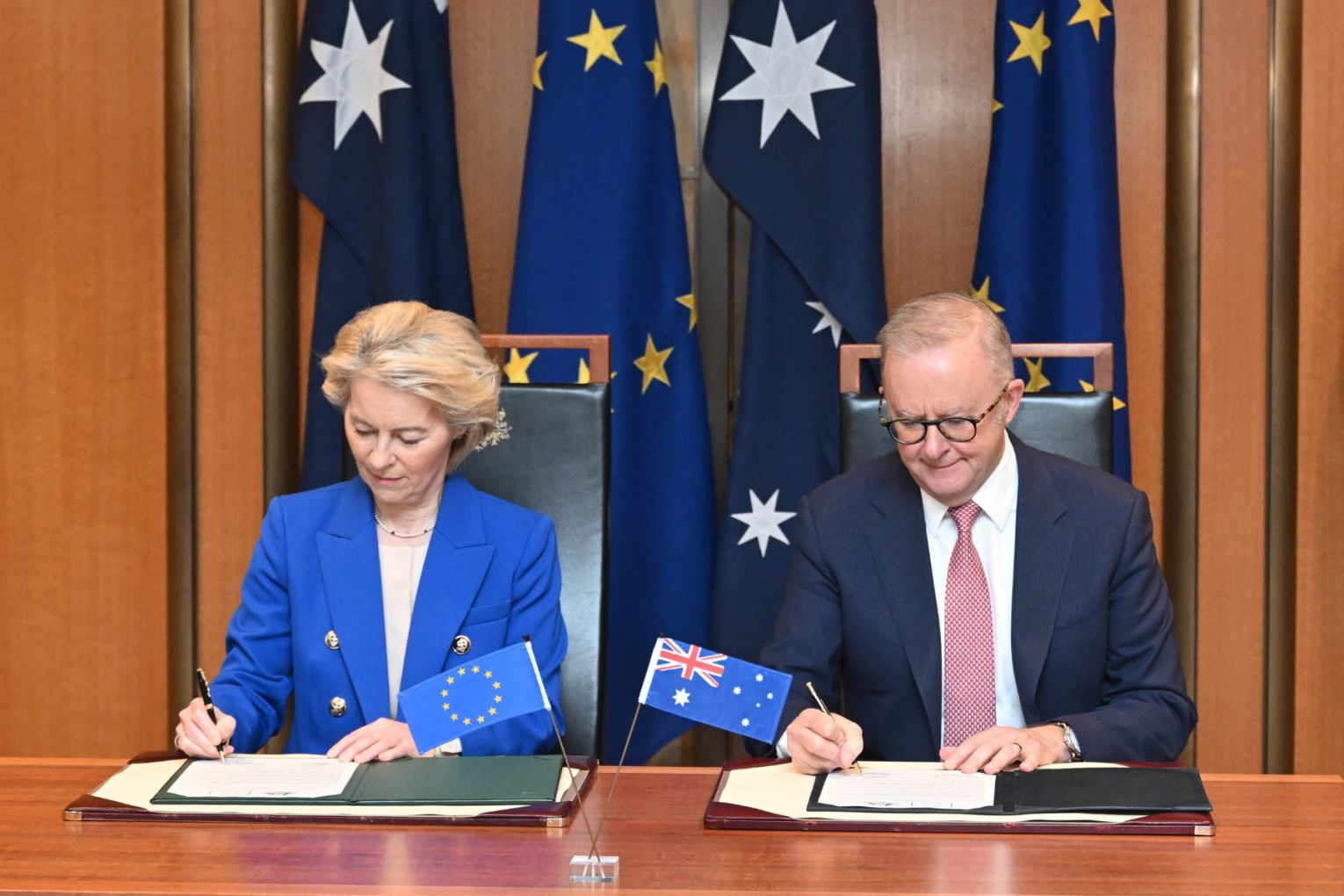
Prime Minister Anthony Albanese said the deal was a “win-win” for Australia and Europe, marking a defining moment in the relationship between the two sides.
“This is a significant moment for our nation as we secure an agreement with the world’s second-largest economy,” he told reporters in Canberra.
Australia and the EU have also agreed to increase military co-operation, including on cyber security and counter-terrorism, while striking a deal to boost research ties.
Growing global uncertainty, driven by US President Donald Trump’s tariff regime, meant both sides approached negotiations with an open door, European Commission President Ursula von der Leyen said.
“Countries are longing for stability and predictability, and this is what the European Union is offering,” she told reporters while standing alongside Mr Albanese.
“You have a free-trade agreement and both sides are winning. It’s enhancing the business sectors on both sides, and it benefits the people on both sides.”
Want to see more stories from InDaily Qld in your Google search results?
- Click here to set InDaily Qld as a preferred source.
- Tick the box next to "InDaily Qld". That's it.