Study reveals tree bark removes greenhouse gases from air
A recent study has revealed tree bark harbours trillions of microbes scrubbing the air of greenhouse gases.
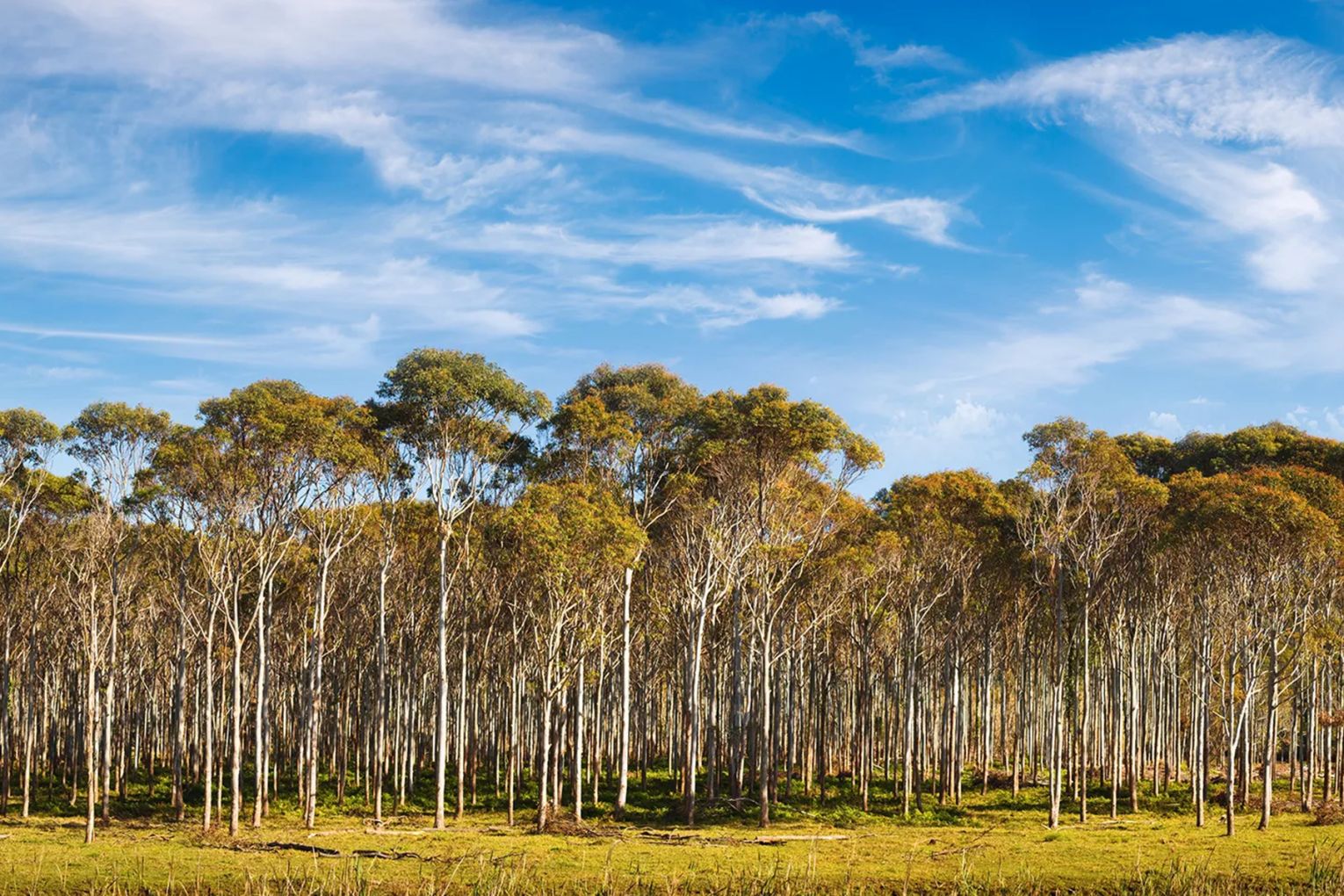
In a study primarily conducted by Monash University (MU) and Southern Cross University (SCU), researchers found that every tree homes trillions of microbes capable of taking up vast amounts of other climate-active gases.
Primary researchers and co-first authors Dr Bob Leung of MU’s Biomedicine Discovery Institute (BDI) and Dr Luke Jeffrey of SCU’s Faculty of Science and Engineering said the discovery rewrites scientific understanding of how tree microbes can shape the atmosphere.
“Each tree hosts trillions of microbial cells on its bark,” said Dr Leung, a co-first author “Yet their existence and roles have been overlooked for many decades until now.”
While it’s been long known that trees consume carbon dioxide (CO2) through photosynthesis, the recent study revealed the microbes in tree bark do a lot more.
The researchers spent five years studying trees and their bark microbes using genomic and biogeochemical techniques across eastern Australia, across wetland, upland and mangrove forests.
You might like

“Remarkably, most of these microbes are tree-adapted specialists that feed on climate-active gases. They consume methane, hydrogen, carbon monoxide, and even volatile compounds released by the trees themselves,” Dr Leung said.
Dr Jeffrey agreed that the scale of this hidden process was shocking to discover.
“Counting all trees on Earth, the total global surface area of bark covers an area roughly the same as all seven continents combined,” Dr Jeffrey said.
“This microbial activity across this massive ‘bark continent’ is potentially removing millions of tonnes of climate-active gases every year.”
Stay informed, daily
The study shed light on the way tree bark surfaces support the exchange of atmospheric gases along the soil-tree-atmosphere continuum.
With an estimated six trillion cells per square meter of bark, the microbes can flexibly metabolise gases and adapt to substrate and redox conditions within trees.
The results suggested tree microbes regulate atmospheric cycles and should be considered in biochemical models, forest management and conservation efforts.
BDI Professor Chris Greening, the study’s co-leader alongside SCU’s Professor Damien Maher, said there was potential to use these findings for climate action.
“We now know different trees host different microbes,” Professor Greening said. “If we can identify the trees with the most active gas-consuming microbes, they could become priority targets for reforestation and urban greening projects.”
He added that this discovery could hold benefits for both climate and human health.
“In addition to being a climate-active gas, carbon monoxide is also a toxic air pollutant. Tree microbes are helping scrub it from the air and so improve air quality.”
Professor Maher added there are more discoveries to be made around tree microbe capabilities.
“The diversity of microbes that we found living in the bark of these trees suggests that we may need to rethink how trees and forests control Earth’s climate now and into the future,” Professor Maher said.
The study looked at paperbark, Swamp box and Swamp oak trees from freshwater wetland forests, Banksia and Golden wattle from coastal forests, grey ironbark and grey gum from upland forests, and mangrove forests.
Want to see more stories from InDaily Qld in your Google search results?
- Click here to set InDaily Qld as a preferred source.
- Tick the box next to "InDaily Qld". That's it.