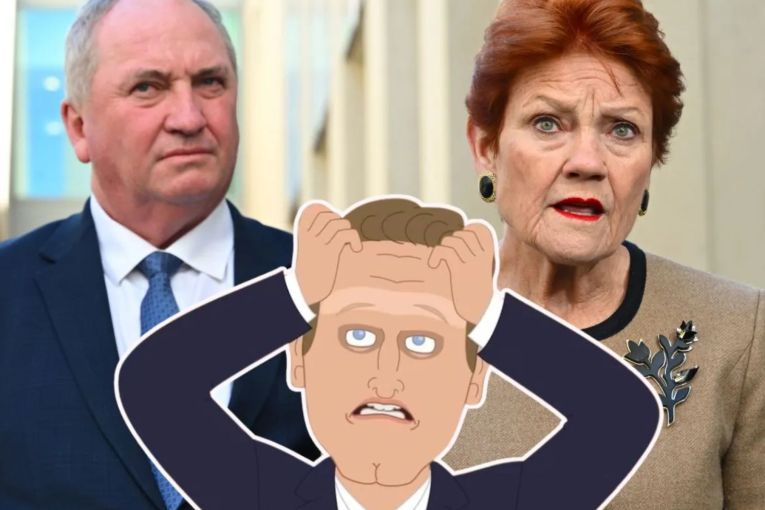
Nationals senators may quit amid Coalition split on hate speech
Three senior Nationals are expected to quit the shadow ministry after defying the Coalition’s official position to cross the floor on Tuesday night’s vote on hate speech laws.
Source: Sky News Australia
Senators Ross Cadell, Bridget McKenzie and Susan McDonald were waiting on Wednesday to learn if they would be asked to resign after breaking shadow cabinet solidarity in their votes on the government’s post-Bondi legislation.
“I am willing to take the consequences of my actions, I think that is fair. I can’t do the crime if I’m not prepared to do the time,” Cadell said.
“Some things you have to stand [up] for … I couldn’t get there, I had real fears about what could happen, so I did what I thought had to be done.”
Earlier, McKenzie ducked questions on whether she breached shadow cabinet solidarity. She said she was “very aware of the conventions of parliament” but would not be drawn on potential consequences for Tuesday’s defiance.
“I will be doing what I’ve always done, which is trying to do my very best to conduct my career here with integrity,” she told Sky News.
It is understood the Nationals met early on Wednesday morning, with the Liberal leadership holding its own closed-door meeting on the issue.
Party leaders David Littleproud and Sussan Ley were then due to speak before publicly confirming their positions.
You might like
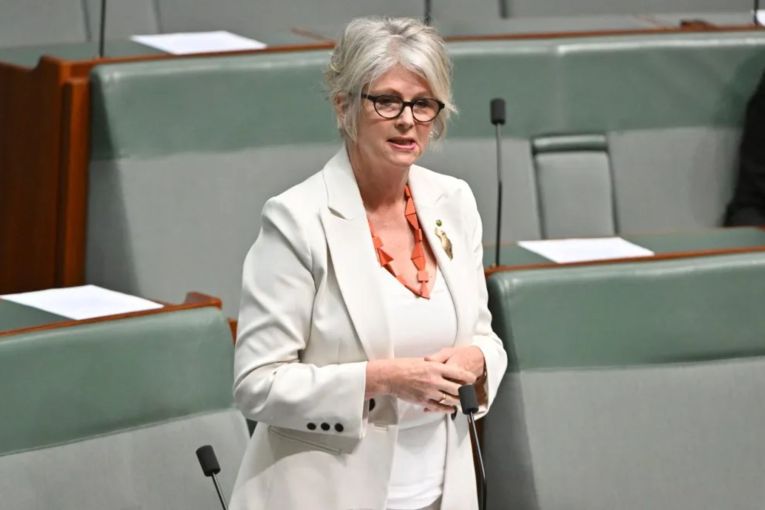
The government’s bill passed in a late-night sitting on Tuesday allows extremist groups espousing hate to be banned, stronger powers to cancel visas, and strengthened penalties for religious leaders who promote violence.
The laws were quickly drafted in response to the December 14 anti-Semitic terror attack at Bondi Beach that left 15 people dead.
The cross-party agreement was only reached after last-minute negotiations between Labor and Liberal leaders and weeks of fractious political debate.
The Nationals voted to oppose the reforms after an amendment put forward by McKenzie to have it referred to a committee for extra scrutiny was shot down.
LNP senator Matt Canavan also voted against the bill, as did Liberal senator Alex Antic. Northern Territory senator Jacinta Nampijinpa Price, who sits in the Liberal party room, abstained.
Also on Wednesday, Labor signalled more action to combat hate speech was unlikely, even if the royal commission into antisemitism calls for stronger laws.
“The massacre itself didn’t create the political will,” Home Affairs Minister Tony Burke told ABC radio on Wednesday.
“I’m not sure how even a royal commission will on hate speech laws.
Stay informed, daily
“I wish that were not the case, I’ve just got to give you my honest assessment.”
Greens justice spokesperson David Shoebridge, whose party voted against the measures, said there were real concerns the laws would target political criticism, particularly from those who opposed Israel’s actions in Gaza.
“We couldn’t support the hate speech bill because the government hasn’t said what conduct they want to ban, which groups they want to ban, who they’re targeting,” he said.
“It would have been reckless, it would have been a sort of betrayal of basic sense of democracy to ram through legislation last night with such broad, ranging impacts, when every legal expert we spoke to said it was reckless and dangerous and they didn’t know the scope of it.”
Meanwhile, Thomas Sewell, head of the neo-Nazi group the National Socialist Network, is raising money to challenge the laws.
The group, which has been involved in increasingly public stunts calling for a white Australia, has said it will disband because of the provisions.
Multiple Jewish groups have backed the hate crimes legislation as a welcome first step in cracking down on inflammatory language, but they believe it could go further.
Zionist Federation of Australia president Jeremy Leibler said the measures to shut down hate groups, which would likely include the National Socialist Network and radical Islamist organisation Hizb ut-Tahrir, were a good move.
The government was forced to strip out some tougher provisions, which would have created criminal offences for racial hatred, to get the bill through parliament.
Leibler said Labor should revisit the issue.
“I don’t think that we as a society can afford to abandon the possibility of strengthening hate speech laws,” he said.
-with AAP
Want to see more stories from InDaily Qld in your Google search results?
- Click here to set InDaily Qld as a preferred source.
- Tick the box next to "InDaily Qld". That's it.