‘This is just awful’: The toxic fumes harming our kids
It’s as easy as disengaging a button or key but it’s taken a long time to spread the message that idling engines near schools is a danger to children’s health.
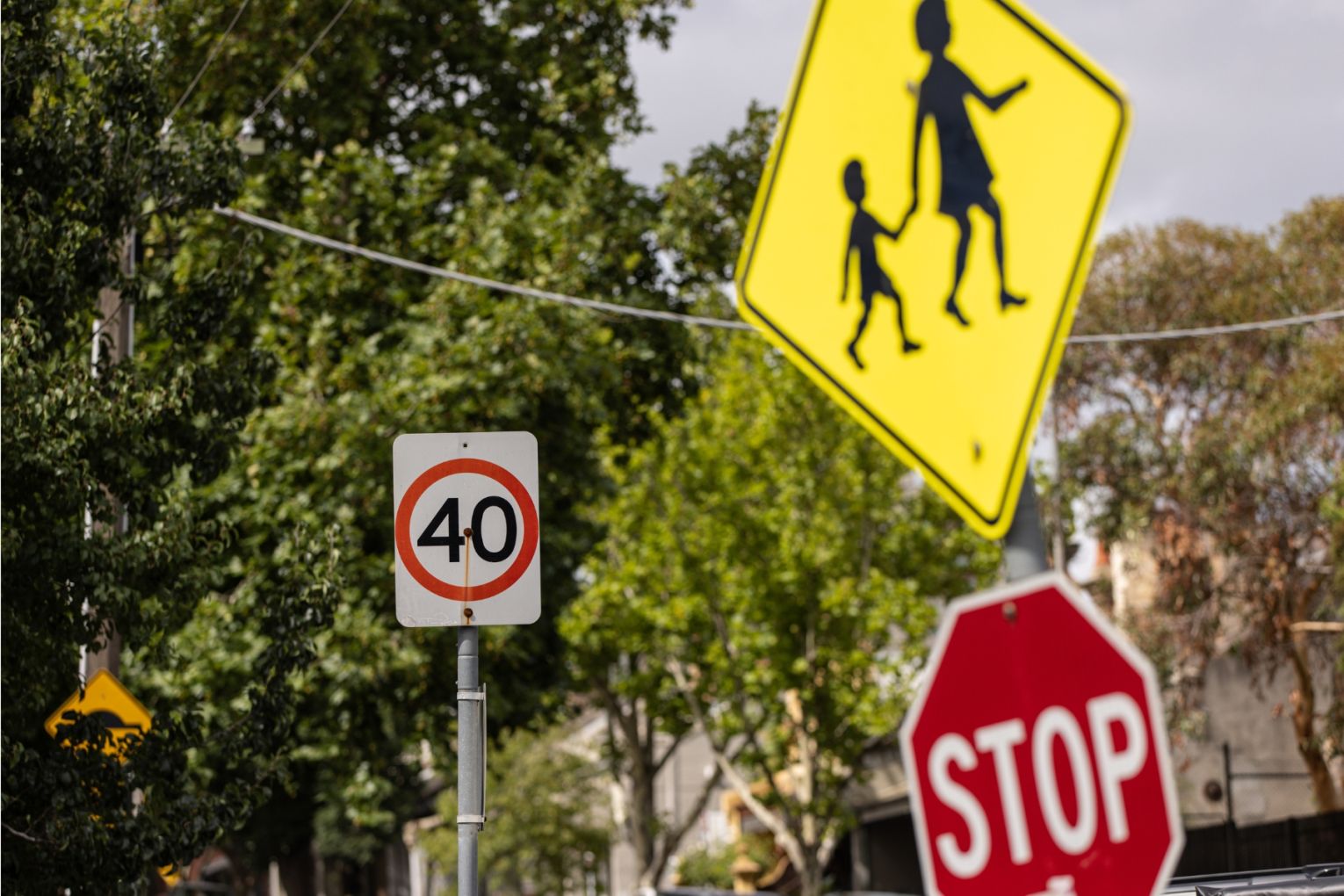
The drop-off and pick-up line has become a cleaner, quieter place at the primary school Anthony Hull and Fiona Foo send their kids to.
Parents now diligently switch off their combustion engines to prevent harmful pollutants spewing into the air.
St Anthony’s Catholic Primary School in Clovelly, in Sydney’s east, has been actively educating caregivers about the harms of idling near schools.
Dr Hull and Dr Foo, a husband-and-wife team with medical backgrounds, spearheaded the campaign after becoming distressed by the snaking line of rumbling vehicles.
“You smell it, and you’re like, ‘Oh, this is just awful’,” Dr Foo tells AAP.
The World Health Organisation says there is no safe level of air pollution and having cars idling creates hotspots of harmful gases and particulates.
Children are particularly vulnerable.
Their lungs are still developing, their faces are closer to exhaust fumes and they breathe in more air relative to body weight than adults.
Brief exposure can worsen asthma, while in the longer term it affects the development of the lungs, heart and brain.
You might like

Medical experts liken leaving a car running around a child to second-hand cigarette smoke.
The anti-idling project started with an audit finding that roughly 50 per cent of cars remain running while waiting.
Conducted during temperate autumn months, the findings suggest idling can be habitual rather than a necessity for air conditioners or heaters.
From there, flyers were sent home in bags, a poster competition was held and education sessions ran during parents and friends meetings.
School principal Anna Novak describes the Idle Off project as a success.
Once made aware of the harms, she says most parents and carers are happy to switch off their engines or park nearby and walk.
“Some parents bought electric cars as a result,” Ms Novak tells AAP.
The school is now trying to spread the message but she says progress has been gradual.
Australia has been slow to act on transport pollution, particularly needless idling, compared with other countries.
From London’s “Engine off at every stop” to India’s “Red light on, Gaadi off”, anti-idling campaigns can be found worldwide and are typically strictest around schools and childcare centres.
University of Melbourne health and policy researcher Clare Walter says there is a prevailing narrative that Australia has “good” air quality.
“How do you define good? We don’t say we have a ‘good’ road toll,” Dr Walter says.
Stay informed, daily
Air pollution is systematically “overlooked, underestimated and deliberately minimised” in Australia, she says, with even light-touch interventions such as encouraging less idling around schools struggling to gain traction.
Part of the problem is air pollution gets handballed from one portfolio to another and across three tiers of government.
Some jurisdictions point to electric cars as the answer but Dr Walter says a generation of children are being exposed in the interim.
Students will continue inhaling a cocktail of tailpipe gases, including carbon monoxide, carbon dioxide, nitrous oxide and sulphur oxides.
GP and executive director of Doctors for the Environment Australia Kate Wylie says particulate matter from exhausts is also harmful.
“Those particles tend to get stuck in our upper airways,” she tells AAP, where they can enter lungs and bloodstreams and cause a host of health problems.
In Australia, air pollution was attributed to 1.3 per cent of the total disease burden and linked to over 3200 deaths in 2018, more than the 1300 killed on roads last year.
Dr Hull and Dr Foo have fielded many concerns, particularly regarding hot days.
A common sense approach should be adopted, Dr Hull says.
Air conditioners can stay running most of the time but switched off briefly while kids jump in, or parents might consider wearing lighter clothing or parking and waiting in the shade.
Beyond health, Dr Hull says idling less is better for engines and saves fuel – pertinent as overseas conflict pushes petrol prices higher.
Keeping engines running is also a needless source of greenhouse emissions, with stopping idling equivalent to taking 1.6 million cars off the road.
Parents for Climate have recently taken up the anti-idling campaign in collaboration with Doctors for the Environment.
The non-profit’s Laura Billings has been surprised by the number of parents worried about idling pollution and encourages them to champion the cause.
“It doesn’t cost anything, it doesn’t require new technology, no new infrastructure,” she tells AAP.
“It’s just awareness.”
Want to see more stories from InDaily Qld in your Google search results?
- Click here to set InDaily Qld as a preferred source.
- Tick the box next to "InDaily Qld". That's it.