Passengers to pay as airports unveil big spending plans
Some of Australia’s biggest airports are embarking on massive infrastructure expansions – with passengers likely to end up paying for them.
Source: Melbourne Airport
Airports have collectively proposed to spend $20 billion on major infrastructure in the next decade, the Australian Competition and Consumer Commission said in its latest airport monitoring report last week.
ACCC commissioner Anna Brakey said that would likely bring higher charges for airlines and, ultimately, more expensive tickets for passengers.
While ongoing investment to increase airport capacity is needed, “large capital programs are likely to place upward pressure on airport charges paid by airlines, which may result in higher airfares for passengers as these costs are recouped”, she said.
“It is important that airport charges reflect sensible and timely investment decisions, efficient costs and a rate of return that matches the risks involved.”
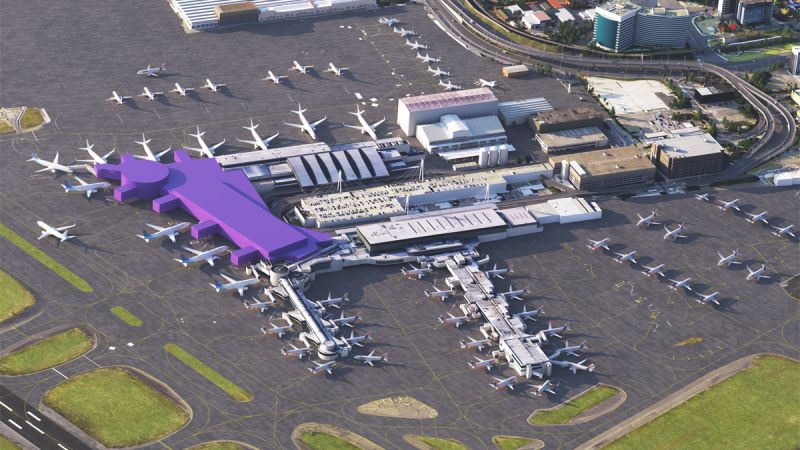
Sydney Airport is planning a massive expansion of its domestic terminal. Photo: Sydney Airport
Airports make much of their money from charging airlines to land on their runways and use their terminals.
But these charges are unregulated and the watchdog said monitoring was ineffective at constraining “the behaviour of the major airports, who hold market power”.
You might like


Airlines have been outspoken in their criticism of the rapid rise in airport charges.
In February, Virgin Australia chief financial officer Race Strauss told an investor call that airport charges increased 14 per cent in the year to December 2025, compared to 3.8 per cent headline inflation.
Echoing concerns from Qantas boss Vanessa Hudson, Virgin chief executive Dave Emerson said air travel could become unaffordable for Australians if the industry was not vigilant.
The ACCC said curtailing the market power of major airports would limit growth in airport charges and ultimately airfares. It called on the federal government to hold a Productivity Commission inquiry into whether regulatory settings for airports are appropriate.
Labor has committed to beefing up the airport monitoring regime as part of its response to the Aviation White Paper, with Sydney’s second airport set to increase competition when commercial flights begin later this year.
The Australian Airports Association said infrastructure investment was necessary to meet growth in passenger numbers, which has strained terminal capacity, processing systems, security screening and baggage facilities.
“Many Australians have likely experienced crowding at international terminals in recent years, and we’re working to fix this,” chief executive Simon Westaway said.
“The ACCC report highlights a profitable sector supported by strong international travel but also indicates that airports are facing rising cost pressures – like the rest of the aviation sector – with expenses up 8.1 per cent last financial year.”
Stay informed, daily
Upcoming projects include Sydney Airport’s $200 million domestic terminal transformation, which is intended to get 95 per cent of passengers from kerb to gate in under 15 minutes. Melbourne Tullamarine is planning a third runway and recently revealed plans for a $4.5 billion international terminal expansion that would also add five gates.
In all, Melbourne, Sydney, Brisbane and Perth airports are planning to spend a combined $33 billion in the next decade, in collaboration with airlines, to expand terminals, improve baggage processing, upgrade runways and deliver better passenger amenities.
Brisbane Airport will spend $5 billion on a domestic terminal update that includes direct connection to parking and pick-up areas.
The watchdog found that airports are raking in enormous revenue from parking, with Brisbane making almost a 77 cents profit from every dollar charged for parking.
Collectively, the four-largest airports earned $402.1 million in operating profits from parking, with Sydney raking in $108.7 million – an 11.1 per cent increase on the prior financial year.
Brisbane’s carparks were the most lucrative. Thanks to the country’s highest drive-up fees of $25 for less than 60 minutes, the airport generated $125.3 million in profit.
Sydney Airport gained 66.3 cents on every dollar charged for parking, Perth made 61.4 cents and Melbourne 59.5 cents.
The ACCC found Sydney customers dug the deepest for longer-term parking in the year to June 30, 2025, at $84.84 for two-three days. Melbourne was next, charging drivers $79.30.
“Car parking continues to be a lucrative business with operating profit margins above 60 per cent at Brisbane, Perth and Sydney airports,” Brakey said.
-with AAP
Want to see more stories from InDaily Qld in your Google search results?
- Click here to set InDaily Qld as a preferred source.
- Tick the box next to "InDaily Qld". That's it.