At least 32 dead after powerful quake rocks Philippines
A magnitude 7.8 earthquake has hit the southern Philippines, killing at least 32 people, damaging buildings and sparking tsunami alerts.
Source: Pilipinas Today
At least 32 people are dead after a magnitude 7.8 earthquake struck the southern Philippines on Monday and triggered tsunami alerts across the Pacific.
Buildings were destroyed in the port city of General Santos and the earthquake caused a landslide, which buried a village and claimed 13 lives at Sarangani.
There were tsunami warnings for the coasts of the Philippines, Indonesia, Taiwan, Japan, Papua New Guinea and Palau.
Evacuation warnings impacted neighbouring Indonesia and Malaysia.
Philippines President Ferdinand Marcos told Filipinos living near the coast to “move to higher ground now. Do not wait”.
Footage shared by major media organisations shows fast-food workers fleeing a Jollibee franchise moments before the building collapses, with shocked witnesses screaming in the street.
In another clip, dozens of young students huddle together outdoors at a school in Davao, swaying as the ground shakes before an awning collapses.
The quake, the strongest to strike the country so far in 2026, was centred at sea off Mindanao, the second most populous island in the Philippine archipelago.
You might like

“Our pick-up truck suddenly jerked and I thought we had a flat tyre,” said Rod Sosmena, regional director of the Office of Civil Defence in General Santos, where the quake struck at 7.37am.
“The shaking was very strong and people dashed out of houses into the streets.”
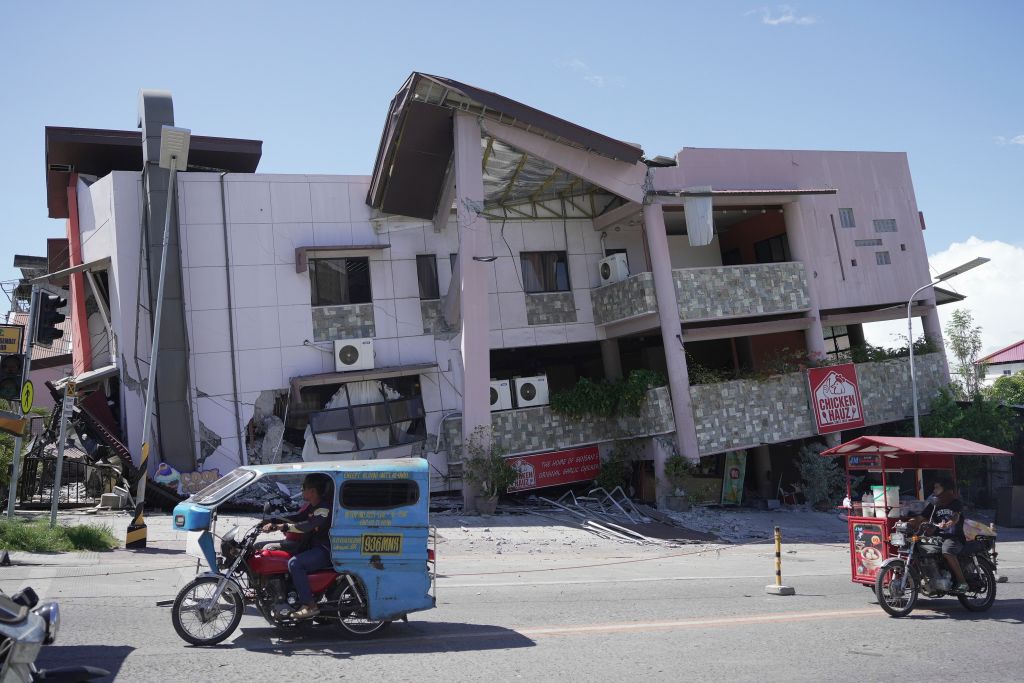
A damaged food establishment following an earthquake in General Santos City. Photo: AAP
General Santos is a port city of more than 700,000 people that is a regional hub for the tuna export industry and other commerce.
According to the Philippine Institute of Volcanology and Seismology, the quake occurred at a depth of 33 kilometres.
The Pacific Tsunami Warning Centre said the threat of a tsunami had largely passed about five hours after the quake.
Philippine officials also lifted a tsunami warning by mid-afternoon.
Six shanties on stilts were damaged in a coastal village in Zamboanga del Sur due to the quake and taller waves, officials said.
The Office of Civil Defence said earlier that at least 19 people were killed, mostly in collapsed buildings and landslides, while thousands of villagers were displaced.
Among the dead were seven people in General Santos, where a few small buildings collapsed or were severely damaged, Sosmena said.
Stay informed, daily
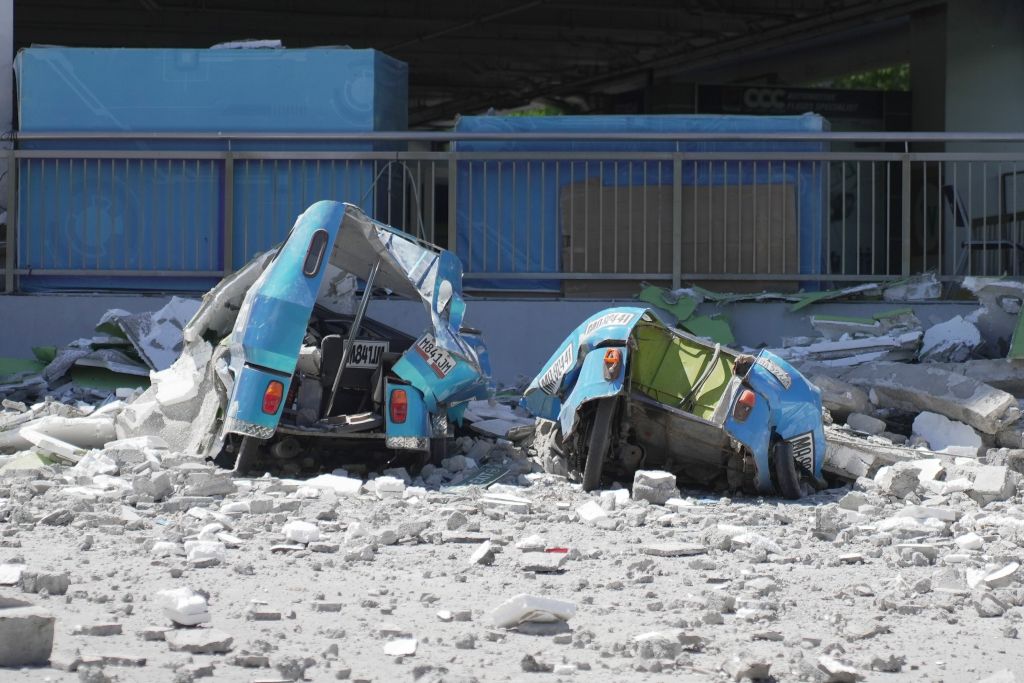
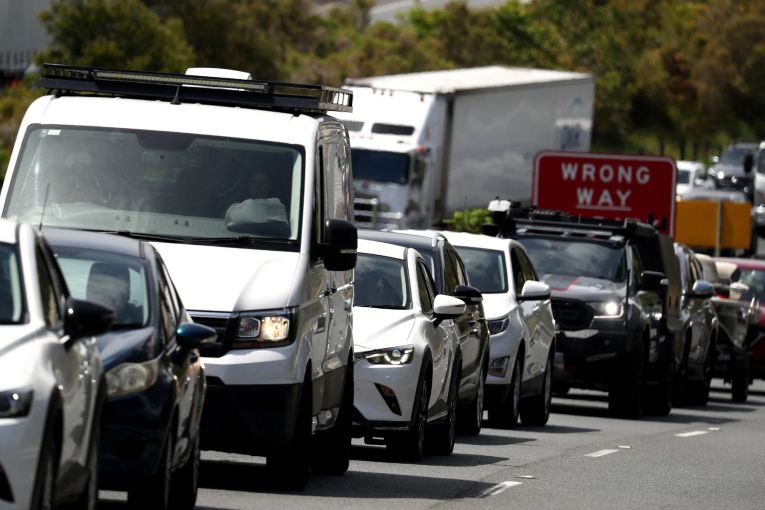
Vehicles in General Santos City. Photo: AAP
The other deaths were caused by falling debris, a damaged mosque and a landslide in the southern provinces of Sarangani, South Cotabato and Davao Occidental and on Balut Island, Sosmena and another regional disaster-response official, Ednar Dayanghirang, said.
Sosmena said authorities were checking reports of students being trapped in a two-storey school that collapsed in General Santos.
Public schools had reopened nationwide on Monday after the summer holidays.
Dayanghirang said more than 100 students attending morning flag-raising ceremonies in his southern region suffered bruises and some fainted in panic.
Waves of a metre were monitored in the provinces of Sultan Kudarat and Sarangani, and there was one 1.4-metre wave in the coastal area of Kiamba town in Sarangani.
The quake was also felt in Malaysia’s Sabah state on Borneo island.
An 83-centimetre tsunami was measured by a gauge off Indonesia’s Sulawesi island, and the PTWC said 30-centimetre waves were measured in Palau.
Waves up to 20 centimetres were detected on the remote Japanese island of Chichijima and the central Japanese town of Kushimoto, the Japan Meteorological Agency said.
The US Geological Survey reported the depth of the original quake at 55 kilometres.
The main quake was followed by aftershocks as strong as 6.5 magnitude.
The Philippines is often hit by earthquakes and volcanic eruptions due to its location on the Pacific “Ring of Fire”, an arc of seismic faults around the ocean.
-with AAP
Want to see more stories from InDaily Qld in your Google search results?
- Click here to set InDaily Qld as a preferred source.
- Tick the box next to "InDaily Qld". That's it.