Housing market ‘fully in decline’ as prices tank
House prices in Australia have recorded their steepest monthly decline in more than three years, according to new data.
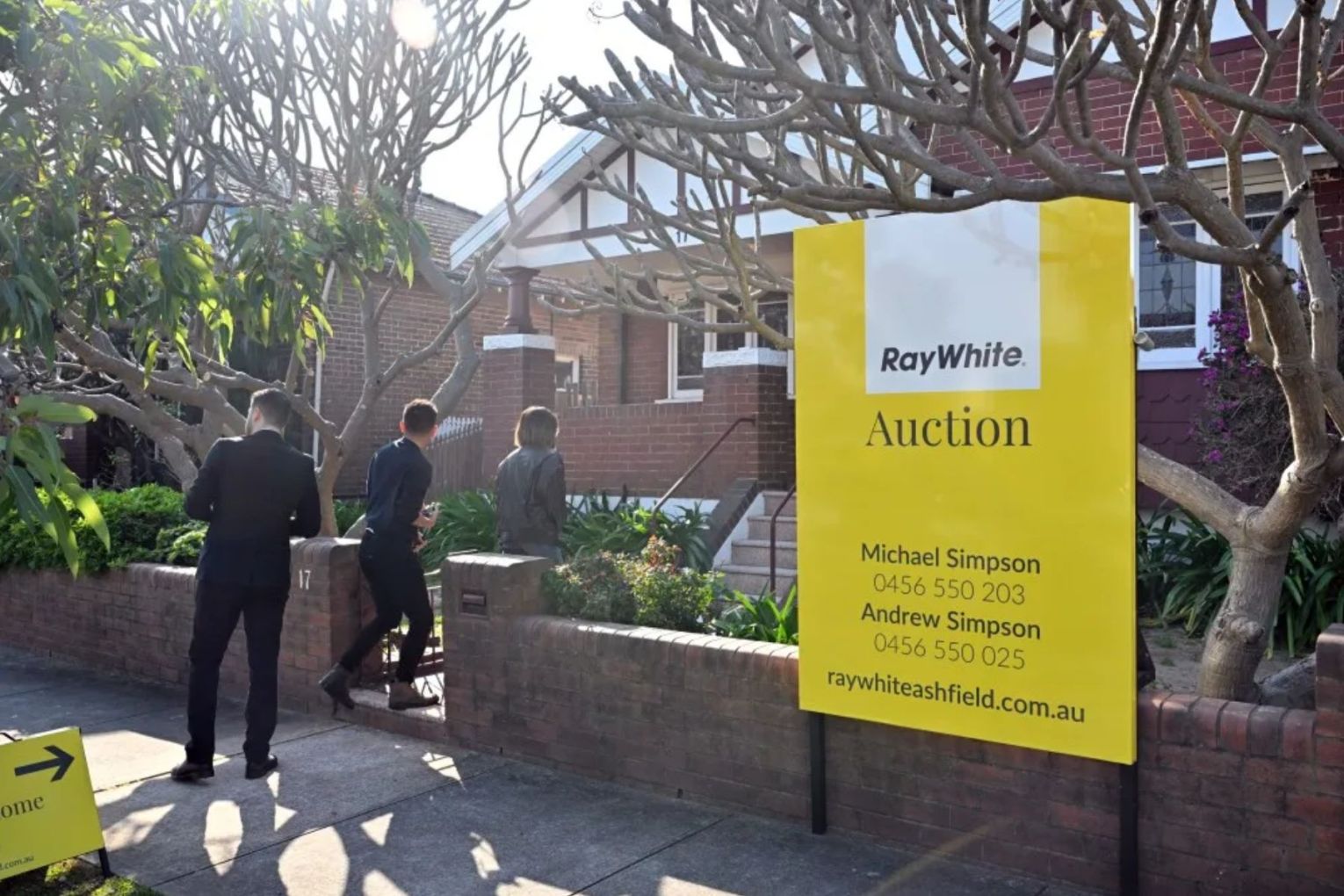
House prices in Australia have recorded their steepest monthly decline in more than three years, according to new data, with predictions that the market is “fully in decline”.
Sydney’s median home price fell 1.2 per cent to $1,265,608 in June, leading a nationwide decline of 0.4 per cent.
It was the largest month-on-month fall in national dwelling values since December 2022, property data firm Cotality said in its monthly home price report on Wednesday.
“The key change we’ve seen in our June data is that the national market is now fully in decline,” Cotality research head Gerard Burg told the ABC.
The downturn followed the federal government introducing changes to capital gains tax and negative gearing, which dampened already weak buyer sentiment.
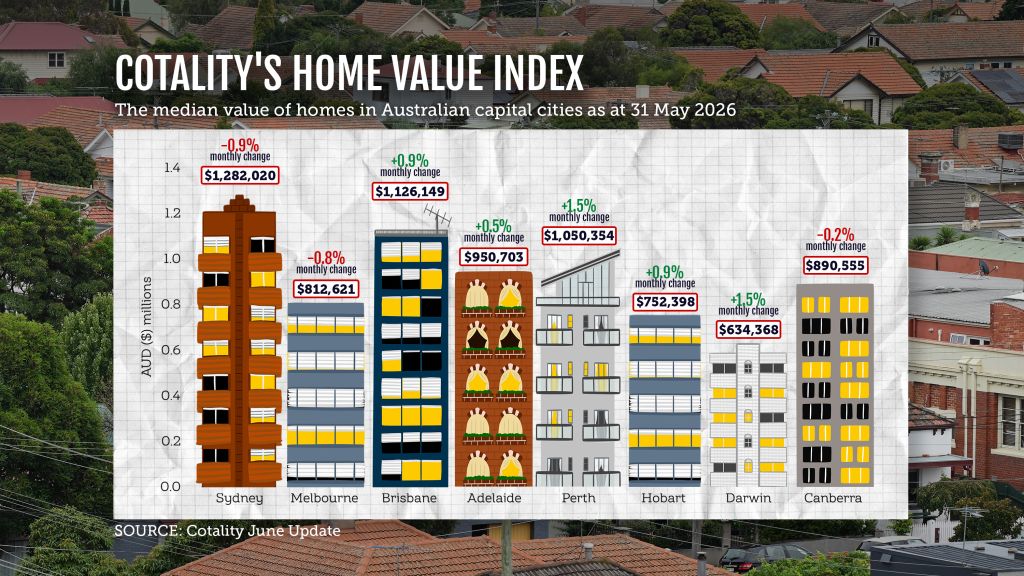
The median value of homes in Australian capital cities at May 31, according to Cotality. Photo: AAP
Cotality research director Tim Lawless said demand for housing had dropped following three interest rate rises and rising affordability pressures, even before the federal tax changes.
You might like

Labor’s changes to capital gains tax and negative gearing concessions further hit investor confidence, he said.
“Speaking to people on the ground, some more anecdotal evidence does suggest there’s been a pretty sharp pullback in investment activity already,” Lawless said.
“But I’m not hearing much about first-home buyers becoming more active at a time when affordability is improving and buying conditions are improving. I think confidence is just too low.”
He said it was too early to tell whether it was just adding to a cyclical downturn or represented an inflection point in the housing market long-term.
On Wednesday morning, Prime Minister Anthony Albanese said house prices would still rise but the increase would be “slightly lower than it would have been without these measures”.
“The great news is that this Saturday, like last Saturday, first-home buyers would have rocked up to auctions and not be competing with investors who want to negatively gear their properties and have taxpayers backing in those investments. So, a level playing field,” he told ABC’s News Breakfast.
“[What] we’re seeing, increasingly, is stories right around the country of people who had almost given up on owning their first home, getting access to a roof over their own head.”
Lawless said pullbacks in home prices and transactions were tracking about in line with previous cycles.
Stay informed, daily
So far Sydney home values were down 3.6 per cent from their peak.
In 2022, when housing markets retreated off the back of the Reserve Bank’s rapid interest rate tightening following the Covid-19 pandemic, they were down about 8.5 per cent at the same stage of the downturn, Lawless said.
The tax changes would probably mean less aggregate demand in the market and less upward pressure on prices, he said.
“But whether or not this is an end to what people are describing as a super cycle, I simply don’t know,” Lawless said.
Melbourne dwelling prices fell 1 per cent over the month, while Adelaide was flat for the first time since early 2025.
The pace of growth in the other mid-sized capitals was significantly slower, but Brisbane still grew 0.3 per cent and Perth was up 0.7 per cent.
Lawless said there was a risk that first-home buyers who had used the government’s 5 per cent deposit guarantee scheme would end up in negative equity if prices fell further.
But it would not be a major problem unless owners were forced to sell, which would be relatively rare given the robust labour market, he said.
“The reality is all these first-home buyers buying at the 5 per cent deposit guarantee have been tested to repay their mortgages with a 3 per cent serviceability buffer, and with fairly stringent assessments on their spending,” he said.
Such a serviceability buffer means lenders assess borrowers’ ability to pay their loan if interest rates rise a further 3 per cent.
Housing Minister Clare O’Neil said Treasury had forecast the tax changes to cause home prices to grow 2 per cent slower, but they would still increase over time.
“[The budget] delivers, for the first time, a level playing field for our nation’s first-home buyers, that’s going to get 75,000 Australians who are today stuck in renting into the home of their own that they deserve,” she said in question time on Tuesday.
-with AAP
Want to see more stories from InDaily Qld in your Google search results?
- Click here to set InDaily Qld as a preferred source.
- Tick the box next to "InDaily Qld". That's it.