Two boys among Aussies missing after flash flood devastates Nepal-Tibet
Hundreds of tourists are missing in Nepal after a wall of water and mud smashed through villages, among them 34 Australians.
Source: X
Thirty-four Australians are among hundreds of tourists missing in Nepal after a thundering wall of water smashed through villages and caused catastrophic flooding.
The government is urgently working to confirm the welfare of dozens of missing Australians after catastrophic flooding and a landslide hit communities along the Himalayan border between Nepal and China.
Latest reports include a group of 15 Australians on a hiking tour in Nepal being unaccounted for after devastating flooding struck the country.
The group was travelling with US-based tour company Himalayan Glacier Adventures, including two boys aged 11 and 14 years with Founder and chief executive Sagar Pandey telling AAP the group lost contact after the landslide on Wednesday about 8.30am local time.
Australian officials are aware of several citizens in the impacted region, near where a huge wall of mud and rock collapsed into a river on Wednesday.
Foreign Minister Penny Wong said on Thursday afternoon that she would not confirm details of any Australians “until we have both ascertained them and also engaged with next of kin”.
“At this stage, access and information are very limited, given the scale of disaster,” Wong said.
At a press conference in Adelaide on Thursday, Wong said she asked the Department of Foreign Affairs and Trade this morning to “ensure we dispatched additional personnel to the region”.
At least 160 people are dead and 340 tourists remain unaccounted for after the disaster unfolded along the Himalayan border between Nepal and Tibet, a popular region for outdoor adventurers.
It’s believed a landslide of mud and rock collapsed upstream in Tibet, triggering a devastating wall of water that swept into Nepal and destroyed buildings and houses, roads and power poles.
Verified videos show the horrifying unfolding disaster, with dozens of people swept away, collapsed homes, floating cars and a metal bridge being washed away.
You might like


Witnesses told Reuters the waters engulfed entire villages.
Nepali officials said 403 people, including 341 foreigners, were reported missing.
Prime Minister Anthony Albanese has urged Australians in the affected area to follow the advice of local authorities.
“We are aware of a number of Australians in the area and Australian officials are urgently working to confirm their welfare,” he said in a statement.
“We are liaising with local authorities as well as tour operators. We stand ready to provide consular assistance.”
Albanese expressed his “deepest sympathies” to those affected by the flooding.
Around 133 of those missing were from India on pilgrimage to Mount Kailash in Tibet, a sacred site for Hindus, said Sunil Sharma, a tourism board spokesman.
Also missing were 34 from Australia, 47 from the US, 33 from Britain and 24 from Canada, he said.
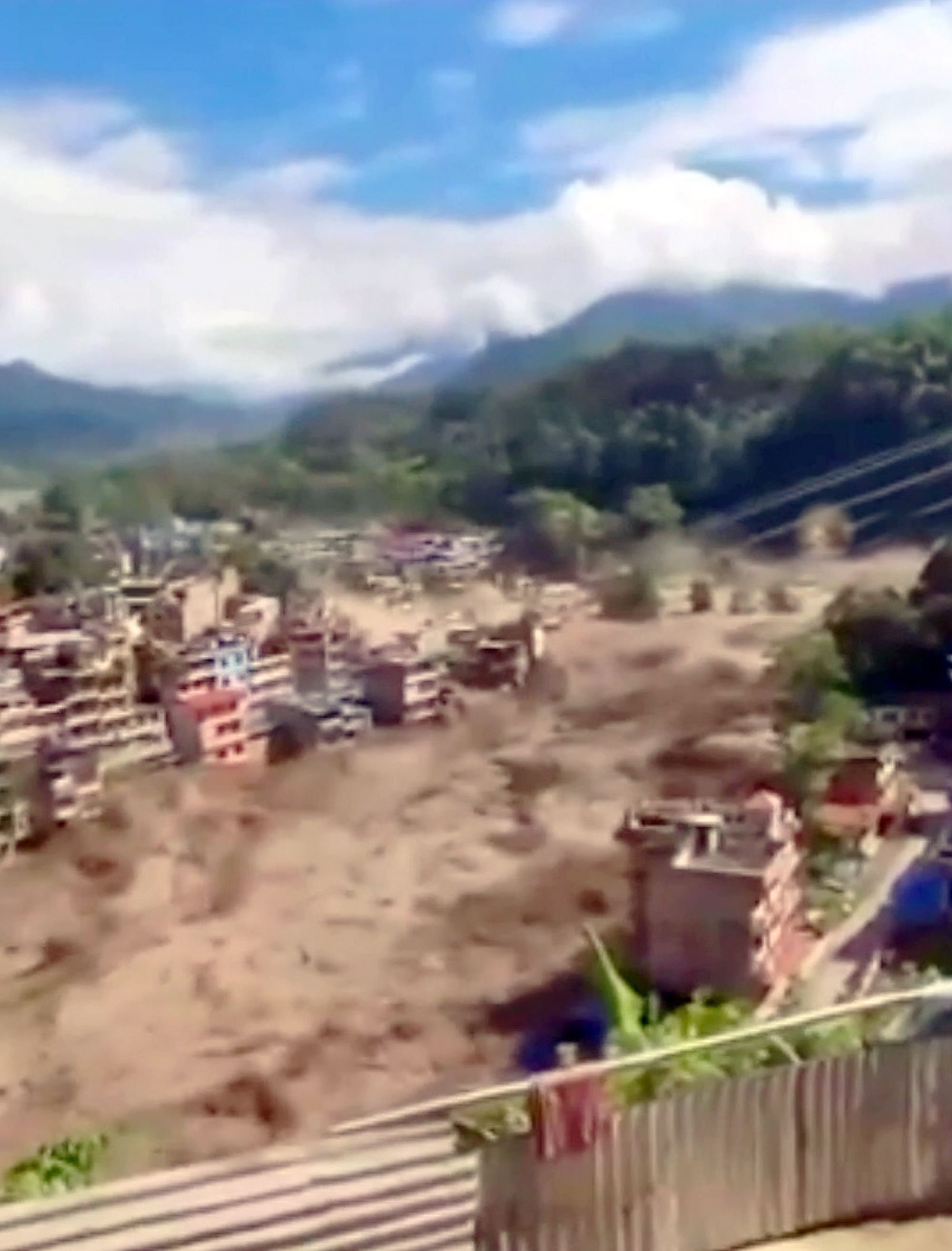
A torrent roars through a mountain village near the Himalayan border. Photo: AAP
“It was a huge gush of mud coming straight towards us. As it got closer, it kept rising higher and higher,” said Keshav Prasad Baral, a 68-year-old survivor.
“When I saw it enter our home, I tried to grab my wife’s hand and take her to the terrace. But she was swept away by the mud.
“Four or five hours later, a helicopter came to rescue me. My wife is still somewhere beneath the mud. She’s gone.”
Another survivor described being saved by clinging to a mango tree as he watched the house where he had been working disappear.
Initial reports suggested an earthquake in the area could have triggered an avalanche and caused the floods, Nepali Foreign Minister Shisir Khanal told the country’s parliament on Wednesday, local media reported.
But it was later reported that seismic energy was generated by a landslide, according to the US Geological Survey.
Stay informed, daily
From its origins in Tibet, the Bhote Koshi river empties into Nepal’s Trishuli river, which eventually flows into India as the Gandak river.
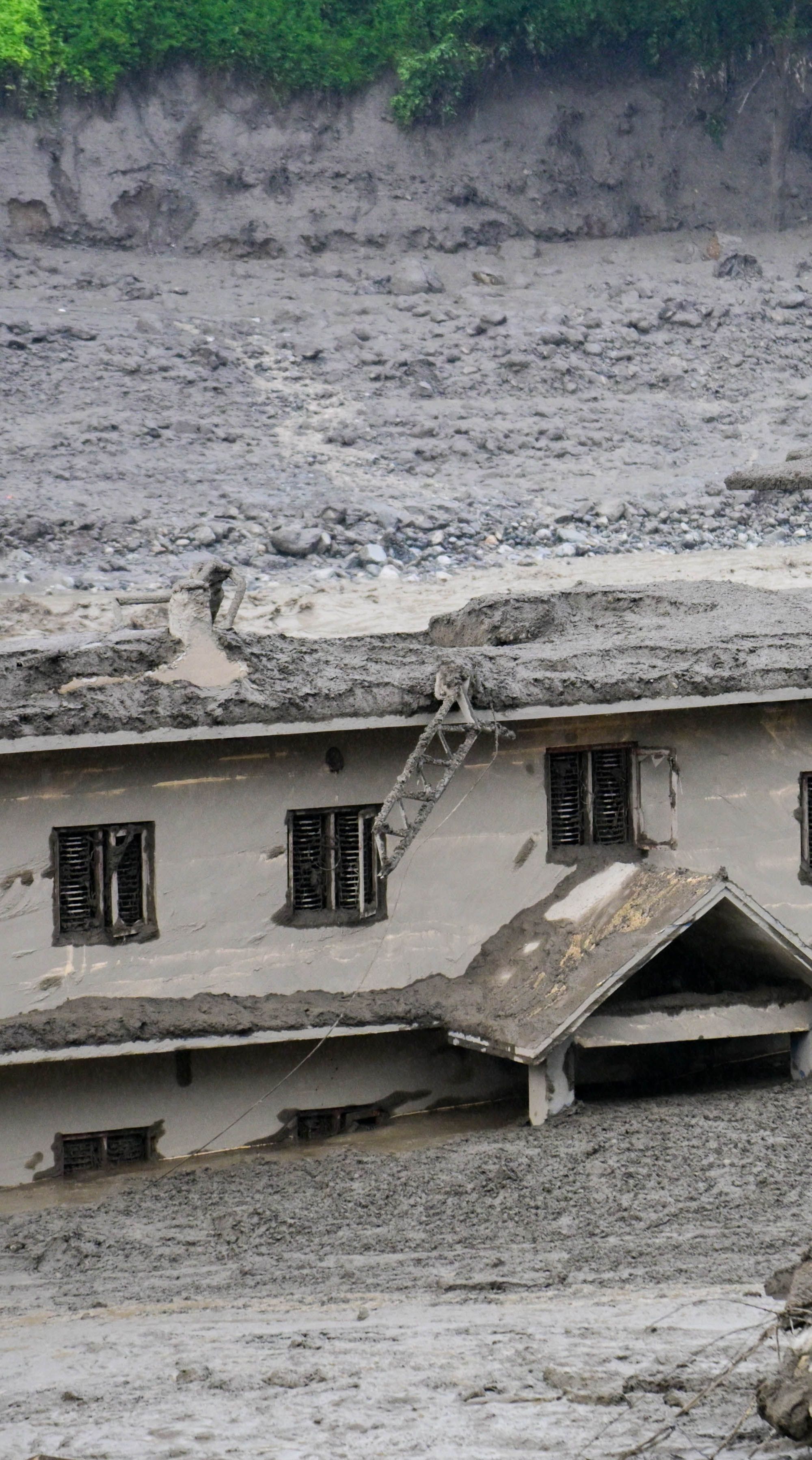
The aftermath of flash floods and mudslides along the Trishuli River, Nepal. Photo: AAP
Security footage captured in a border town on the Chinese side of the Nepal-Tibet border showed many people fleeing before a torrent of rock, mud and water destroyed buildings, vehicles and took many lives.
With the deluge of muddy water sweeping down from an estimated nearly 2000 metres above sea level, flood alerts were issued in the populous northern Indian states of Uttar Pradesh and Bihar, which border Nepal and where rivers flow down the mountains into the plains.
Authorities in Bihar said they had relocated about 5000 people from six districts and planned to move up to 12,000 people.
At least 62 missing Nepali citizens were among hundreds of locals trekking in the Gosaikunda Lake area in Rasuwa, coinciding with the local festival of Janai Purnima on Friday.
Nepal police spokesman Abi Narayan Kafle told the Associated Press at least 28 police officials were missing.
Local media reported 65 people were being treated in hospitals in the area and in the capital Kathmandu.
A Department of Foreign Affairs and Trade spokesperson told AAP they were liaising with local authorities as well as tour operators and stood ready to provide consular assistance.
“We extend our deepest sympathies to those affected by the significant flooding in Nepal and Tibet, China,” the spokesperson said.
“We are aware of a number of Australians in the area and Australian officials are urgently working to confirm their welfare.”
The loss of life and and destruction caused by flash flooding is devastating, Foreign Minister Penny Wong said.
“Our thoughts are with the loved ones of those killed or missing and all affected by this disaster,” she said in a statement on Thursday morning.
“Officials are urgently working to confirm the welfare of Australians in the area.”
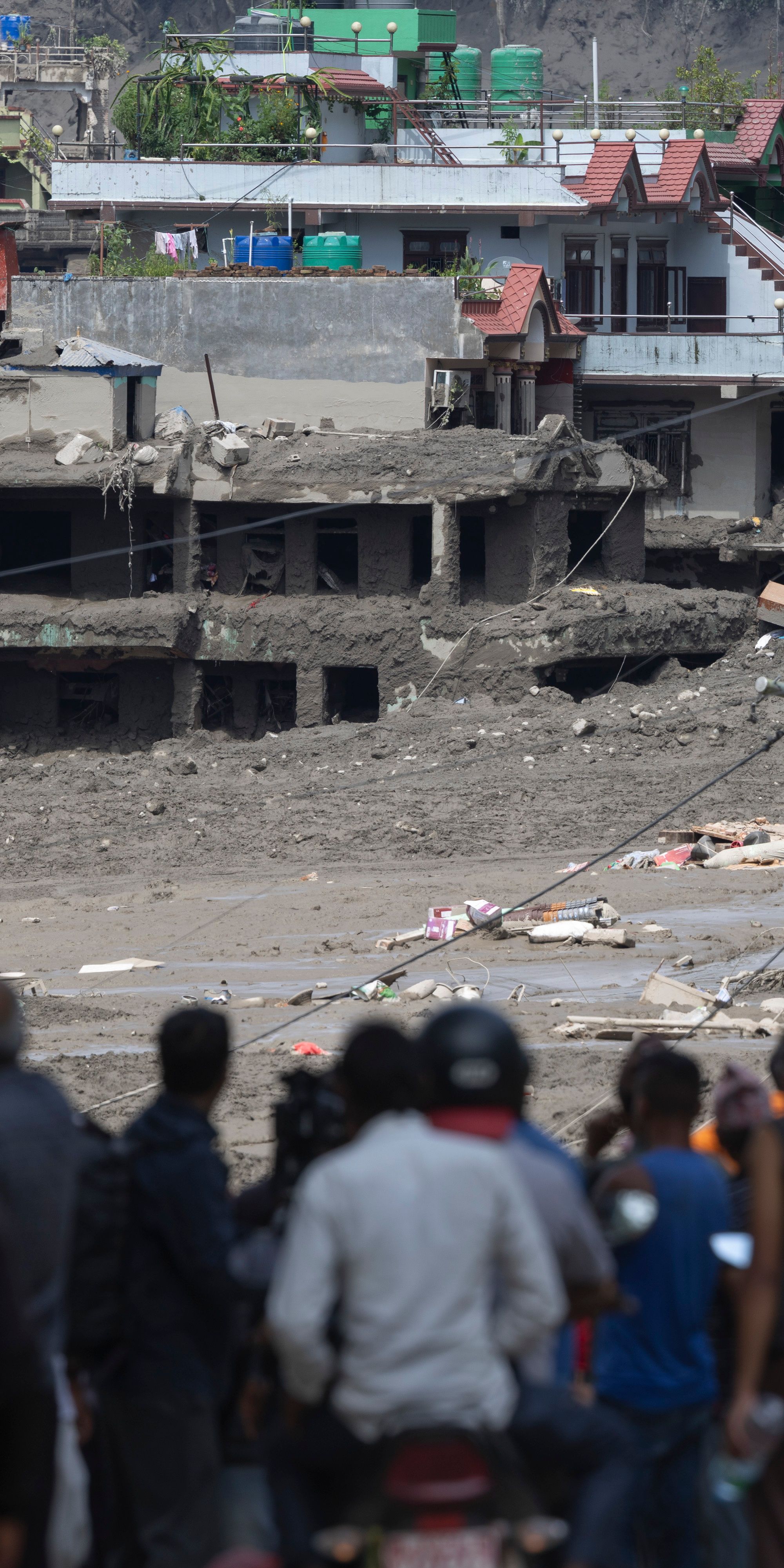
The death toll from a flash flood that struck the Nepali border has risen over 150, police say. Photo: AAP
South Korea separately said that eight of its citizens working on a hydropower plant were missing.
The exact cause of the mudslide could not be immediately determined but the German Research Centre for Geosciences initially said there was a 4.4 magnitude quake about seven minutes before the time shown on the security footage time-stamp.
An initial study of Planet Labs satellite imagery indicated that a landslide of snow and rock triggered a debris-laden flood in the Lhende river, about 20 kilometres north-east of the Nepal-China Rasuwagadhi border crossing, Nepal’s National Disaster Risk Reduction and Management Authority said on X.
Before and after images from Planet Labs appeared to show a wide swathe of destruction on either side of the usual river course.
Qianggong Zhang, head of climate and environmental risks at the Kathmandu-based International Centre for Integrated Mountain Development, said the cause of the ice-rock avalanche into the Lhende Khola river on the Nepali side was yet to be confirmed.
“With a blockage still lodged upstream on the Nepal-China border river, authorities warn a second flood may occur,” Zhang said.
Rescue helicopters could not land in Nepal’s affected areas of Syapru Besi and Timure in the mountainous district of Rasuwa, with a population of about 50,000, officials said, with the river flowing above its normal course.
-with AAP/AP
Want to see more stories from InDaily Qld in your Google search results?
- Click here to set InDaily Qld as a preferred source.
- Tick the box next to "InDaily Qld". That's it.