Five more Australians found safe after Nepal disaster
There is a glimmer of hope for families as more Australians are found safe, a week after a devastating flash flood on the Nepal-Tibet border.
Source: Instagram/Emily Boyd
Five more Australians have been found alive after catastrophic flash flooding hit the Nepal-Tibet border last week.
At least 38 citizens remain missing after multiple Australians were confirmed safe, the Department of Foreign Affairs and Trade confirmed on Wednesday.
More than 1000 people have been killed after the glacier collapse sparked a huge mudslide and flash flooding near the Gyirong border crossing in the Himalayas on August 26.
Two of the five Australians were found in Nepal and Tibet, with the other three outside the crisis zone, the government said early on Wednesday. None had previously been in contact with families or next of kin since the disaster and their welfare could not initially be confirmed.
One Australian in Tibet, who remains unidentified, made contact on Tuesday with authorities and is receiving support from consular officers.
You might like


They have spoken with family members.
Foreign Minister Penny Wong previously said nine Australians were missing on the Chinese side of the border, after speaking to Australia’s ambassador in China on Friday.
Satellite captured glacier crack days before disaster
Scientists say the glacier that collapsed showed warning signs days before it broke off and caused devastating flooding in Nepal.
Stay informed, daily
“In hindsight, there were some pre-event indications,” a report from international scientific consortium HiRISK said.
They included melted water turning “visibly brown” and a “crack propagating” into the surrounding bedrock slope.
HiRISK looked at satellite imagery for its August 28 report.
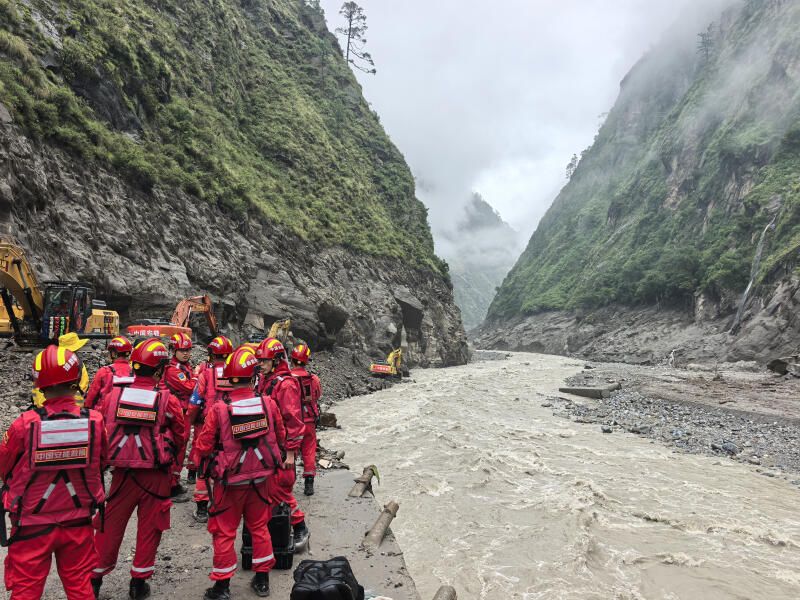
A warning system could have saved many lives downstream, says the report. Photo: AAP
The scientists said a “significant number of lives” could have been saved if warning systems had been implemented further downstream, where more than 10 minutes’ warning could have been given.
They said early warning systems had been set up in the region recently, but not at the site of the avalanche due to its isolation.
“The science is there, we have the data to do monitoring, but we have to constructively work together and take action,” the paper’s co-author, Jakob Steiner, said.
“At the moment, in a geopolitically stressed situation, this is very, very difficult.”
Even if there had been warning systems, the speed of the avalanche meant communities at the border-checkpoint would not have been able to be evacuated in time, the report said.
-with AAP
Want to see more stories from InDaily Qld in your Google search results?
- Click here to set InDaily Qld as a preferred source.
- Tick the box next to "InDaily Qld". That's it.