Airport chaos as volcano eruption grounds Australian flights
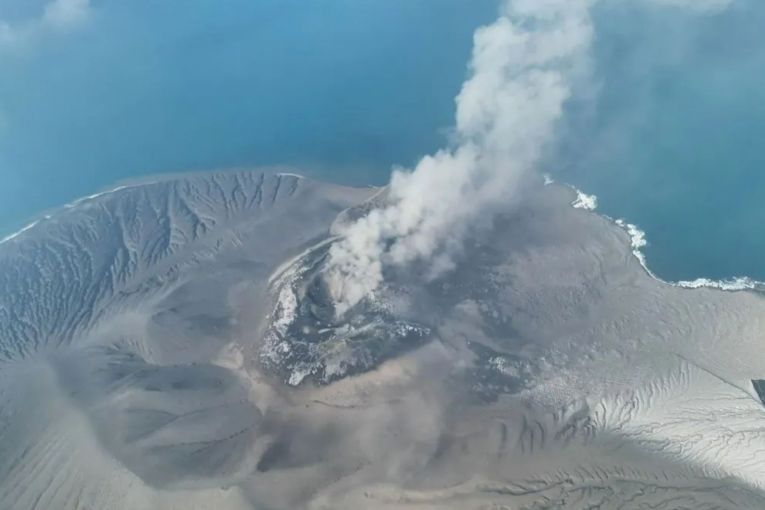
Thousands of flights have been cancelled across Indonesia after the eruption of Mount Anak Krakatau.
Source: X
Airports have halted operations and grounded hundreds of flights as Indonesia’s Mount Anak Krakatau enters a fourth day of eruptions.
Soekarno-Hatta International Airport, the main airport in the Indonesian capital Jakarta, had suspended flight operations due to volcanic ash, the airport posted on Instagram.
The decision left thousands of passengers stranded.
Flights to and from Australian airports have also been disrupted, with travellers urged to contact their airline with queries.
Indonesia’s transportation ministry said the suspension, which has already been extended several times, had affected 964 flights at Jakarta’s main airport alone.
Singapore Airlines, Malaysia Airlines, AirAsia and Lion Air Group said they had cancelled flights to and from Jakarta for the rest of Monday.
Total affected flights across the eight airports reached more than 1500 flights with 170,000 passengers, the ministry said.
You might like


Anak Krakatau, which is about halfway between Java and Sumatra in Indonesia’s vast island chain, has been erupting since late on Friday. The transport ministry said volcanic ash was detected at the airport early on Sunday.
Ash reached as high as 6000 metres on the Java side of the volcano and 15,000 metres on the Sumatra side and some parts of Banten province in Java, meteorological agency BMKG posted on its website.
Ersy Laksita Rini, 55, was upset when she arrived at Soekarno-Hatta International and learned that her 8am flight to Surabaya had been cancelled. She said the airline had not informed her ahead of time.
“If the eruption happened last night and there were predictions of flight cancellations, we should have been notified from the start,” she told Reuters.
“That way, passengers wouldn’t have needed to come here so early and could have looked for alternatives instead.”
Disaster mitigation agency BNPB said it would conduct a weather modification operation, which could include cloud-seeding, on Sunday to promote rain.
“If it rains heavily enough, the volcanic ash that has been disrupting our daily lives since yesterday and continuing today will be washed away quickly,” BNPB chief Suharyanto said.
The transport ministry named three other airports across Java – Kertajati, Ahmad Yani and Juanda – as alternatives, “should airlines or operators be able to divert their flights”, Minister Dudy Purwagandhi said.
Stay informed, daily
BNPB urged people “to remain calm while increasing vigilance. In the event of ashfall, people are advised to wear masks and eye protection, reduce outdoor activities, cover water sources and exercise caution when driving, as volcanic ash can reduce visibility”, spokesperson Berton Panjaitan said.
Ferries in the Sunda Strait were operating normally, the transport ministry said, urging vessels to stay at least three kilometres from Anak Krakatau’s crater and remain vigilant for volcanic hazards, including volcanic ash and other ejected materials.
Local media outlet Kompas reported that schools had cancelled activities on Saturday after students and residents suffered eye irritations from the ash, while fishermen cancelled fishing trips.
One resident, Aldi Candra Prayogi, told Kompas said it felt like “small grains of sand had gotten into my eyes”, and he was using eye drops to ease the irritation.
The dust was so thick that he had to sweep the front yard of his house every five minutes, he said.
Police distributed masks to motorists in Cianjur, West Java, 200 kilometres from Anak Krakatau, the state news agency Antara reported, while the disaster management agency reported volcanic ash in the city, urging residents to stay indoors.
Governors of Lampung and Jakarta have ordered remote learning starting on Monday to prevent health risks for students caused by volcanic ash, state news agency Antara said.
About 850 kilometres away from Anak Krakatau, Mount Semeru in East Java also also erupted on Sunday, sending an ash column a kilometre above the summit, volcano monitoring agency PVMBG said. It advised residents to stay at least five kilometres away from the crater and warned of the risk of hot ash clouds and lava flows up to 17 kilometres from the summit.
Anak Krakatau, which means child of Krakatau, began emerging a century ago from the area previously occupied by Krakatau, then known as Krakatoa.
The older volcano destroyed itself in mass eruptions in 1883, which killed more than 36,000 people in a series of tsunamis.
-with AAP
Want to see more stories from InDaily Qld in your Google search results?
- Click here to set InDaily Qld as a preferred source.
- Tick the box next to "InDaily Qld". That's it.