Govt trials new tech to save whales
A trial in Noosa is focused on giving some 50,000 humpback whales safe passage through Queensland waters.
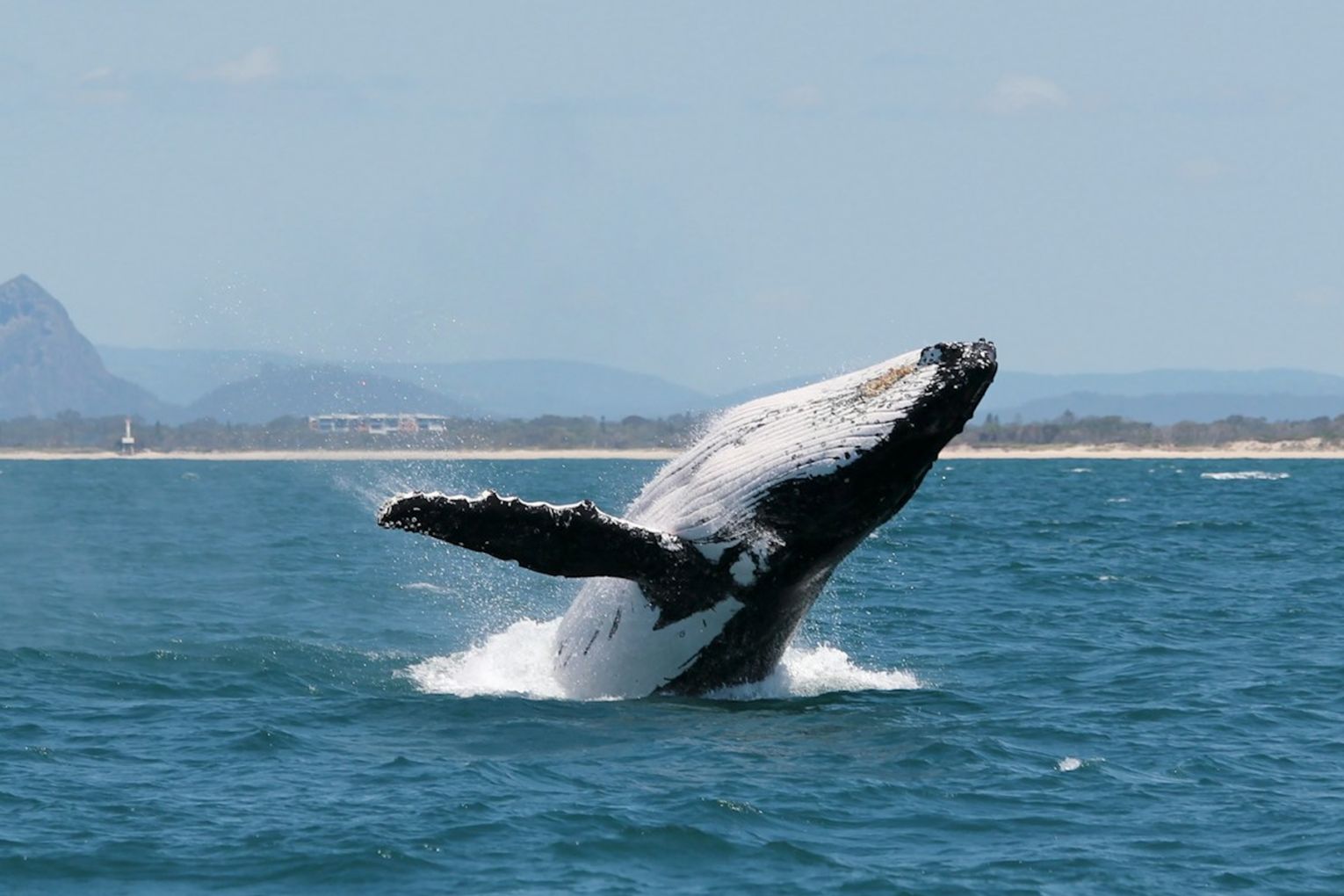
A trial of innovative acoustic technology conducted by the State Government may help humpback whales avoid being caught in shark control nets.
The Queensland Government’s Shark Control Program is conducting a five-week trial at Noosa Main Beach to investigate technologies like drone surveillance and whale-deterrent measures.
In partnership with the University of Queensland, the trial is part of the largest investment into the program, as part of the state’s Shark Management Plan 2025-2029.
From this week until Sunday, October 11, novel acoustic alarms will be set up on two Queensland Shark Control Program nets, while independent land-based observation from the Noosa headland will record whale behaviour in the area.


The trial will also improve our understanding of how humpbacks respond to sound in coastal environments and asses the effectiveness of the new technology.
Primary Industries Minister Tony Perrett said the trial aims to improve swimmer safety and science-based innovation.
“This trial is about using science and innovation to explore new ways of reducing interactions between humpback whales and shark control equipment, while maintaining important public safety measures,” Perrett said.
The Shark Control Program also funds the Marine Animal Rescue Team, comprising of 25 officers based on the Gold Coast, Sunshine Coast, Redlands and Mackay, who are on call for when whales become entangled in shark control gear.
Recent data estimates 50,000 whales will migrate through Queensland’s waters this year with only 0.02 percent on average interacting with program equipment in previous years.
Stay informed, daily
“Queensland is home to an incredible marine environment, and this research will help us better understand whether this new acoustic technology can support improved outcomes for both marine wildlife and beachgoers,” Perrett added.
Sea World Foundation Head of Marine Sciences Wayne Phillips added that while the research in still in the early stage, the project will stimulate further scientific investment and inform practical management actions.
“We hope this evidence-based work will contribute to developing future solutions that reduce the impacts of human activities on marine life,” Phillips said.
Future Oceans CEO James Turner said the State Government’s investment in research and technology ensures the Shark Control Program can continue to evolve while reducing its environmental impact.
“Delivering this very specific acoustic output from a durable, battery-powered device required considerable engineering. We are proud to put that technology into the water and have its effectiveness independently assessed through this Queensland trial,” Turner said.
Want to see more stories from InDaily Qld in your Google search results?
- Click here to set InDaily Qld as a preferred source.
- Tick the box next to "InDaily Qld". That's it.