Brisbane home values suffer worst capital city drop
Brisbane is a buyers’ market as Australia’s property market tracks towards its fastest decline in 40 years.
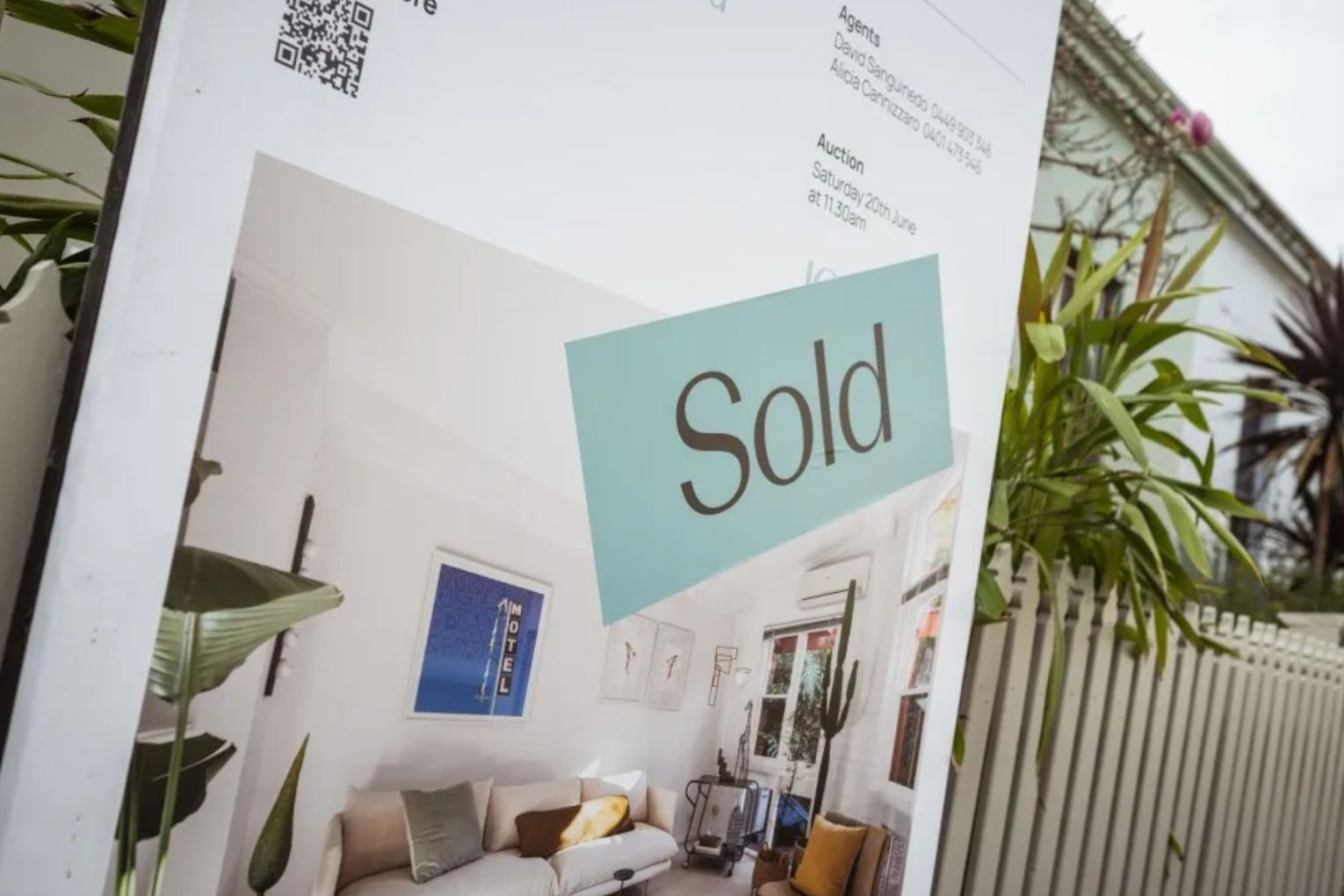
Brisbane and Perth have overtaken Sydney with the largest house price falls as Australia’s property market tracks towards its fastest decline in 40 years.
The latest Cotality Home Value Index for October, released on Monday, shows another 1.2 per cent drop in the national median to $884,855.
That capped seven months of price plunges in the current housing downturn.
Since the March peak, house prices have falling 6.7 per cent — wiping about $63,400 from national values.
The October slump affected all capital cities except Hobart (up 0.5 per cent to $743,854) and Darwin (up 0.6 per cent to $641,873).
But Australia’s housing downturn still has a way to go to return to affordable values.
In Sydney, prices fell 1.6 per cent in the month. At $1,178,959, the median Sydney dwelling is more than 10 per cent cheaper than the February peak and has dropped below where it was five years ago.
You might like


But the mid-sized capitals of Perth and Brisbane are falling even faster.
Previously bulletproof Brisbane’s median value had the largest drop, plunging two per cent to $1,018,401, but it was still 46 per cent more expensive than five years earlier.
In Perth, where prices had an annual growth rate of about 25 per cent a few months ago, values fell 1.7 per cent to $942,018.
“We saw such an enormous accumulation of value in those mid-sized capitals over the past five years,” Cotality head of research Gerard Burg said.
“It means when you see these sizeable declines in those markets, they have a lot they can give up, with a lot of home owners not feeling too much direct pain.”
It was a different story in Melbourne where the median fell 0.8 per cent to $773,027, Burg said.
The Victorian capital has underperformed the rest of the country for five years. It is now giving up value more slowly than the other mainland capitals.
Melbourne’s affordability advantage was beginning to attract residents on net, a reversal from the exodus to cities such as Perth and Brisbane during the Covid-19 pandemic, Burg said.
Stay informed, daily
Burg told the ABC that Australia was “on track to see the largest downturn across the past 40 years”.
“The previous record was 2017 through 2019, which stood at 8.2 per cent [falls] across the combined capital cities,” he said.
“At the moment, as of October, the downturn that we’ve seen over the past seven months is 8.1 per cent [falls], so it looks like we’re easily going to push past that mark.”
Melbourne Ray White real estate agent Dexter Prack said the declines were the biggest he had seen in his 28-year career.
“Some properties, they’ve gone back to 2017, 2018 prices, which is scary,” he said.
In the prestige Mornington Peninsula market, Prack said some properties were on the market at a 25 per cent discount.
By exiting a falling market, some investors would have taken a sizeable loss. But for owner-occupier vendors buying in falling markets, Prack said there were plenty of opportunities.
However, prospective buyers would have to wait for prices to fall further, or for the Reserve Bank to start cutting interest rates, to see affordability really improve.
Nationally, the median dwelling value is down about $63,400 from March.
Four interest rate rises have eroded a median household’s borrowing capacity by about $71,000 since February, Burg said.
The Reserve Bank is widely tipped to hike rates again on Tuesday.
With most economists not forecasting a cut until late 2027, Burg expected values to keep falling until then.
-with AAP
Want to see more stories from InDaily Qld in your Google search results?
- Click here to set InDaily Qld as a preferred source.
- Tick the box next to "InDaily Qld". That's it.