‘I’ll put a spell on you!’ The terrifying sport of witch-hunting … and other burning issues
The history of our treatment of those who were deemed to be witches is part of the rich tapestry of this fascinating new book.
The historiography of witchcraft is as turbulent and varied as its subject – and as revealing about modern times as it is about the period of the witch trials.
The flow of publications never abates, and the debates refuse to settle, as each generation of researchers and scholars has its say. From the early 18th century, rationalists saw the Middle Ages as a time of barbarous superstition typified by witch-hunting, an interpretive bassline along which a range of melodic variations was played, from indictments of popish persecutions to veiled meditations on 20th century genocide.
Across the decades, a number of brilliant and formative works about the history of witchcraft and the witch trials that took place across the UK and Europe have emerged, largely thanks to scholars such as Robin Clark, Deidre English, Malcolm Gaskill, Brian Levack, Diane Purkiss, Lyndal Roper and Keith Thomas.
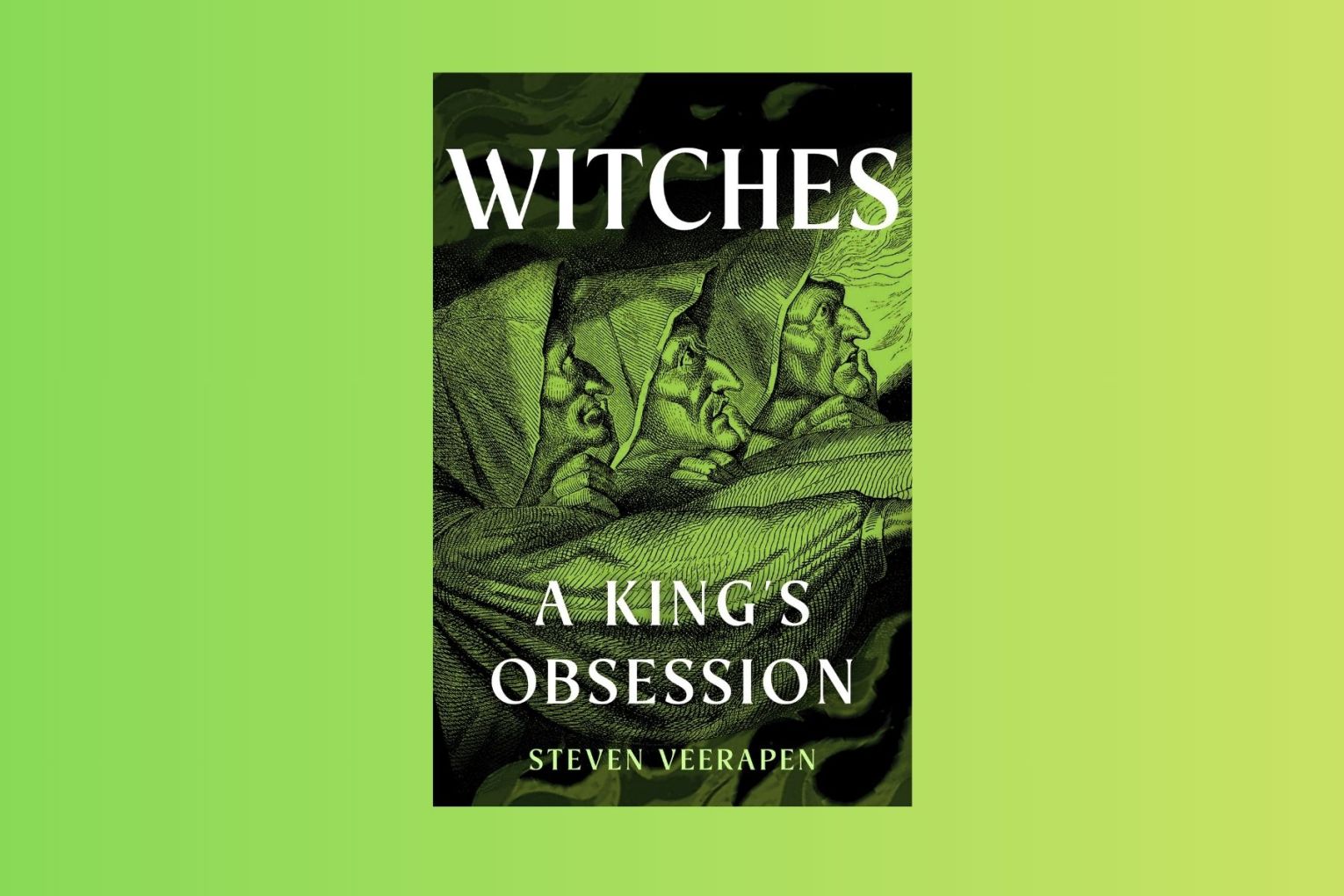
Now comes Witches: A King’s Obsession from Glasgow academic historian Steven Veerapen, in which he traces witches, witchcraft and witch-hunters from the explosion of the mass trials that took place under King James VI of Scotland (James I of England) in the late 16th century to the death of the witch-hunting phenomenon in the early 18th century.

Based on documents, analysis, historical, sociological and archival research, Veerapen explores what motivated widespread belief in demonic witchcraft throughout Britain as well as in continental Europe, what caused mass panic about alleged witches and what led, ultimately, to the relegation of the witch and the witch-hunter to the realm of fantasy and the fringes of society.
“Witchcraft is a subject which puts the traditional conceptual frameworks of historiography under pressure, making disciplinary boundaries more permeable,” writes historian Katharine Hodgkin.
You might like


It is, of course, this interdisciplinary dynamism that makes witchcraft such a historically rewarding subject, and yet it also generates endless contrasting images that resist intelligible unification. During 1661 and 1662, Scotland experienced one of the largest witch-hunts in its history. Within the space of 16 months, no fewer than 660 people were accused of various acts of sorcery, witchcraft and diabolism. The hunt began to the east of Edinburgh in villages and small burghs where 206 people were named as witches between April and December 1661.
As Veerapen notes, the search did not remain restricted to that area, as the privy council busily issued commissions to local authorities throughout the country to apprehend, try and execute suspected witches.
At no other time in Scottish history … were so many people accused of witchcraft within such a brief period of time
We do not know exactly how many people were executed during the hunt, but the report by English naturalist John Ray that 120 were believed to have been burned during his short visit to Scotland suggests the total number was substantial. At no other time in Scottish history (with the possible exception of 1597) were so many people accused of witchcraft within such a brief period of time. Indeed, the hunt, which involved four times the number of persons accused of witchcraft at Salem, Massachusetts, in 1692, was comparable to the large witch hunts that occurred on the European continent during the 16th and 17th centuries.
The Great Scottish Witch Hunt received its direction mainly from above – from the monarchy, judges, magistrates, clergy and local gentry who controlled the judicial machine and used it to obtain confessions, implications and convictions. Consequently, the reasons the hunt took place reside primarily in the fears, beliefs, policies, superstitions and activities of that ruling elite.
But popular fears, suspicions and accusations also played an essential role in the process, mainly by determining which people would be prosecuted and providing evidence of the alleged witches’ maleficent deeds.
As many scholars have consistently pointed out, and Veerapen makes abundantly clear, the most obvious social characteristic of those accused of witchcraft at most points in history is that they were female. This was certainly the case in Scotland, where in 1661-62 about 84 per cent were women. In this respect, the Scottish witches of those years conformed closely to the stereotype of the witch that has prevailed in all societies, ancient as well as modern, and again received reinforcement during the European witchcraft prosecutions of the 15th, 16th and 17th centuries.
Reading Veerapen’s book, one question reoccurs repeatedly, and it is this: How could otherwise rational people have held such irrational beliefs about witchcraft and about a woman’s predisposition to it?
Subscribe for updates
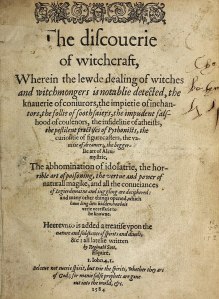
Pervasive gender and religious ideologies of the time, naturally, contributed much to such perceptions. The woman was considered to be the weaker sex, the “gateway” for the devil’s entry into the mortal realm. It did not help matters when the rabid witch-hunter King James in 1597 wrote and published Daemonologie, a direct response to Reginald Scott’s The Discoverie of Witchcraft (1584).
The question of proof in witch trials was key, and one wonders how it is that people who were presumably otherwise quite rational, by the standards of the age in which they lived, could have believed that you could identify witches simply by looking into their eyes?
King James was well aware of the difficulty of proof and the need to avoid convicting the innocent, writing that, “For it is as great a crime (as Saloman sayeth) To condemn the innocent as to let the guiltie escape free”. His solution, like that of so many others during this period in history, was to trust in the justice of God, who would ensure that the guilty were convicted and the innocent were spared.
Thus, not only did the monarch advocate pricking a witch to find the devil’s mark (prickers would pierce the skin of the accused with needles, pins or bodkins), and floating a witch in the water, he also asserted that the Devil could not borrow the shape of an essentially innocent person, for “God will not permit that any innocent persons shall be slandered with that vile defection: for then the devill would find waies anew to calumniate the best”.
What King James was arguing was that normally suspect evidence could be trusted in witchcraft cases because God actively intervened to ensure its reliability. Though, as Veerapen points out, traditional witchcraft detection methods such as floating the witch or pricking her were a direct return to the concepts of the medieval trial by ordeal – a direct appeal to the intercession and verdict of God.
Witches: A King’s Obsession reveals that when comparing the pause in national witch-hunts from 1597 to 1628 with the permanent cessation after 1662, many similarities appear. Veerapen draws on Levack’s account of how witch-hunting declined in the wake of the excesses of the 1661-62 hunt. Renewed caution on the part of Scottish authorities, especially the privy councillors, brought a reduction in local accusations and trials and a bias in favour of Justice Court trials. Cautious lawyers and judges began to discourage regional prosecutions, and more witches were acquitted. This reflected what he describes as “a broader effort on the part of the Scottish government in the late 17th century to rationalise and centralise the criminal justice system”.
Ultimately, the decline of witch trials was closely connected to their rise. Like Levack, Veerapen asserts that the twilight of confessional states, religious enthusiasm and enforced orthodoxy helped turn opinion against witch-hunting, witch trials and witchcraft as a prosecutable crime. The apex of witch-hunting, ironically, marked the beginning of its eventual end.
The persuasive force of confessions, and ensuing judicial savagery, were matched by the intensity of scepticism in the aftermath: witch-hunting was a failing of absolutism, not its enabling policy or a sign of hegemony.
What Witches: A King’s Obsession does so strongly and convincingly is illustrate that witchcraft was real in hearts and minds beyond doubt, thereby illuminating its organic dynamism and its inveterate connectedness to every other aspect of early modern life.
The trick for historians is always to be analytical and objective without being too reductionist or anachronistic and, here, Veerapen manages to be just that with considerable skill.
Witches: A King’s Obsession by Steven Veerapen, Berlinn, $39.99.
Want to see more stories from InDaily Qld in your Google search results?
- Click here to set InDaily Qld as a preferred source.
- Tick the box next to "InDaily Qld". That's it.
Free to share
This article may be shared online or in print under a Creative Commons licence