Our home among the gum trees … and other habitats
A comprehensive new field guide to our natural world is inspiring and intoxicating and a boon for birders.
Growing up on the fringe of the Gold Coast as a teenager, I spent a lot of time wandering the local landscape, sometimes fishing, sometimes exploring local creeks in my canoe. The suburbs were fast encroaching, however, and since then the place has changed irrevocably and not for the better.
Driving through that area now, there is little left of the habitat in which I wandered with a copy of Neville W. Cayley’s book, What Bird is That? in my backpack. It makes me sad.
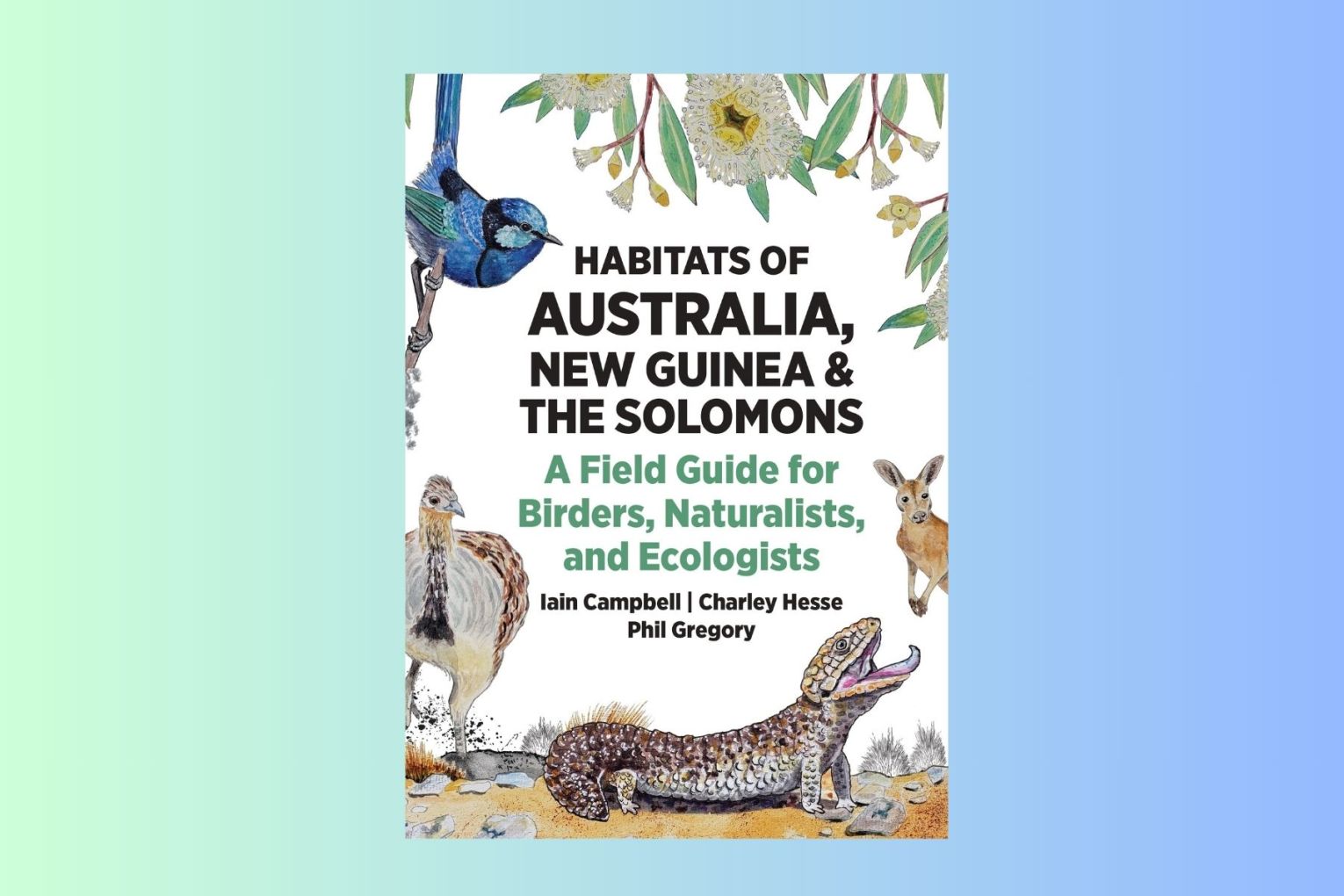
Our natural world does make way for development, but we need to preserve as much of it as we can. That is something to think about when reading Habitats of Australia, New Guinea & the Solomons – A Field Guide for Birders, Naturalists, and Ecologists.
This is a visually stunning, meticulously researched field guide to all the major habitats of these places.
When visitors think of Australia, they expect strange wildlife such as kangaroos, platypus, koalas and cassowaries. Yet nothing prepares people for the otherworldly landscapes of mallee and mulga woodlands, karri forests and spinifex and gibber deserts.
You might like

This illustrated guide covers every major habitat found on the continent, together with those of New Guinea and the Solomons.
Making the otherworldly understandable, it presents an easy-to-use system for exploring and enjoying habitats by combining wildlife assemblages with descriptions of habitat structure, climate, soils and botany. Packed with invaluable information, it completely redefines how we experience the landscapes and wildlife in this spectacular region of the world.
If there is such a thing as nature porn (pardon the crudeness), this is it. If you are interested in the natural world this book is an absolute treasure trove. You will be impressed, to say the least, by the forensic attention to detail.
In the introduction the authors talk about “the many lenses through which planet Earth’s habitats can be assessed”.
“Geology, geography and botany are all critically important,” they write. “But we don’t view any of them as the final word on habitats, and much of what these models prioritize is of little immediate relevance to travelling naturalists and ecologists. A specialist in entomology or herpetology will apply a different, and fascinating, lens to the world.
“Our reason for prioritising the bird (and to a lesser extent mammal) ‘lens’ is that we look at the world primarily through this lens, and so do most of the world’s travelling naturalists.”
Subscribe for updates
No objections from me on this count, since I am an old birder from way back.
And there are some gorgeous colour plates in the book elucidating habitat with pictures of its feathered inhabitants. The Rose-Crowned Fruit-Dove photo, for example, shows two birds living in the Australasian Monsoon Vineforest habitat of the extreme Far North and New Guinea. And so it goes.
Bird and mammal photos pepper the pages but sometimes all you need is an image of habitat itself in the natural landscape. Australian art is, to a large degree, occupied with coming to terms with our landscape and its habitats and sometimes the birds and mammals that live in them. There is a timeless, spiritual quality to these places, as any artist knows, and the variety and richness of our natural world is something to celebrate and preserve.
I do love the fact that they see these habitats through a lens that leans towards birdlife
There are subtle differences, too, between habitats that may seem similar to the untrained eye. Take the Jarrah-Marri Forest of Western Australia, which is more open and shorter than the sympatric Karri Forest. Who knew?
The rainforested areas of the region have a certain allure but so does the more open Grassy Mulga of Central Australia. There is infinite variety in this book, which includes habitats that are a tad agricultural such as the Australasian Banana and Sugarcane habitat, which is favoured by the Pheasant Coucal and other birds.
This book is an extraodinary achievement and offers a vast wealth of information and a dizzying array of habitats.
I do love the fact that they see these habitats through a lens that leans towards birdlife. No apologies needed on that score.
Iain Campbell is a PhD candidate at the University of NSW as well as a professional nature guide and habitat ecologist whose books include (with Dale Forbes and Pete Morris), Habitats of Europe (Princeton) and multiple bird guides. Charley Hesse is a professional nature guide whose books include (with Iain Campbell, Ken Behrens and Phil Chaon), Habitats of the World (Princeton). Phil Gregory is a professional nature guide whose books include (with Richard Allen) Birds of Paradise and Bowerbirds (Princeton).
Habitats of Australia, New Guinea & The Solomons: A Field Guide for Birders, Naturalists, and Ecologists by Iain Cambell, Charley Hesse and Phil Gregory, Princeton University Press, $55.
Want to see more stories from InDaily Qld in your Google search results?
- Click here to set InDaily Qld as a preferred source.
- Tick the box next to "InDaily Qld". That's it.
Free to share
This article may be shared online or in print under a Creative Commons licence