Whodunnit: Revered author deep dives into a colonial cold case
Kate Grenville’s latest book explores mysterious gaps in a real-life historical scandal, which she’ll be discussing at this year’s Brisbane Writers Festival.
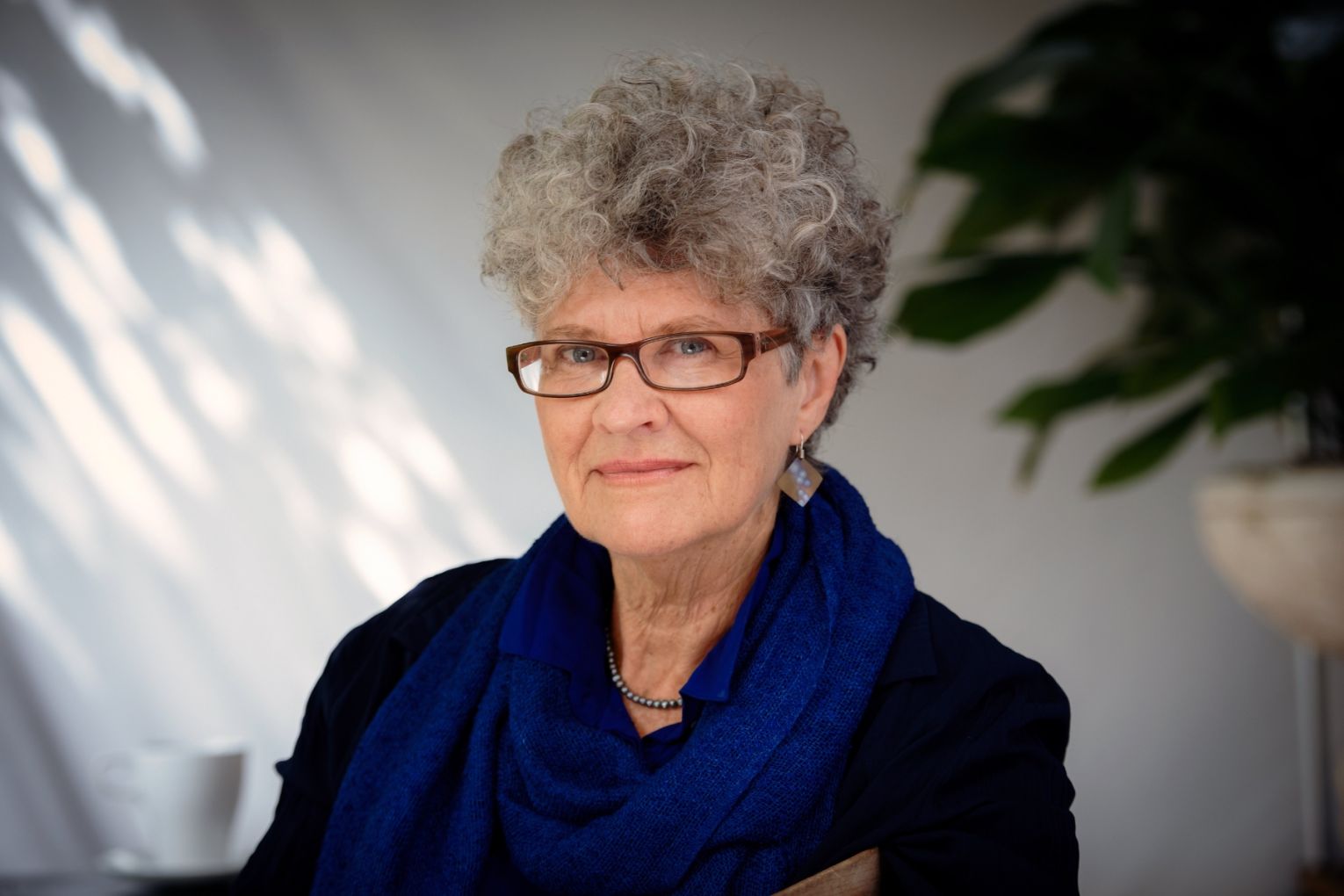
Kate Grenville has spent much of her career looking into the gaps in Australia’s official stories – the places where voices were overlooked, dismissed or never recorded. For the award-winning author of The Secret River, among other novels, those silences are not empty, they are invitations.
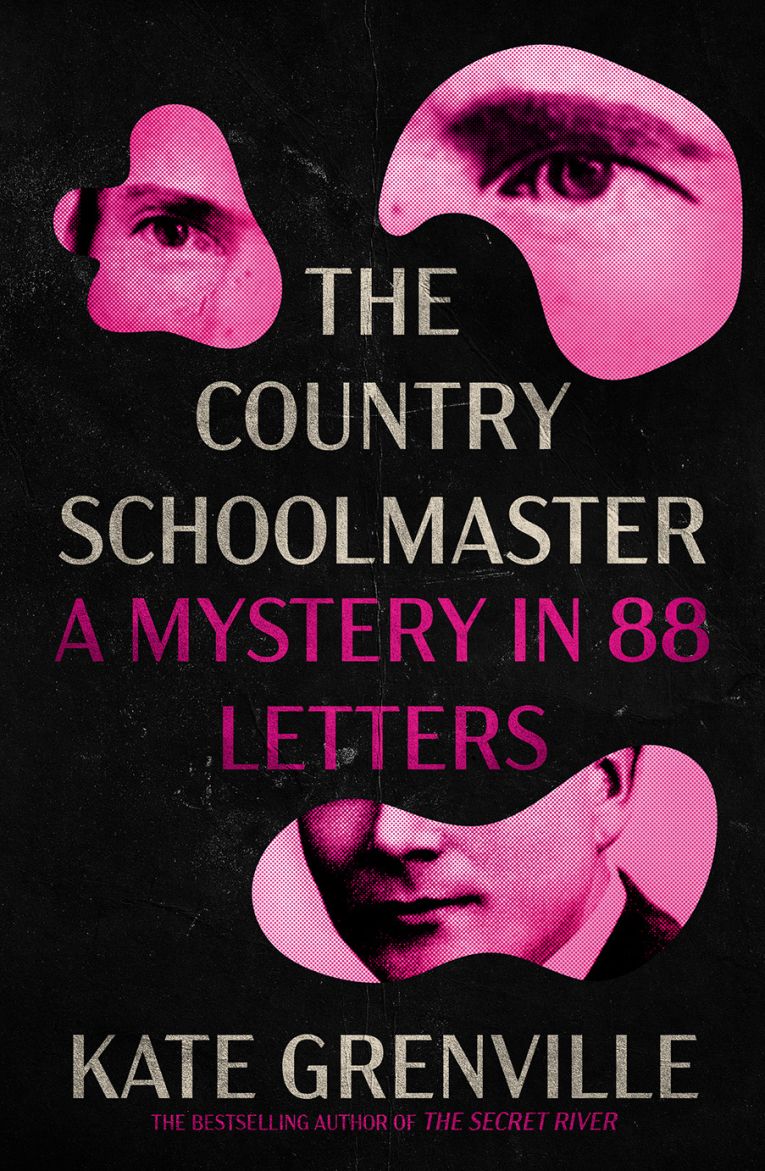
I was fortunate enough to have a chat with Grenville ahead of her return to Brisbane Writers Festival (October 8 to 11), where she will discuss her latest book, the non-fiction The Country Schoolmaster: A Mystery in 88 Letters.
This book begins with an unlikely discovery in an old archive – a collection of letters concerning a schoolteacher in a small country town in Australia in the 1880s. The discovery quickly became a mystery. Was Joseph Connor, the schoolteacher at the centre of the correspondence, a monster or the victim of a campaign of local persecution?
Grenville initially had little more than a letter – one that turned out to be forged – written to Connor’s employer urging that he be removed. Rather than accepting the accusations at face value, she began to ask the question that has become central to much of her work: How do we establish the truth when the historical record is incomplete?
Eventually, about 100 related letters were found, 88 of which appear in the book, reproduced largely as they were found – handwritten documents from 1880, written in the formal style of the period. Around them, Grenville allows herself to speculate, imagine and invent. The result sits somewhere between history, memoir and fiction.
“I love to write into the story that has not yet been told,” Grenville says.
There is, she admits, something unusual in her attraction to these silent places. But their very lack of certainty is what makes them compelling. A tiny thread can lead into a world that almost nobody has explored before. History contains countless people who mattered but were left out because they were not considered important enough, or because the systems recording history simply did not hear them.
Women have been central to Grenville’s efforts to recover those missing voices.
You might like
“The history of the human race, I think, is women negotiating their way around systems that weren’t made for us,” she says.
 Grenville, 75, grew up in an era she remembers as “hardly the Dark Ages”, but still “pretty gruesome” for girls. That experience gave her a lasting interest in the choices available to women in earlier generations and in the ways their voices were constrained. Women, she points out, have frequently been talked about and legislated about without being allowed to speak for themselves. Those who were not at the top of the social ladder were especially likely to disappear from the record.
The literary world has changed considerably during Grenville’s career. She recalls Queensland writer Thea Astley saying that when she sat down to write she felt she had to make herself an “honorary male” because books were written by men.
Women writers are still impeded due to a disproportionate responsibility for childcare and caring for elderly parents. Writing demands solitude and sustained concentration – luxuries that, historically, men could more readily claim because someone else was looking after the domestic world around them.
However, Grenville’s questioning of the stories that Australia tells about itself extends beyond gender. She firmly believes Australia’s relationship with Indigenous people is still not fully acknowledged or understood.
‘The more you find out, the more you realise this is unfinished business’
That history is now being examined more openly, although questions about how it is remembered and understood continue to generate discussion and debate. She grew up with Australian history textbooks that began in 1788, as though nothing of significance had happened before European settlement. The process of learning what was omitted has been a long one, she says, and it is not complete.
“The more you find out, the more you realise this is unfinished business,” she says.
Grenville is fascinated by how people arrive at their opinions. People are bombarded with information, yet somehow transform that information into conclusions about politics, others, and the world. What the individual brings to the information matters. Their experiences, histories and assumptions shape what they see and the conclusions they draw, but the conclusion may not necessarily be the right one.
For Grenville, the challenge is to retain enough curiosity to keep an open mind — and enough generosity to keep talking to people with different opinions.
Subscribe for updates
“We’ve forgotten how to disagree,” she says.
Once the silences of history have been noticed, they become difficult to ignore. Ignorance may be comfortable, Grenville suggests, but knowledge brings responsibility. What has been swept under the carpet eventually has to be acknowledged and dealt with. That willingness to question accepted versions of events also shapes Grenville’s approach to writing itself and led her to write novels such as The Secret River, The Lieutenant and Sarah Thornhill.
That same uncertainty is part of Grenville’s writing process. After decades as an author, the blank page still scares her. Every book reaches a point where she becomes convinced it is hopeless and should be abandoned. The reassurance comes from experience. She has felt the same way about previous books, and they eventually “came good”. The trick, she says, is not to give up.
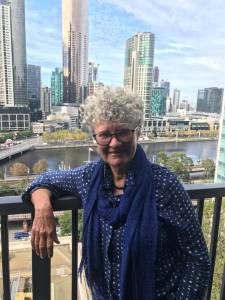
Her process is a combination of instinct and structure. In the first draft she is a “pantser”, allowing herself to follow ideas without worrying too much about whether they work. She can make a fool of herself because, at that stage, nobody is going to read it. Then comes the painstaking part. Grenville might write 25 or 30 drafts. Once she has accumulated enough material, she begins searching for the structure, finding the story within the material and, finally, getting the words right.
It is a process that mirrors the historical investigations at the heart of The Country of the Schoolmaster: A Mystery in 88 Letters. Gather what exists, question what it appears to say, consider what is missing and remain open to the possibility that the first interpretation is wrong. That openness has become one of Grenville’s particular interests.
At Brisbane Writers Festival Grenville will appear in conversation with Matt Condon and take part in the panel discussion, Justice is Served. Although The Country of the Schoolmaster is not a legal case, its central question is deeply connected to justice: How do we decide what happened when the evidence is partial, contested or distorted?
Grenville’s answer is not to pretend that uncertainty can always be eliminated. Instead, she enters it. She follows the fragments, listens for the voices that have been lost and allows herself to imagine what might have existed between the surviving lines. That is the question running through so much of her work: How do we know what we know — and what might happen if we find the courage to look again?
Kate Grenville has several events at Brisbane Writers Festival:
Justice Is Served – Kate Grenville (The Country Schoolmaster, Black Ink, $36.99.), Suzie Miller (Inter Alia), Michael Mohammed Ahmad (Bugger), Olivera Simic (Madam War Criminal). Chaired by Jessica Rudd, Brisbane Powerhouse Theatre, October 10, 9.30am: bwf.org.au/2026/brisbane-writers-festival/justice-is-severed
The Country Schoolmaster: A Lesson in 88 Letters: Kate Grenville in conversation with Matthew Condon, Brisbane Powerhouse Theatre, October 10, 1pm: bwf.org.au/2026/brisbane-writers-festival/kate-grenville-the-country-schoolmaster-a-mystery-in-88-letters
The Country Schoolmaster: A Lesson in 88 Letters: Kate Grenville, Redcliffe Library, October 11, 12.30pm: blackincbooks.com.au/events/country-schoolmaster-kate-grenville-brisbane-writers-festival
This article was written as part of The Critical Writing Program, run in partnership with Queensland Writers Centre and InReview Queensland, supported by the Queensland Government through Arts Queensland, part of the Department of Education.
Want to see more stories from InDaily Qld in your Google search results?
- Click here to set InDaily Qld as a preferred source.
- Tick the box next to "InDaily Qld". That's it.
Free to share
This article may be shared online or in print under a Creative Commons licence