Puppet masters of truth: How pollies script their own reality
Historian and speechwriter Joshua Black provides an eye-opening account of how Australian politicians have become experts at fashioning stories about themselves, their lives, personal ambitions and political entanglements.
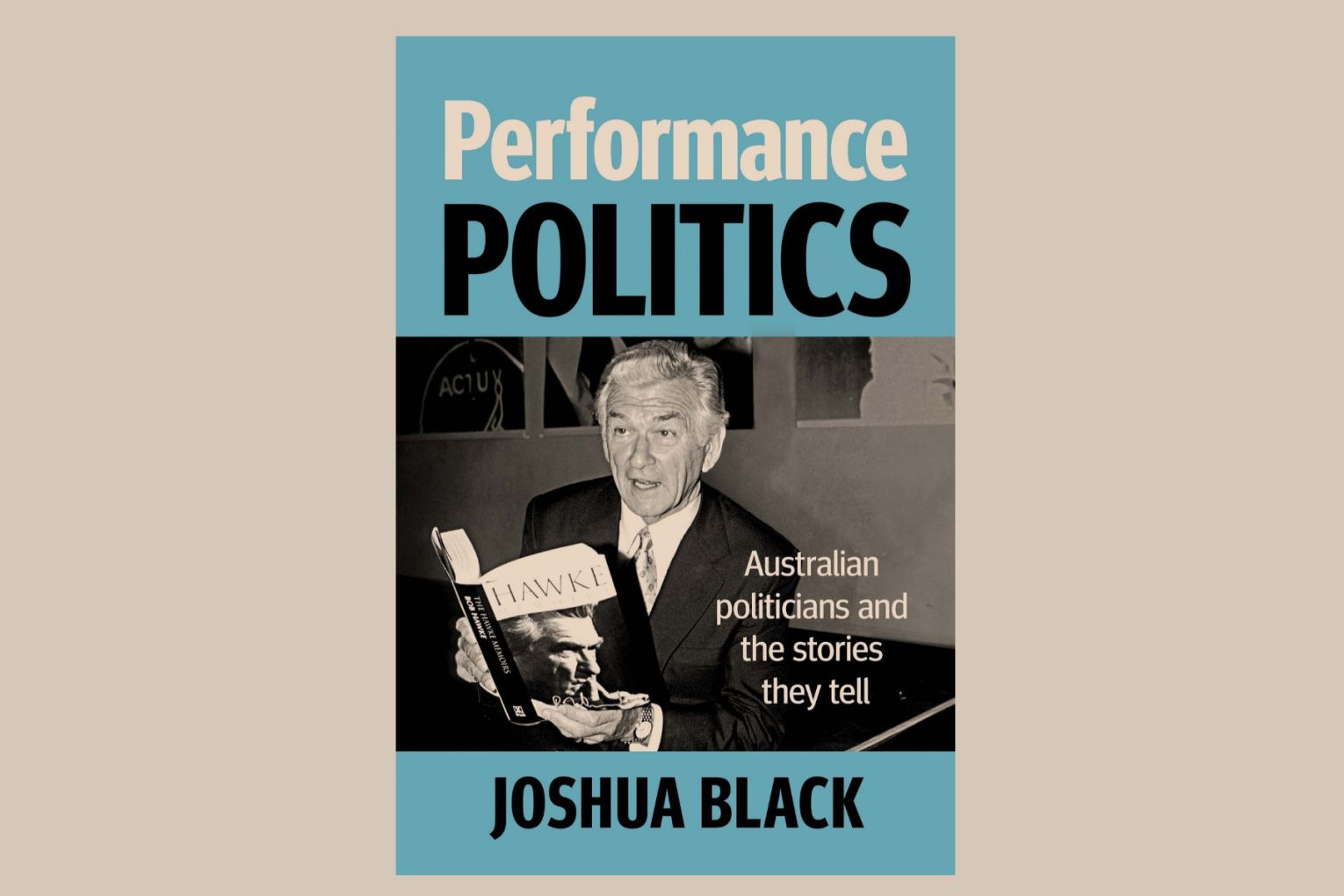
If you’re not a bookworm addicted to current affairs, the latest longform reminiscence on Australian governance in the Hawke-Keating era – Performance Politics – may not be for you. (That said, it will make a thoughtful gift for anyone in your circle who does fit that description.)
A paperback that references 325 other books and contains just on 1600 endnotes is bound to be heavy going at times but, for those too young to know what the pre-internet world was like, this is what you might call a portal into the land of Australiana as it was half an adult lifetime ago.
Joshua Black articulates the case for recognising the historic turning point reached in 1983, when a cocky Rhodes Scholar with a well-publicised alcohol problem (he couldn’t get enough of it) became the nation’s leader, replacing a dour Scot whose detractors had likened him to an Easter Island statue.
To his credit, Black doesn’t merely tread the same path as his literary forerunners. His new volume is as much a study of the urge all politicians have to justify their decisions as it is a social history. As he points out, politicians writing at length about themselves in the early decades of our nationhood were a rarity.


Until the culturally transformative ’60s, there had been only three a decade on average. In the 13 years Bob Hawke and Paul Keating ruled the roost, 74 MPs served as ministers and, at last count, 42 of them – more than one a year since they occupied high office – have favoured the public with their hundreds-of-pages-long apologias.
And they say the book trade is dying!
Perhaps “apologias” is too sweeping a term. Not all the insider accounts are self-vindications. An honourable exception was Barry Jones, whose intellect (most unusually) outstripped his ego. Looking back on the party’s decision to install Hawke as its leader just weeks before the 1983 election, he judged it “a Faustian bargain” which delivered Labor four victories on the trot at the cost of “if not its soul, then a clear sense of its beliefs”.
Dismissal of the Whitlam Government half a century ago remains the most dramatic political crisis in Australian history, and – largely for that reason – spawned a durable subgenre of our literature that continues to thrive even though all the “players” have now exited the stage.
Subscribe for updates
Alan Reid, a Canberra journalist whose career in the national capital began with off-the-record briefings from Prime Minister John Curtin and ended with Hawke at the peak of his power, was the first to produce a considered book-length account of Gough’s government – The Whitlam Venture in 1976.
How Bill Hayden, the man Hawke ousted and eventually appointed Governor-General, would have fared if he’d becomes prime minister is unknowable, but on occasion his mordant wit was in Whitlam’s class. In 1996, at a public discussion on his own autobiography, attention focused on an episode at Labor’s 1988 conference where Hawke invited him to a chat in his hotel room. When Hayden entered, there was his leader fresh out of the shower.
Hayden wrote: “I couldn’t help thinking how far from impressive were the dimensions of the apparatus which he displayed with such evident pride.”
But that wasn’t the pinnacle of Hayden’s wit. Asked about the episode at the book talk, he turned bashful and confessed: “I have a tendency to make molehills out of mountains.”
Even the inevitable gremlins one finds burrowed deep in Black’s narrative sometimes have their funny side. When he says that John Howard’s political memoir, Lazarus Rising, depicts a leader who inhabited the authority of the prime ministership “from go to woe”, it is nothing less than wince-worthy (though considering Howard’s end in 2007, perhaps that’s not so much a typo as a serendipitous accident).
Black, a political historian and Canberra academic – or his editors, rather – manage to make Sir John Kerr, Whitlam’s appointee as Governor-General and “executioner”, a ludicrous figure in a new way. In Matters for Judgment, Kerr’s own account of the events leading up to Remembrance Day 1975, he spent chapters “describing his service in the armed forces during the First World War”. Impressive for a Balmain boy not quite four years old when the war ended.
While biographies rhyme even less than histories do, one reason to delve into works from both genres is that the psychology of individual politicians is so static as to be a reliable guide to future performance.
Despite One Nation’s resurgence, Pauline Hanson emerges from these pages as a one-trick pony. Black recalls her spouting prejudice against Muslim immigrants in the late 1990s though, he adds, she exempted from her anathema “Christian Muslims” who, she declared, were not a problem. Could it be because there never were that many?
Performance Politics: Australian politicians and the stories they tell by Joshua Black, NewSouth Publishing, $39.99.
Want to see more stories from InDaily Qld in your Google search results?
- Click here to set InDaily Qld as a preferred source.
- Tick the box next to "InDaily Qld". That's it.
Free to share
This article may be shared online or in print under a Creative Commons licence