Don’t undervalue the creativity that flows from the ‘burbs
With so much great Aussie fare – from films to punk music – coming from the suburbs, why have they been overlooked as creative hubs?
There is a long-held view among so-called intellectuals and inner-city elites that the suburbs are somehow inferior in cultural energy. Columnist and architecture critic Elizabeth Farrelly famously wrote: “The suburbs are about boredom and obviously some people like being bored and plain and predictable. I’m happy for them … even if their suburbs are destroying the world.” Hmmm.
This anti-suburban snobbery has a long history. Way back in 1961 author Lewis Mumford wrote in The City in History that the suburbs were: “… a multitude of uniform and unidentifiable houses, lined up inflexibly, at uniform distances, on uniform roads, in a treeless communal waste, inhabited by people of the same class, the same income, the same age group, witnessing the same television performances, eating the same tasteless prefabricated foods, from the same freezers, conforming in every respect to a common mould.”
In Australia, much to the chagrin of people such as Farrelly, it has actually been the suburbs that have produced some of our greatest artistic talents or been featured in some of our most endearing and popular books, movies, music or TV shows.
Avid readers of Australian novels will all have enjoyed Hugh Lunn’s Over the Top With Jim, the story of a suburban childhood in 1950s Brisbane, centred on the family cake shop in suburban Annerley.
Then there was author Nick Earls’ Zig Zag Street (1996), a novel set in Red Hill and named after one of its suburban streets. More recently, Trent Dalton’s multi award-winning Boy Swallows Universe was set in and around suburban Darra in the 1980s. An international success, it went on to become a phenomenally successful Netflix series and is set to become a stage play.
You might like
In movies, too, the suburbs have been fondly featured. Who could forget The Castle – set in outer suburban Melbourne, where the Kerrigan’s fight to keep their home from being consumed by the neighbouring airport. Theirs is a story of suburban defiance, even down to the engagement of bumbling solicitor Dennis Denuto, who tackles their defence relying on “the vibe, your honour” of the Constitution. No wonder we all loved it – there is a lot of Kerrigan in all of us. And none of us have actually read the Constitution.
Not to mention movies such as Puberty Blues (1981), set in the ‘burbs of Sydney’s Sutherland Shire, or Muriel’s Wedding (1994), set beyond the ‘burbs in fictional Porpoise Spit. In Muriel, we see an awkward ABBA-loving young woman from the Spit at odds with a her more socially adept but mean friends. So outcast Muriel heads to Sydney. City vs suburbs right there.
Most other Australian movies have featured rural or historical/country settings – Walkabout, Crocodile Dundee, Picnic at Hanging Rock, Australia, Wolf Creek, The Dish, Red Dog and others have variously romanticised or demonised the harsh realities of Outback life.
But I cannot think of any films that have sought to do likewise with inner-city life. Just too boring, plain and predictable?
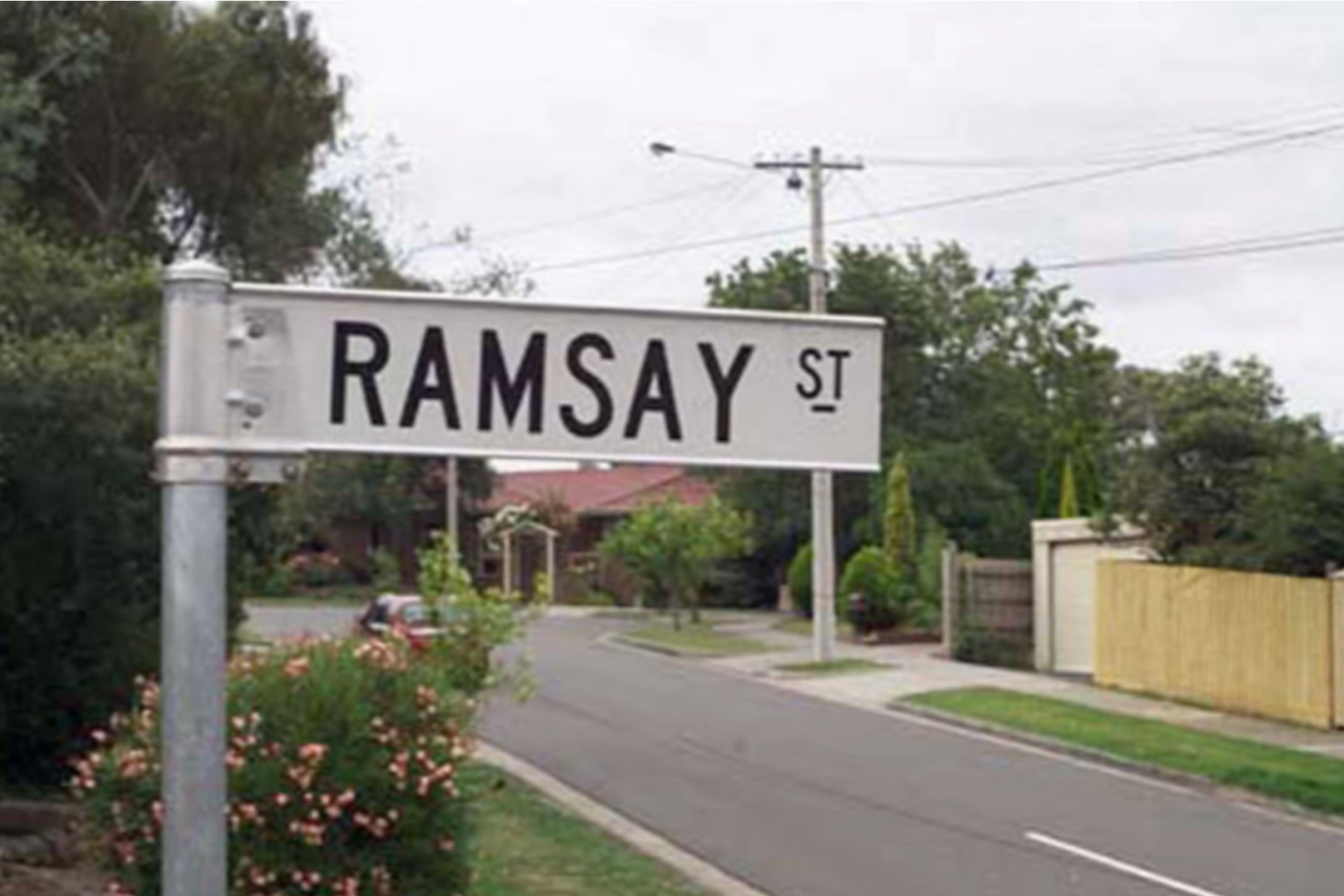
On television, the suburbs reigned supreme. From the long-running Neighbours (with Ramsay Street) to Kath and Kim (in fictional Fountain Lakes) and Home and Away (set in fictional Summer Bay but filmed in Sydney’s northern beaches) as well as the globally successful kids’ show Bluey (said to be set in inner-Brisbane Paddington), popular viewing has tended to have a strong suburban vibe.
Given it is where the vast majority (about 80 per cent) of us live and work, this should come as no surprise. Successful TV shows centred on life in CBDs are rare – with a notable exception being the extremely funny Utopia, which aired on the very inner-city vibing ABC.
Subscribe for updates
But it is perhaps in musical creativity that the suburbs have delivered us some of the greatest talent. Perth-based Dave Warner first recorded Suburban Boy in 1978 in which he lamented, I’m sure that it must be easier for boys from the city.
Around that time bands such as The Saints (from Oxley in Brisbane) crashed onto the music scene with (I’m) Stranded (1976), written on a suburban train ride home. International success followed.
In Sydney, around the mid-1970s, AC/DC were getting started in suburban Burwood (back then it was a suburb but it’s now enveloped in inner-city gentrification) while INXS were getting underway in distinctly suburban Belrose (Sydney).
Nearby, Midnight Oil from Sydney’s northern beaches were doing suburban pub gigs in the late 1970s. Adelaide was also leaving its mark with Cold Chisel from its northern suburbs first performing with Aussie icon Jimmy Barnes in 1975. The band’s Khe Sanh is now an anthem.
The suburbs have left an indelible mark on our cultural and creative character
Over many years in Brisbane the suburbs produced a roll call of talent including Ups and Downs (Redlands), The Bee Gees (Redcliffe), Keith Urban (Caboolture), Savage Garden (Logan City), The Veronicas (Albany Creek), Dami Im (Daisy Hill), Katie Noonan (Ashgrove), Kate Miller-Heidke (Indooroopilly), Violent Soho (Mansfield), Sheppard (Newstead-Wilston), Custard (Kenmore-Albion-Ipswich) and Regurgitator (Bardon).
A special mention for The Chats, from Coolum on the Sunshine Coast, for making me laugh and sing loudly along to their infectious punk songs Smoko, Six litre GTR and Pub Feed.
The suburbs have left an indelible mark on our cultural and creative character. They continue to do so and will do so into the future. Hence the importance of investing in suburban and regional creativity – places to perform and rehearse or places to learn about writing, filmmaking or music.
These are not just for highbrow inner-city dilettantes but should be accessible – as much as possible – to everyone. Nurturing suburban creativity and supporting suburban talent makes a lot of sense. This does not have to mean gleaming new performing arts centres in every suburban hub. Simple, functional and accessible spaces do not have to be expensive.
We have invested heavily in the creative infrastructure of our inner-cities – performing arts centres, galleries, theatres costing hundreds of millions of dollars – but have typically ignored the key role the suburbs have in shaping our cultural history. It is time we changed that.
Ross Elliott is a director of Suburban Futures, a research and public policy organisation devoted to making suburbs better.
Want to see more stories from InDaily Qld in your Google search results?
- Click here to set InDaily Qld as a preferred source.
- Tick the box next to "InDaily Qld". That's it.
Free to share
This article may be shared online or in print under a Creative Commons licence