Home and away – shining a light on Greek culture Down Under
Thanks to Homer’s Odyssey the Ionian Islands have been famous since antiquity and now a new exhibition celebrates the journeys, traditions and enduring spirit of the generations of islanders who have made Queensland their home.
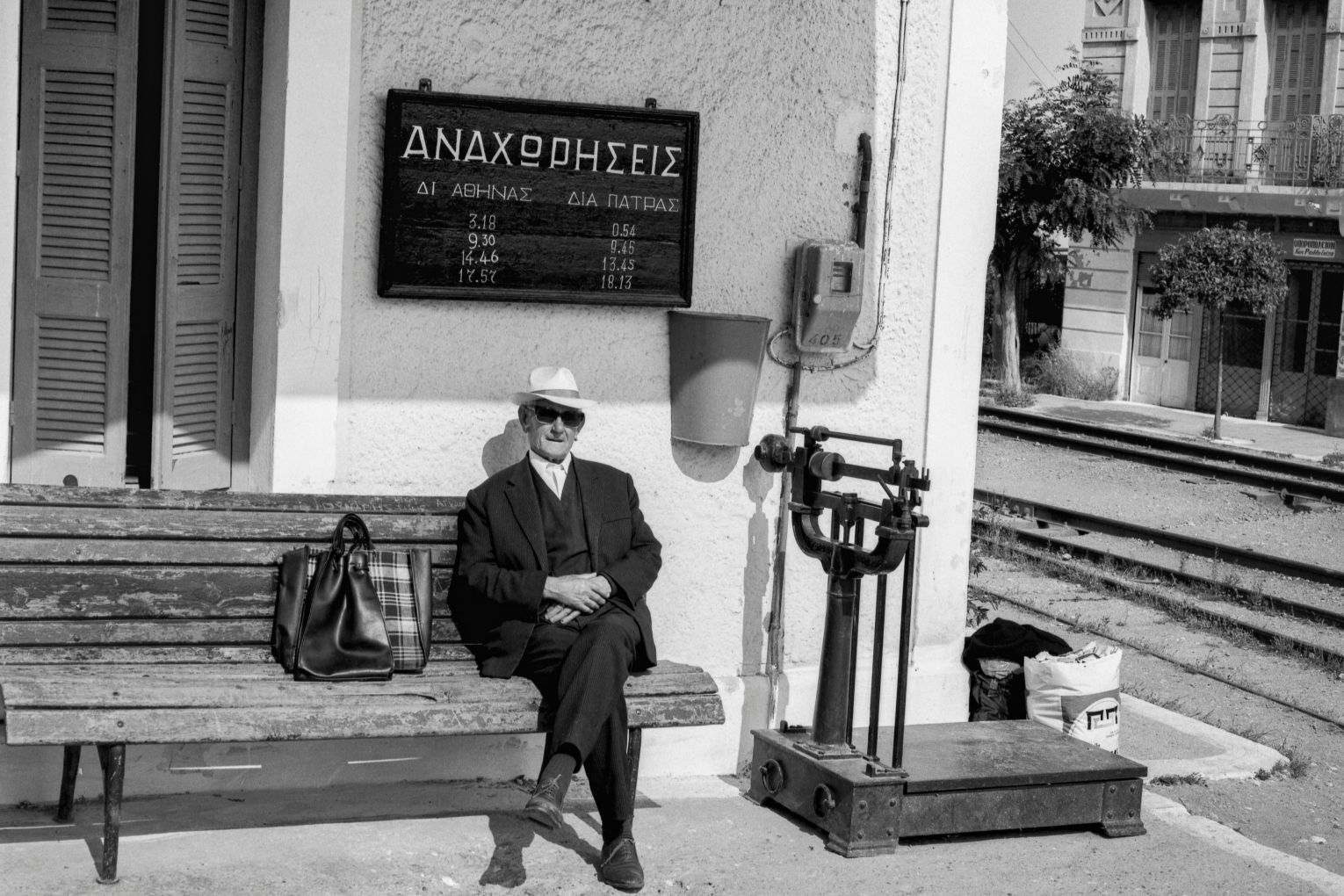
The most famous homecoming is undoubtedly Greek. I’m talking about the Odyssey, Homer’s epic about the return of Odysseus to his home on the island of Ithaca after the Trojan War. It took him 10 years to get home, and it was fraught, but he got there in the end.
So, it seems appropriate that an exhibition about the Greek diaspora in Australia is titled Nostoi – Homecomings: Stories of the Ionian Islands Diaspora in Queensland. Ithaca is one of those islands, which happens to also be a local place name in Brisbane.
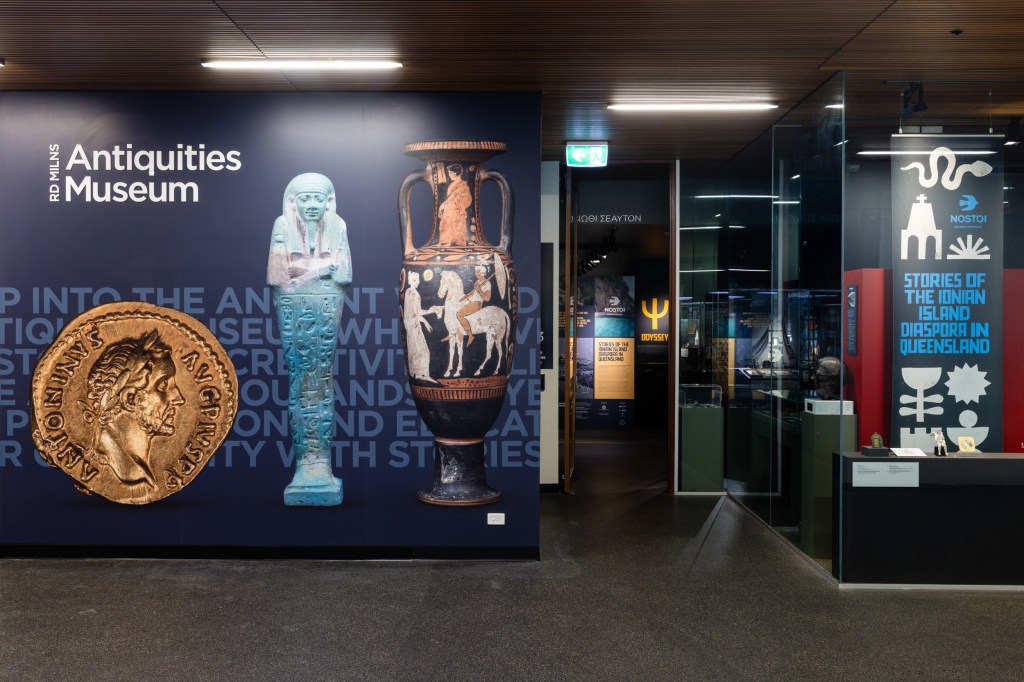
This exhibition is now on at the RD Milns Antiquities Museum at the University of Queensland’s St Lucia campus. If you have never visited this small museum, you must. It’s a treasure and … it is full of treasures, some of which help us relate to the stories in this fascinating exhibition.
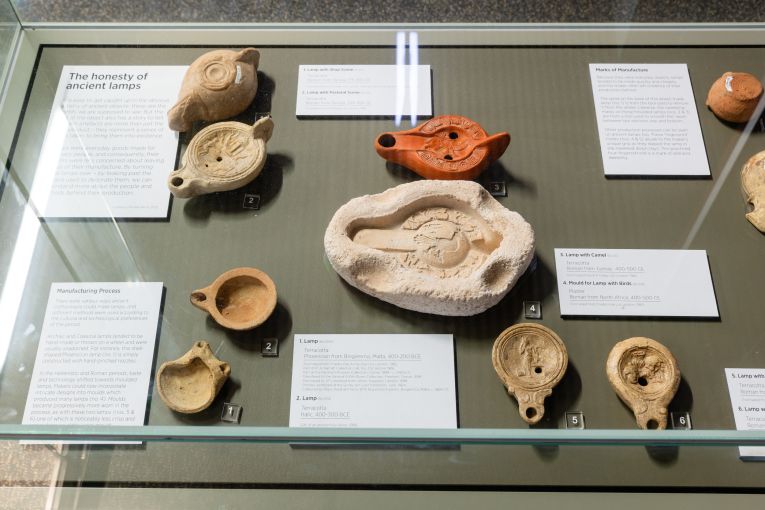
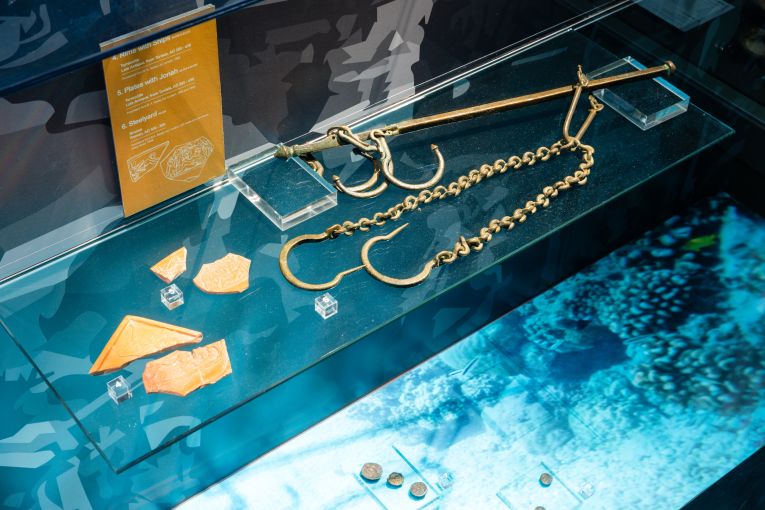
Pottery and other fragments from the Bronze Age (the time of Odysseus) help elucidate an exhibition that recounts the personal stories of those who emigrated to Australia from the Greek islands of Kerkyra, Paxi, Lefkada, Ithaki (or Ithaka and Ithaca), Kefalonia, Zakynthos and Kythira in the 19th and 20th centuries.
You might like
The museum’s manager and curator James Donaldson says the exhibition considers how these islands and their culture continue to be celebrated in Queensland. This is a close collaboration between the Antiquities Museum and the Queensland Greek community.
“Combining more than 80 artefacts, documents, garments and photographs paired with audio recordings of self-reflected personal histories, the exhibition creates a vivid portrait of how the Ionian Islands are remembered, experienced and passed on to future generations,” Donaldson says.
“The exhibition and oral history project were conceived as more than just consultative with the community – from the beginning we wanted the project to be community-led and share the stories that were important to them, rather than stories that were important to the museum. I hope visitors take away a sense of both the diversity and the shared elements of the migrant experience.”
The exhibition is beautifully mounted and it is utterly riveting
Second-generation Greek Australian artist Chrys Zantis was one of the community curators involved, along with community members Beulah Castan, Marie-Christine Sourris and Barbara Vasdekis. Donaldson was assisted by Brianna Sands and Paige Maunder.
The exhibition is beautifully mounted and it is utterly riveting, particularly if you are interested in Greece. We all should be because it was the cradle of Western Civilisation and democracy and it gave us the Homeric epics Iliad and Odyssey, which form the foundation of the western canon.
The exhibition explores the way that storytelling, history, myth and memory, and the experience of the Ionian Islands, fuels the imagination and identity of diaspora communities in Queensland. It also reveals ongoing narratives of migration, belonging and transformation.
The concept of nostos (singular) or nostoi (plural) in ancient Greek literature is associated with the epic journeys of heroes such as Odysseus (Ulysses in Latin form) and is also the root of the modern word nostalgia, the longing for the past. This sense of nostalgia but also responsibility, loss and longing for a remembered home is a constant presence for the diaspora, shared with that Ancient Ithacan hero, Odysseus.
Subscribe for updates
One of the exhibits is a two-volume set of Homer’s Odyssey dating from 1758. It is held by UQ’s Fryar Library and features Greek with a parallel Latin text. Odysseus did have some help from the gods, notably Athena. The exhibit Fragments with Athena is terracotta pottery dated to about 575-525BC. Amazing to have pieces such as this in the show to make these ancient connections.
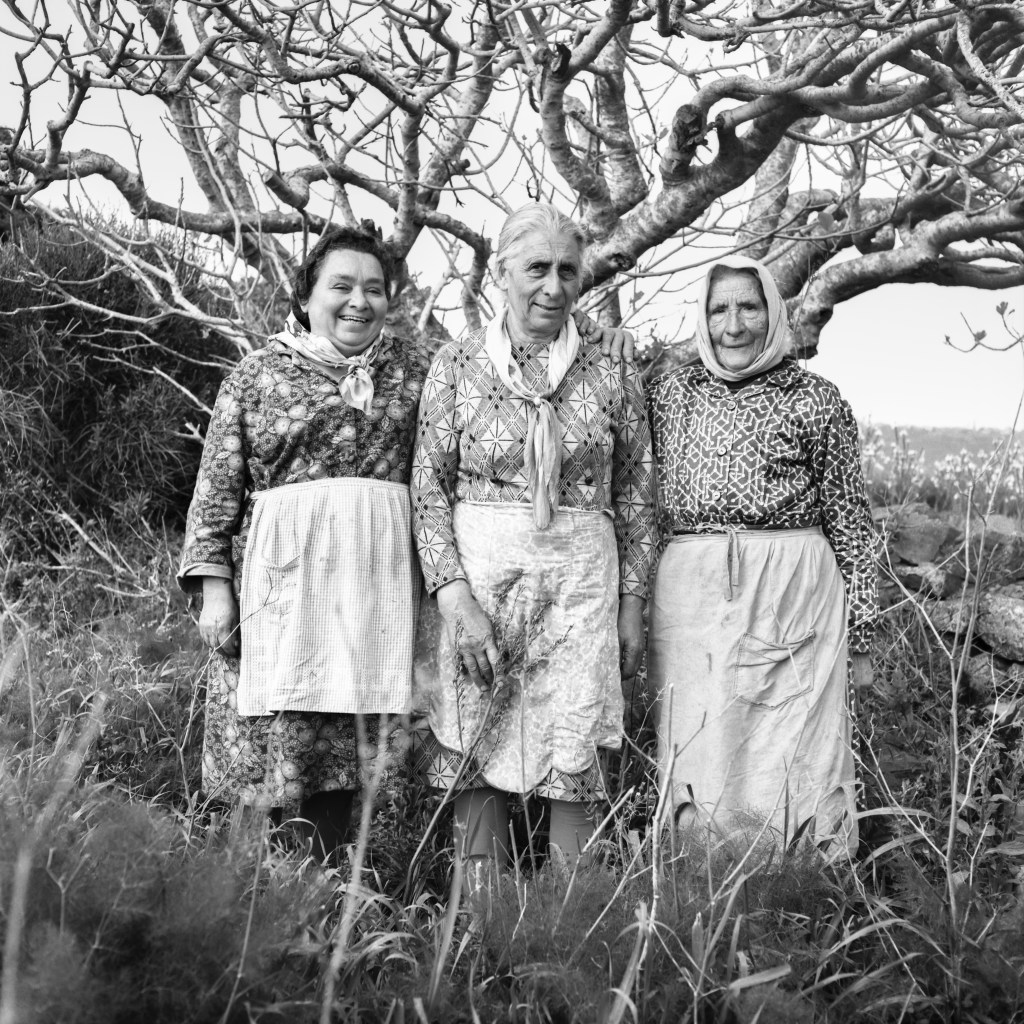
There are contemporary stories, too, and plenty of personal tales are recounted assisted by artefacts, photos and personal items. There is the Passport for Georgia Zambatis, for example. She left her home on Ithaca at the age of 22 to make the long sea voyage to Australia. Her stefano (bridal crown) is included in the exhibition, as she married after arriving.
Con Castan’s book, The Greeks in Brisbane, about migrants suffering from racism and other difficulties, is also an exhibit.
Journeys back to this ancient homeland also feature, although some migrants have never returned. So, it is also a poignant story about separated families and longing.
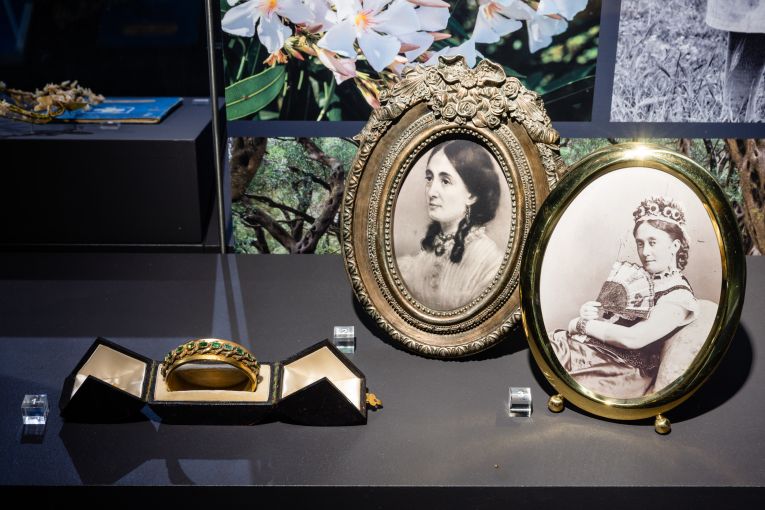
The Queensland connection goes back to colonial times and, in case you’re wondering why there is the Portrait of Lady Bowen included, well, Lady Diamantina Bowen (nee di Roma), was born on Zakynthos in 1833 into a Venetian aristocratic family. (The islands are relatively close to Italy, of course.)
Lady Bowen was one of the first Ionian islanders to live in Queensland, although her experience was a bit different to that of most migrants. In 1856 she married Sir George Bowen, then chief secretary of the Ionian islands Government, and the first Governor of Queensland from 1859.
Lady Bowen was a great philanthropist and a statue of her by acclaimed Brisbane sculptor Phillip Piperides now stands in the grounds of Old Government House at QUT Gardens Point Campus. When she left Queensland Lady Bowen was given an emerald and gold bracelet from “the young ladies of Queensland”, which is now held by the Queensland Women’s’ Historical Society, which has kindly lent it to the museum for this exhibition. It is quite exquisite.
texts come from those who lived these experiences and the artefacts are treasured vessels of memory, offered by families
Second-generation Greek-Australian artist Chrys Zantis lent photographs and family heirlooms, including an intricate soup bowl received by her mother on her wedding day in 1955. She says the Antiquities Museum’s willingness to collaborate closely and respectfully with the community allowed the exhibition to capture the essence of Ionian Island culture.
“The texts featured come from those who lived these experiences, and the artefacts are treasured vessels of memory, offered by families who trusted that their stories would be honoured,” says Zantis. “The most rewarding aspect of this project has been the opportunity to pause and truly honour my parents’ migration story, while listening to the experiences of others within the Ionian Islands diaspora.”
President of the Ithacan Society of Queensland Barbara Vasdekis says the exhibition is a significant project for members of the diaspora.
“This is the first time that the culture of the Ionian Islands has been shared so explicitly with the broader Australian community,” Vasdekis says. “Preparing for the exhibition has given us the opportunity to explore ideas such as home, nostalgia, place, identity, memory and love.”
Nostoi – Homecomings: Stories of the Ionian Islands Diaspora in Queensland continues until 2027 at the RD Milns Antiquities Museum, Level 2, Michie Building (Building 9), UQ, St Lucia.
Want to see more stories from InDaily Qld in your Google search results?
- Click here to set InDaily Qld as a preferred source.
- Tick the box next to "InDaily Qld". That's it.
Free to share
This article may be shared online or in print under a Creative Commons licence