Music, movement and mortality collide in ambitious opener
Messa da Requiem is an epic work on a grand scale and as Queensland Ballet’s season opener it works for the most part, though surtitles would have helped.
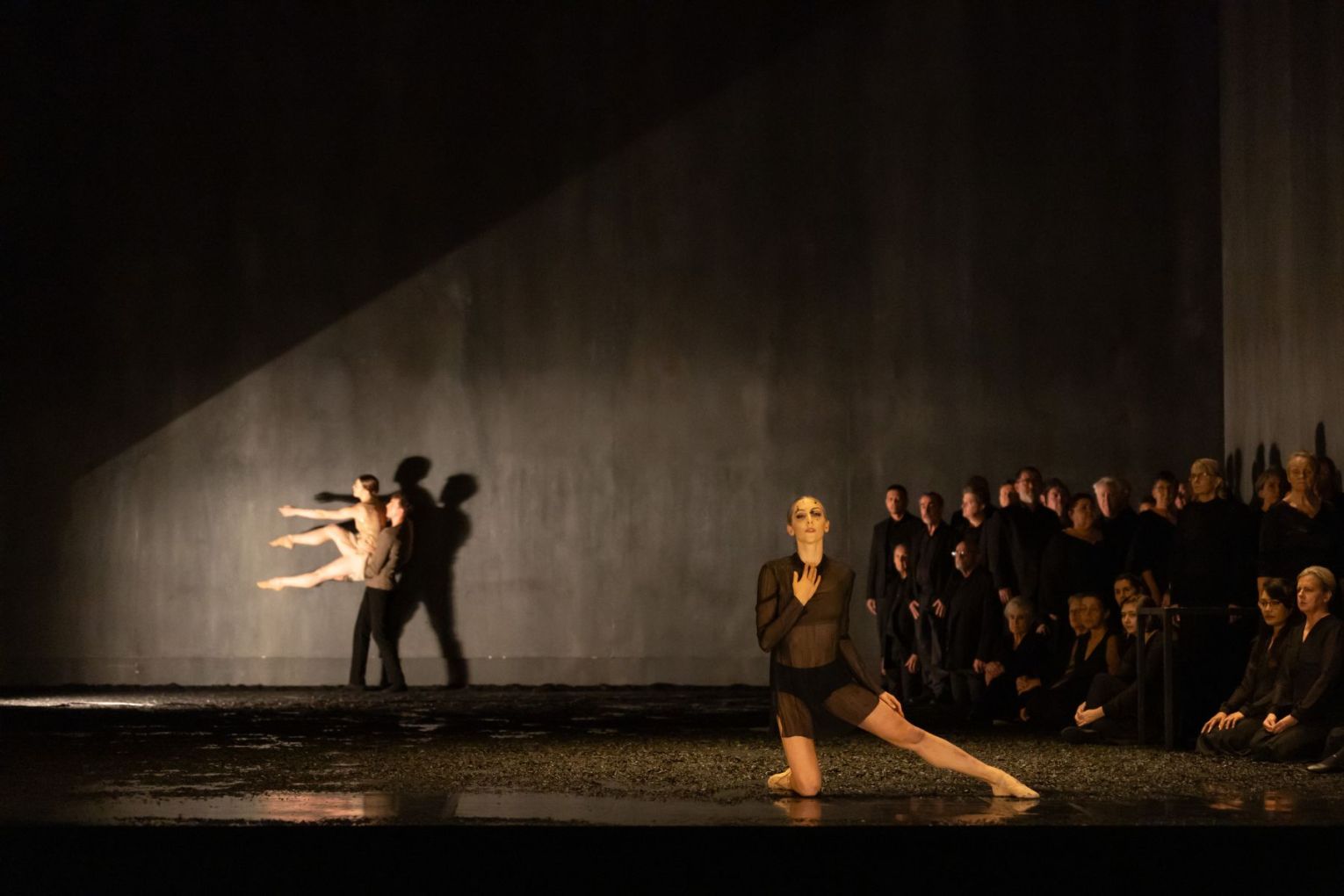
Like Verdi’s composition, this production of Messa da Requiem is notably unconventional. Queensland Ballet’s presentation is also admirably ambitious in scope and scale.
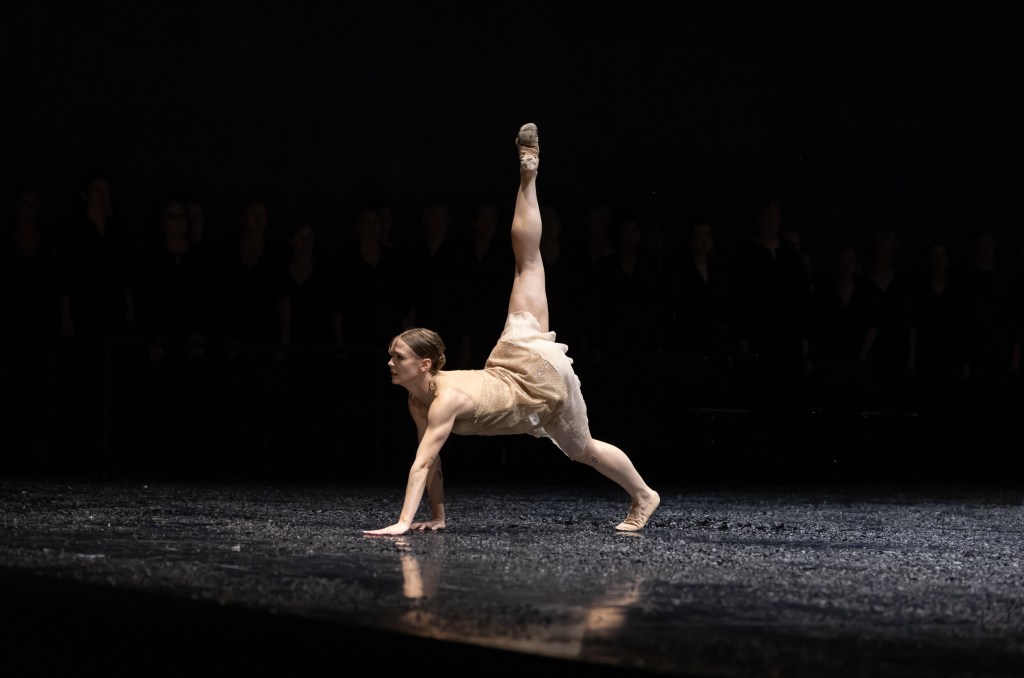
German choreographer Christian Spuck’s universal vision unites three artforms to expand the sensory impact of the famed groundbreaking oratorio. He adds a shifting visual dimension by integrating QB dancers and singers onstage to the aural journey created by operatic soloists, choir and orchestra.
Uniting 216 performers – 35 ballet dancers, four leading opera singers and the 110-strong Brisbane Chorale and Canticum Chamber Choir filling the stage, plus 67 Queensland Symphony Orchestra musicians in the front pit – generates a thrilling intensity.
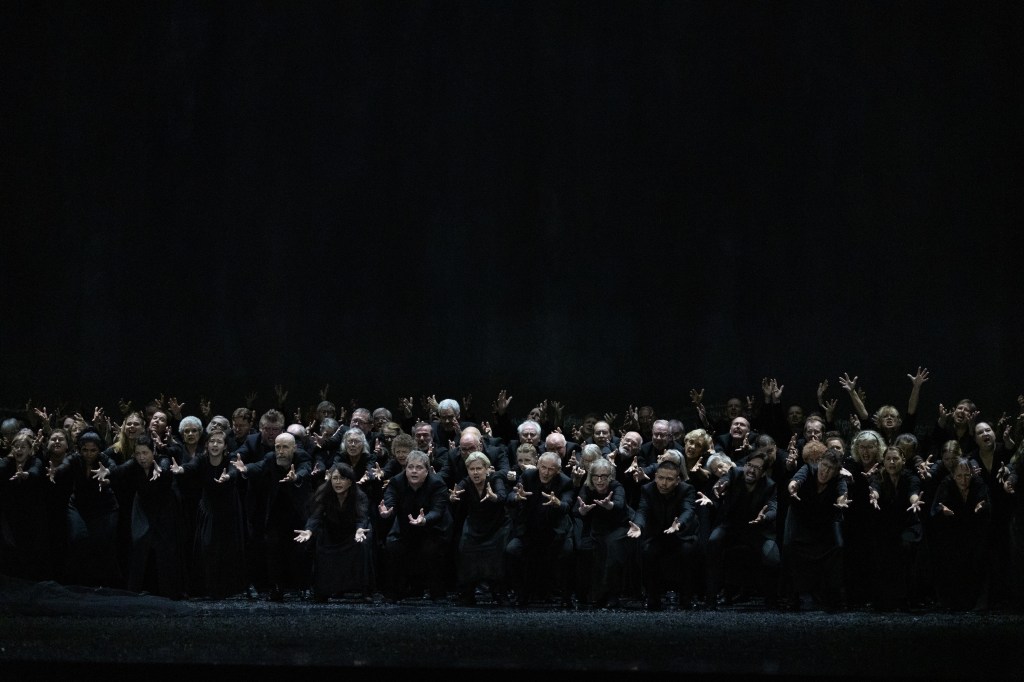
Naturally, this rare scale of cross-artform presentation provides the work’s prime selling point, offering an opportunity to celebrate collective artistry en masse and, moreover, to be immersed in an epic “experience”.
The historical allure of attending the opening season of QPAC’s new Glasshouse Theatre provides additional incentive. The venue’s sophisticated aesthetic produces an atmosphere of anticipation – stepping inside feels like you’re exiting the everyday to be transported to a special realm.
With grand-scale one-offs such as this, the undertaking’s realisation can be as much an incentive to attend as its artistic outcome. It’s an ethos underpinning arts festivals, and fittingly, Adelaide Festival hosted the Australian premiere of Spuck’s Messa in 2023. That performance featured Ballet Zurich (Spuck was then the artistic director), the Adelaide Symphony Orchestra and the Adelaide Festival Chorus.
You might like
Despite wide acclaim, opinions varied as to whether the work’s visual component actually enhanced and elucidated the requiem’s emotional power or distracted from it. That debate continued in conversations following the Brisbane premiere.
Solely in its musical form, Verdi’s 90-minute work is already considered an epic experience, hence being staged all over the world throughout the 152 years since its premiere.
While he stuck with Latin, the Italian composer’s approach to the Catholic funeral mass radically inserted what he knew best – opera – transforming it into an intensely dramatic and powerful contemplation of the human journey.
The requiem’s Dies irae is one of the most recognisable passages of classical music on Earth. Signalling Judgement Day, its visceral explosion of drums and brass has been so widely featured in cinema and even television commercials – I heard it sampled in one this morning – that most people will probably know it, even if not its name.
The production’s program lists Dies irae as the second of “seven main sections”. Its mood of reckoning was effectively accented by gestural and sculptural unison group movement.
Other passages’ moods are immediately apparent even without explanation, such as Lacrimosa’s aching pathos, and the glorious beauty crystallised in Offertorio’s acapella arrangement of soprano, mezzo soprano, tenor and bass-baritone voices.
‘I pondered why there weren’t surtitles … an invaluable tool in expanding understanding and appreciation of opera’
Subscribe for updates
But for a good part of the work I was not sure where it was up to, despite having read the program’s précis. The artistic elements weren’t filling the storytelling void.
Early on I pondered why there weren’t surtitles, which have proven an invaluable tool in expanding understanding and appreciation of opera. While musing that they could at times distract from the movement, I feel selective use would have enhanced engagement and reward.
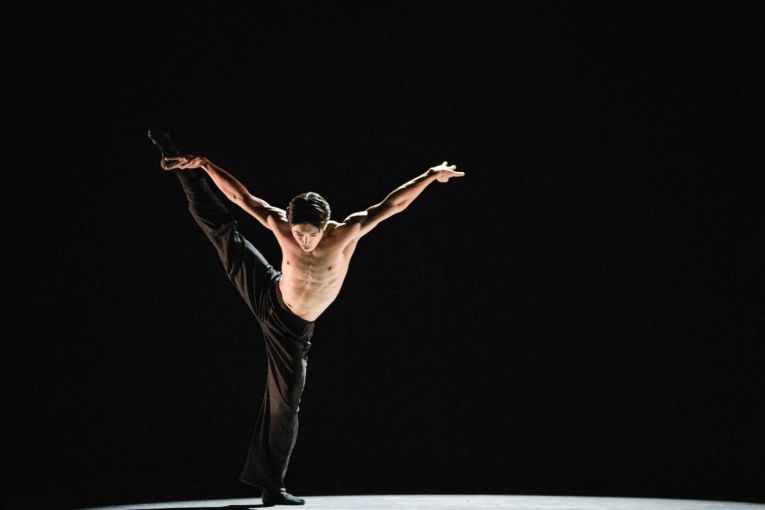
The choreography gives only five of Queensland Ballet’s artists featured roles, but the standard across the entire company is excellent, Spuck’s movement highlighting classical technique and line and overlaying it with the freer expression of contemporary ballet.
The two standout sections for me forged memorable imagery from Spuck’s imaginative use of arms.
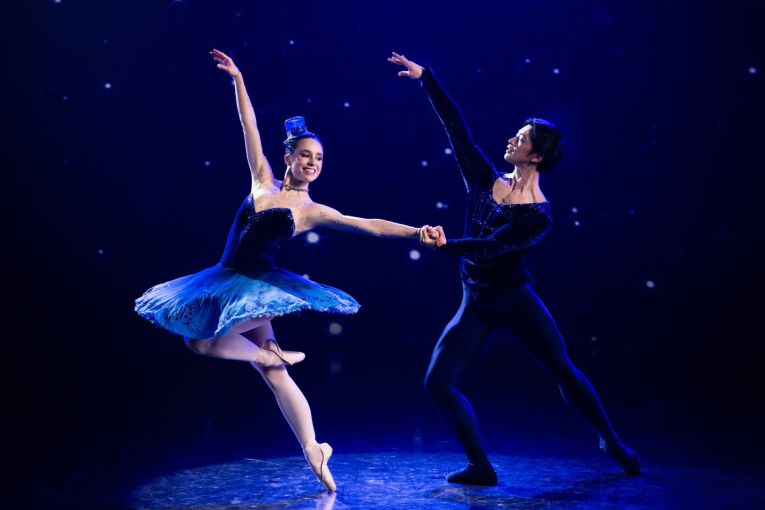
Principal artist Lucy Green and soloist Vito Bernasconi’s exquisite pas de deux in the fugal fourth section, Sanctus, symbolised ideal and infinite union through the pair’s arms symmetrically connecting and encircling to form an array of patterns.
The male dancers circling their arms in front of their bodies during Dies irae created a contrasting effect, the furious pace producing mesmerising auras of blurred light.
I found myself wanting more of such inspired moments that elevated the performance to a synergistic level.
And while the vocal soloists – mezzo soprano Cassandra Seidemann, bass-baritone Jeremy Kleeman, soprano Naomi Johns and tenor Kyle Stegall – appeared comfortable with the movement aspects (the former two in particular), the choir members’ execution wasn’t always uniformly convincing. Among those appearing completely at home, though, Queensland Ballet supporters will notice a familiar face – executive director and trained soprano Dilshani Weerasinghe.
This production represents ballet and opera’s drive to remain current by growing beyond tradition – contrary to Timothee Chalamet’s widely challenged opinion of them as dying arts.
Its approach may open a door for those new to these artforms, as we can never be certain of our opinion until we have first-hand experience. And for novelty-seekers, Messa da Requiem is strikingly different from anything else on offer this Easter.
Messa da Requiem, Glasshouse Theatre, QPAC, until April 4.
Want to see more stories from InDaily Qld in your Google search results?
- Click here to set InDaily Qld as a preferred source.
- Tick the box next to "InDaily Qld". That's it.
Free to share
This article may be shared online or in print under a Creative Commons licence