What we do for love: Dvořák’s masterpiece is a fairy tale for grown-ups
Rusalka is Dvořák’s tragic, fairy-tale opera about a water nymph who sacrifices her voice and immortality to win a human prince’s love – and it’s also Opera Queensland’s first production in its new home, QPAC’s Glasshouse Theatre.
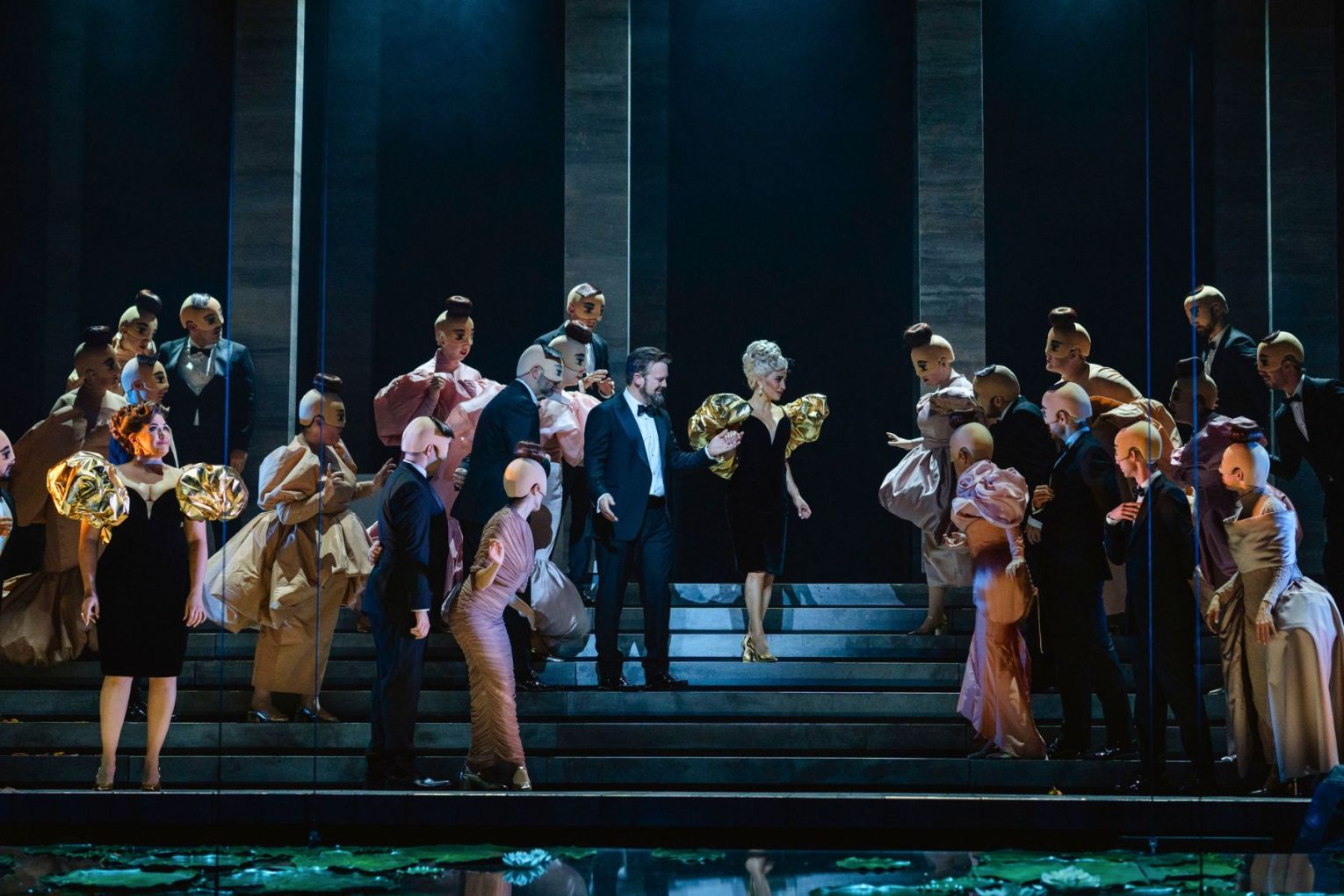
Opera Queensland invites audiences into a world of moonlight, magic and dangerous longing with a major new staging of Antonín Dvořák’s Rusalka at QPAC’s Glasshouse Theatre, June 25 to July 4.
The production marks the company’s first performances in its new home venue.
Inspired by Slavic folklore and Hans Christian Andersen’s The Little Mermaid, Rusalka is one of opera’s most haunting fairy tales: a story of transformation, sacrifice and the devastating cost of love, carried by Dvořák’s lush, romantic score and its most beloved aria, the Song to the Moon.
Written close to the end of the composer’s life, it is, in the words of Opera Queensland CEO and artistic director Patrick Nolan, “the work of an artist at the height of his powers”. For Nolan, Rusalka is the natural culmination of a season built around fairy tales.
“Almost every fairy tale begins with a desire strong enough to carry someone across a threshold, out of the world they know and into one where the usual rules no longer apply,” Nolan says.
“After La Cenerentola, in which goodness triumphed, and Into the Woods later in the year, in which ‘happily ever after’ is pulled apart and reassembled into something less naive, Rusalka sits between them as the most haunting of the three.
Rusalka ‘reminds us that desire and heartbreak share an intimacy as exquisite as it is painful’
“In turning to a folk tale about a water sprite who risks everything for human connection, Dvořák conjured an opera full of human fragility and a profound awareness of the wisdom of the outsider.”
You might like
There is something fitting, he adds, that OQ’s first production in the Glasshouse Theatre is a work that shimmers with water and moonlight.
“We can imagine no more fitting way to begin our time in this extraordinary new home,” Nolan says, noting that Rusalka “reminds us that desire and heartbreak share an intimacy as exquisite as it is painful”.
Director Sarah Giles believes the opera is stranger than a single story. She begins with an old Czech warning: parents once told children that a water goblin named Vodník would seize them by the legs and drag them to the bottom of the lake if they strayed too close to the water’s edge.
“Fairy tales teach us lessons,” Giles says. “Some are designed to scare us into certain behaviours, whether for our own good or to make us fit into society’s norms. Others are there to inspire us, or to protect us.”
Disney’s Little Mermaid can be about love conquering all, while Andersen’s earlier, unhappy version can be about the virtue of putting others’ needs first. Giles’ Rusalka holds all those registers at once.
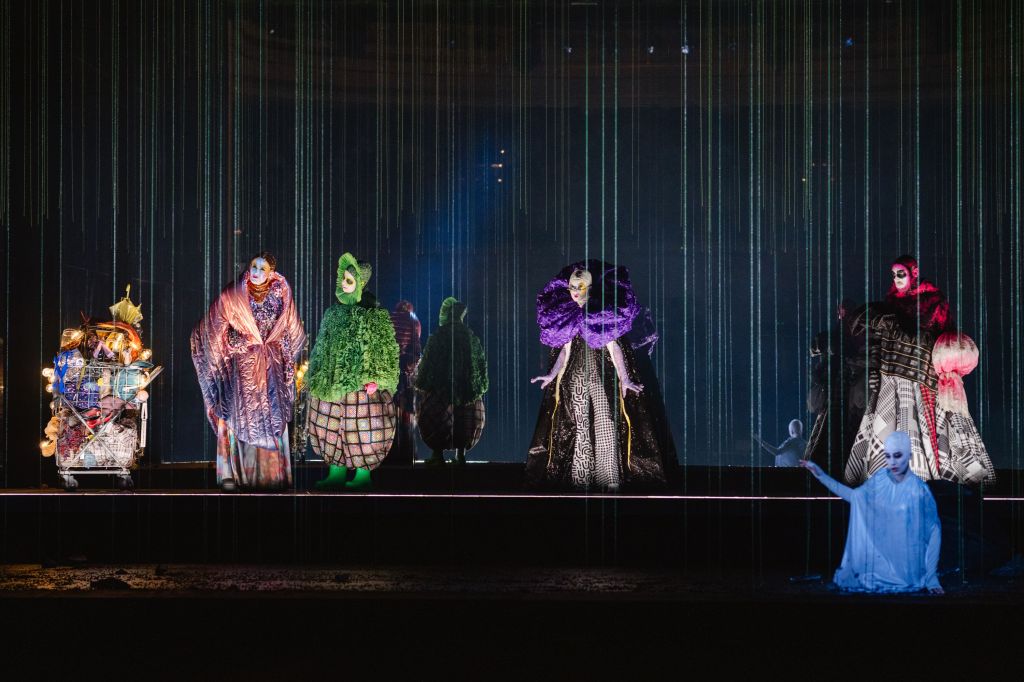
“Our Rusalka is a dream, a nightmare and a fairy tale,” Giles says.
Rather than leaning on familiar mermaid imagery, Giles and her creative team have built a surreal, psychologically charged world drawn from brutalist architecture, fashion photography and contemporary installation art.
Ukrainian-born Australian conductor Vladimir Fanshil says the composer paints almost entirely in orchestral colour.
“The shimmering strings make the moonlight feel cold and real; the warm strumming of the harp feels like a sign that Rusalka is about to surface; and the short, edgy motif of Ježibaba is hauntingly vivid,” he says. “You feel her presence before she even speaks.”
Subscribe for updates
He points, too, to Dvořák’s instinct for contrast: the Prince’s theme set against the raw, earthy brass of the hunting music, and glittering aristocratic waltzes and mazurkas that mask something darker gathering beneath. At its heart, Fanshil says, the opera is a fairy tale deeply rooted in Slavic folklore.
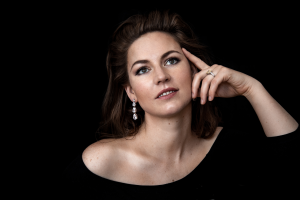
Internationally acclaimed soprano Eleanor Lyons makes her highly anticipated OQ debut as Rusalka, and she does so under the baton of her husband. The pair met as students at the Sydney Conservatorium 20 years ago where, Lyons recalls, a wild passion was “channelled into a series of eight sonnets before we finally plucked up the courage to go on a date”.
Lyons, who grew up in the surf of Sydney’s Northern Beaches, says the role feels like home.
“As a nature kid I thought I could sing with the birds and that they understood me,” she says.
She later met her own Prince in Fanshil, “from another world; a musical family with a European background that spoke in a different language. But fortunately, I still have my voice, unlike Rusalka.”
This is, remarkably, their first opera together. Nolan calls Lyons’s casting a rare gift.
“Few roles demand as much from a soprano as Rusalka,” he says. “Eleanor Lyons meets every moment with virtuosic precision and fearless vulnerability.”
Around her stands a powerhouse ensemble: Tenor Rosario La Spina as the Prince, Eva Kong as the Duchess, Warwick Fyfe as Vodník and Ashlyn Tymms as Ježibaba, the witch, with the Opera Queensland Chorus.
Created for Opera Conference, the national partnership between Opera Queensland, Opera Australia, State Opera South Australia and West Australian Opera, the staging brings together some of Australia’s leading theatre makers. Alongside Davis, the creative team includes costume designer Renée Mulder, lighting designer Paul Jackson, and video designer David Bergman, with chorus master Narelle French, associate director Eugene Lynch, and movement and intimacy coordinator Dr Lyndall Grant.
The company acknowledges its funding partners Arts Queensland, Creative Australia and Brisbane City Council, and its performance partners QPAC and the Queensland Symphony Orchestra.
Featuring the Opera Queensland Chorus and Queensland Symphony Orchestra, Rusalka is sung in Czech with English surtitles and runs for approximately three hours including two intervals. A story of impossible love, shimmering beauty, and emotional sacrifice, it promises an unforgettable experience for first-time audiences and seasoned opera lovers alike.
Rusalka, Glasshouse Theatre, QPAC, June 25 to July4.
Want to see more stories from InDaily Qld in your Google search results?
- Click here to set InDaily Qld as a preferred source.
- Tick the box next to "InDaily Qld". That's it.
Free to share
This article may be shared online or in print under a Creative Commons licence