Benjamin Britten and beyond: A musical feast awaits
The Doric String Quartet and Lloyd Van’t Hoff wowed their Brisbane audience at a Musica Viva concert this week – and there’s plenty more to come this year.
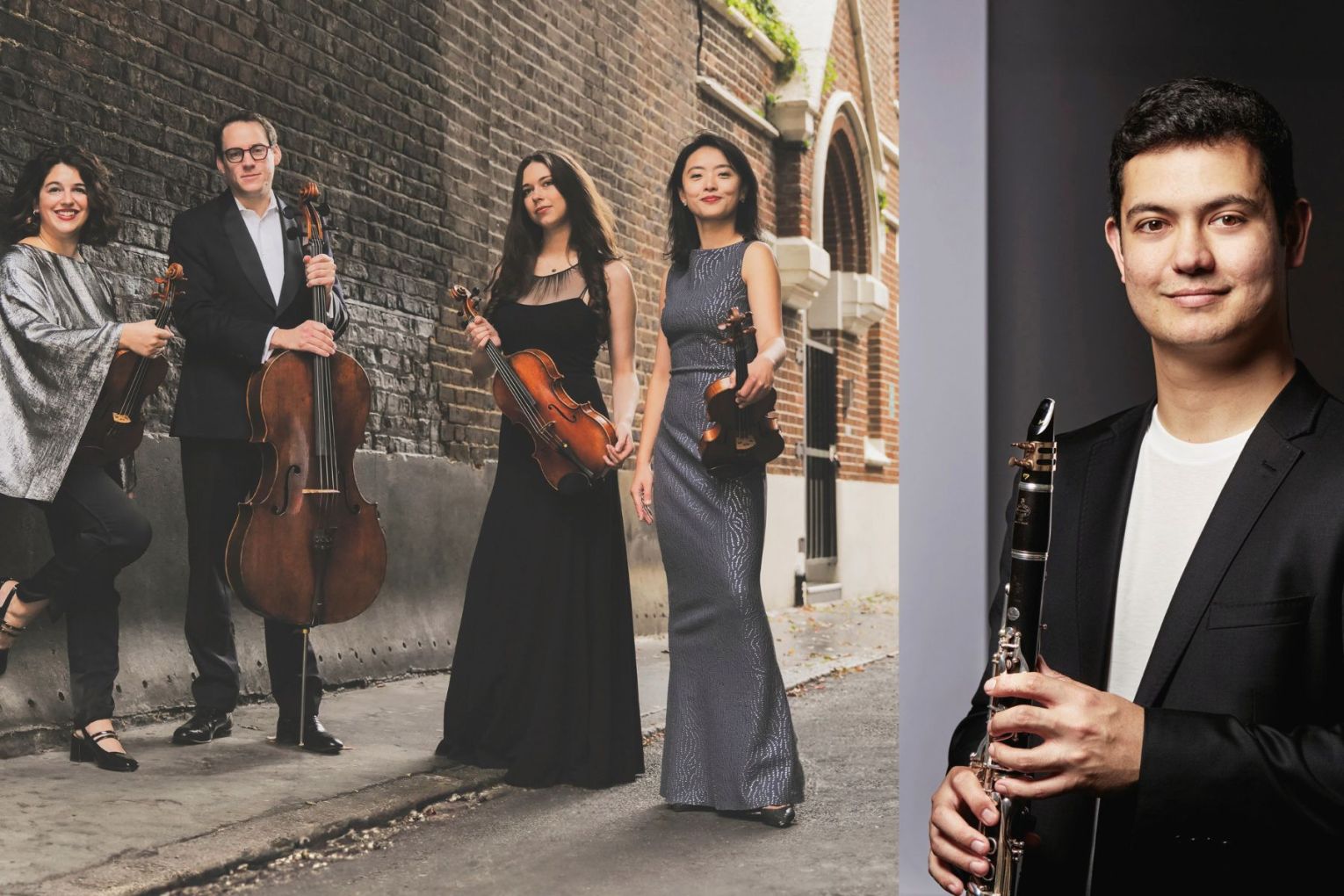
Australians love it when a battler comes good. The Doric Quartet were dumped at the first round of The Melbourne International Chamber Music Competition in 2007. The following year they triumphed in the 2008 Osaka International Chamber Music Competition.
The Doric has enjoyed an impressive career ever since.
The quartet’s program of contrasting works from 1806 to 1971, featuring works by Benjamin Britten, Thomas Adès and Beethoven, demonstrates its exceptional gift for capturing a work’s essence and the ensemble’s intention to champion the composer’s vision through sublime, inspired and informed interpretation.
Britten’s Three Divertimenti for Strings began the concert. This work met with a negative response at its first public performance in 1936. Britten withdrew the work, which wasn’t then published in its current guise until 1983. The Doric Quartet’s superb account heightened the tonal contrasts and explored bold colouring with an acute sensitivity to Britten’s frequently altered pacing and textural surprises.
There’s no doubting that the Doric champions this British composer’s music with which they revealed an obvious affinity. The quartet’s vivid account exposed Britten’s formality while mining his pioneering approaches that show no mercy for string players in its authoritative call for virtuosic unity.
In the March, the quartet haloed silences – even their silences come in variable shades – and revealed a rhythmically taut delivery with the pulse shared across the quartet with astonishing precision. The Waltz delivered a catchy elegance, the Burlesque a wild exuberance.
You might like
Thomas Adès’ mother is an artist and his music is visually stimulating. Not surprisingly, he has created remarkable film scores, notably his score for Colette. He’s also celebrated for his stand-alone classical works, The Exterminating Angel, Powder on Her Face, Asyla and The Tempest.
Alchymia is an introspective, emotionally bruising clarinet quintet, composed in 2021, which is cinematic at heart. The composer harnesses a basset clarinet, brilliantly executed by Lloyd Van’t Hoff, who contributed a rewarding baritonal darkness in the unfolding of this intense and intimate work. A piece that casts a retrospective look at Elizabethan London and its fascination with alchemy.
In the first movement, A Sea Change, the composer conjures the sea’s power as referenced in Shakespeare’s The Tempest. Van’t Hoff’s sustained beautifully phased high notes sounded like rays of sun glinting on the dark surface of an ocean. The Woods So Wild, the second movement, alchemises a Tudor folk song by William Byrd. In this, the quintet produced a spine-chilling flurry of nervy skittering.
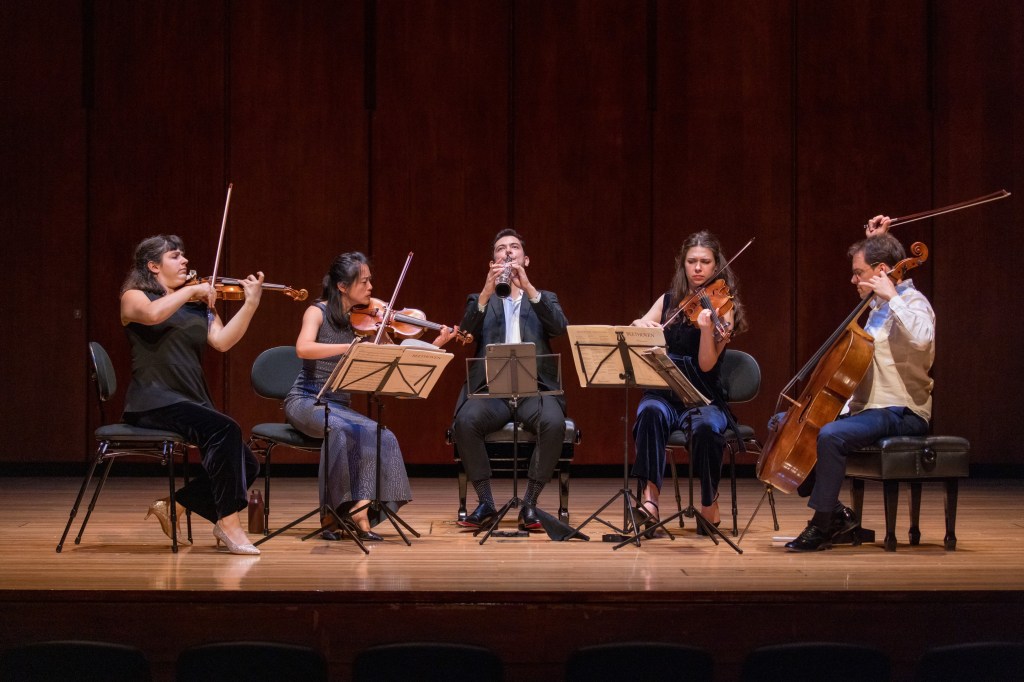
The third movement is a tribute to John Dowland’s song Lachrymae – and the players served a glorious wallow in gloom. Divisions on a lute-song was a foray into imaginatively explored florid variations. An enjoyable element of this performance in general was how masterfully Adès interweaves the clarinet’s voice with the violins, viola and cello and how much Van’t Hoff enjoyed executing his strenuous lines.
Beethoven’s String Quartet in F Major, op. 59, no. 1 (Razumovsky) was remarkably delivered with radiant phrasing and powerfully nuanced harmonic tension. Often conversational, the playful and occasionally conflicted sparring between instrumentalists convinced, and they pushed the dynamic contrasts to extremes.
Subscribe for updates
The robust dynamics had an unusually full-blown power worthy of a larger ensemble, but the quartet also traded in a distinctive hushed delicacy demonstrating the Doric’s trademark finesse and control. In the third movement, John Myerscough’s cello sang a plaintive theme with subdued restraint, and yet it had immense power and was but one of many exemplary moments in this outstanding concert.
One of the reasons chamber music is enjoyable to listen to live is the rapport between the players, honed over many years, in small ensembles like piano trios and duos.
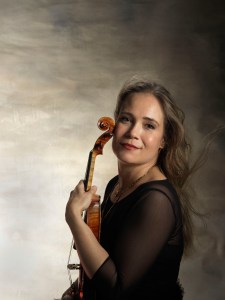
Coming up in Brisbane in July is The Fairy’s Kiss, an Australian debut recital for superstar violinist Leila Josefowicz – a former child prodigy – who will be performing with American pianist John Novacek. These two have shared a stage as a violin and piano duo since they were both eight years old. Their artistic connection is said to be phenomenal.
It’s a tempting menu with Debussy’s sensual Violin and Piano Sonata and Stravinsky’s The Fairy Kiss, a sonic telling of Hans Christian Andersen’s supernatural folly about a thoroughly nasty fairy. The score blazes with Tchaikovsky’s tunes.
These traditional offerings are counterpointed by an Australian premiere of Mriya, an evocative topical work referencing the Ukraine, tailormade for Josefowicz by composer Charlotte Bray.
In August, cellist Nicolas Alsteadt and lutenist Thomas Dunford will put a not-to-be-missed fresh spin on Baroque music. While Dunford is intriguingly dubbed the Eric Clapton of the lute, Alsteadt has a reputation for making familiar 17th century repertoire sound brand new.
Doric String Quartet and Lloyd Van’t Hoff played at the Queensland Conservatorium Theatre on June 15.
The Fairy’s Kiss – Leila Josefowicz and John Novacek – is on at Brisbane Powerhouse on July 5 at at 2pm.
Want to see more stories from InDaily Qld in your Google search results?
- Click here to set InDaily Qld as a preferred source.
- Tick the box next to "InDaily Qld". That's it.
Free to share
This article may be shared online or in print under a Creative Commons licence