Heart of the matter: Capturing the enduring nature of love
True love endures through time, shaped by deep loyalty, shared memory and the quiet choice to stay beside a partner through life and death in Abi Morgan’s intimate Lovesong, sympathetically staged by PIP Theatre.
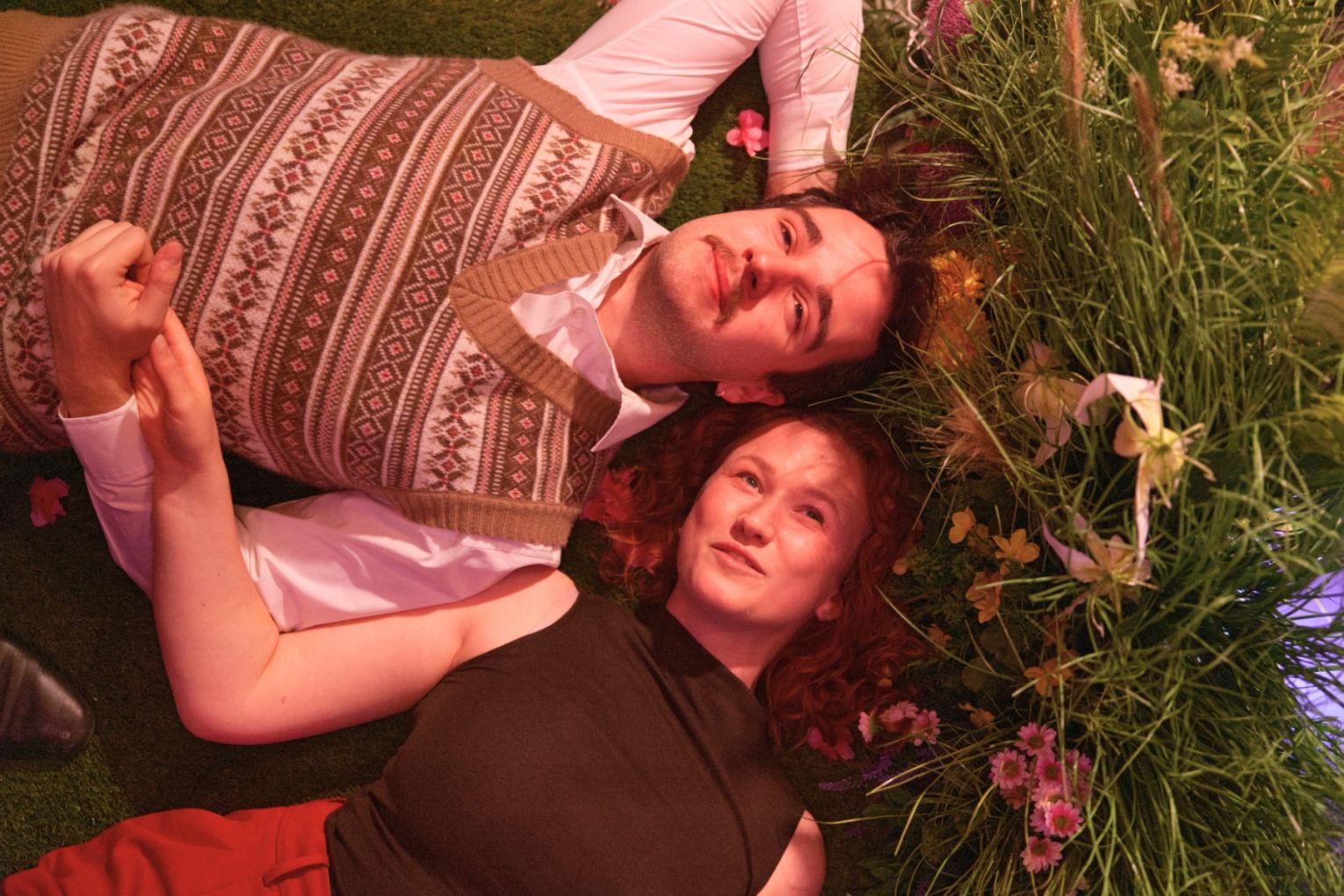
Winter settles over Milton as a buzz of curiosity sweeps through the foyer of PIP Theatre in anticipation of the evening’s performance of Abi Morgan’s Lovesong.
The stage is carefully dressed. From the rolling grass field to the furniture, kitchenette and interactive visual displays cascading across the walls, every element captures attention in this intimate, 100-seat theatre.
Lovesong explores the delicate and enduring nature of love through the parallel lives of one couple, Maggie and Billy, as they are portrayed across two stages of their relationship.
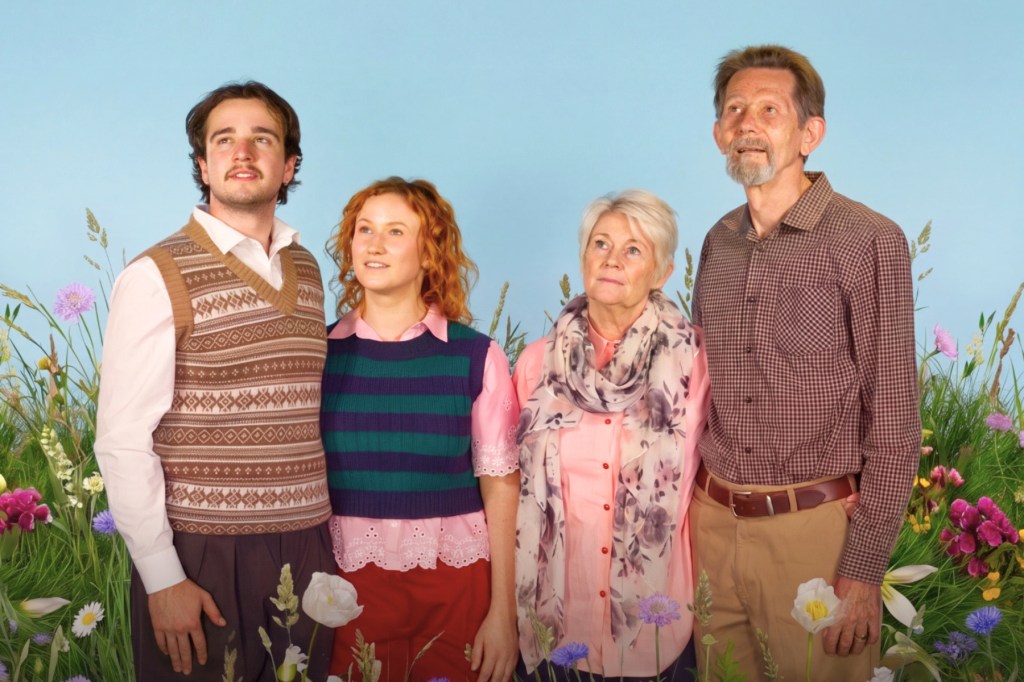
Directed by Harrison Allen, Lovesong moves between Margaret and William’s early years together, brought to life by Anna-Rose van der Wiel and Connor Costin, and in their later years as Maggie and Billy, portrayed by Nicky Whichelow and John Stibbard. Through their perspectives, the story explores the excitement, uncertainty and vulnerability of young love, alongside the quieter realities, challenges and resilience found within a lifelong relationship.
This intention is beautifully present throughout Allen’s direction of Lovesong, allowing both the performers and technical elements of the production to hold their own moments of focus while remaining deeply connected.
The play, just 70 minutes long, invites personal reflection on relationships – parents and grandparents – capturing the familiar rhythms of love that evolve over time. Even the playful and worrying bickering between Maggie and Billy creates some of the evening’s warmest moments, with laughter echoing throughout the audience on opening night.
You might like
Anna-Rose’s performance carries this emotional weight beautifully, with her opening vocals commanding attention. Performed without amplification, her voice fills the space with a confidence and vulnerability that draws the audience into Margaret’s world.
A key moment comes when Margaret (Anna-Rose van der Wiel) asks when she can finally have what she desires most. Her “When?!” becomes a defining moment of frustration and longing, reflecting the sacrifices made within relationships. This moment feels less like an argument and more the question: when do personal dreams become shared dreams and begin to feel like a sacrifice? Margaret’s frustration does not come from a lack of love, but from the feeling of losing pieces of herself while trying to build a future alongside someone else.
Equally, William’s (Connor Costin) quieter struggle – feeling he does not have enough time for himself – creates a powerful reflection on modern romance.
A key strength of the young actors is when they interact with the older versions of their characters. Connor Costin reflects on the excitement of sharing the same character with his older counterpart John Stibbard, where both actors can bring their own interpretation of William while still existing within the same emotional journey. Their connection creates something deeply affecting, as the audience sees not just a younger and older version of one person, but the memories, choices and experiences that shape who someone becomes.
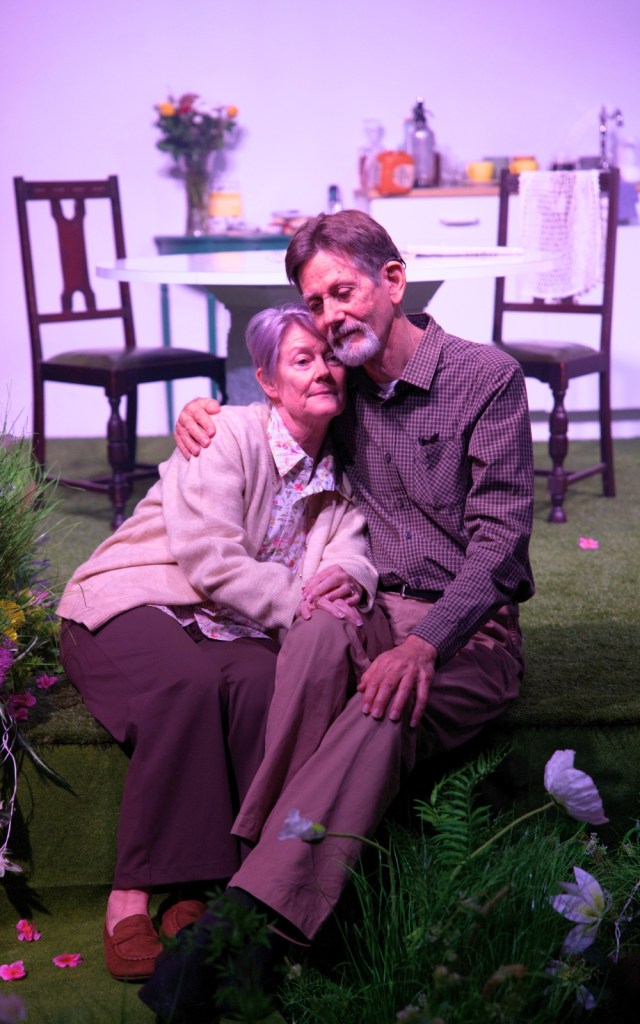
These moments create a connection between the past and present, allowing the audience to see the reflection of who Maggie and Billy were and who they become without needing everything to be spoken.
The older versions of Maggie (Nicky Whichelow) and Billy (John Stibbard) bring a different weight to the story, where the theme of memory becomes more present and unexpectedly familiar. Through their performances, I find myself reflecting on my own grandparents and the quiet realities that come with growing older alongside someone else. These moments leave a sense of reflection rather than sadness, reminding the audience that relationships are not only defined by where they have been, but by the futures they continue to imagine and the memories they continue to carry long after they are gone.
Through Allen’s direction, the production leaves space for personal reflection. As the story unfolds, the stage begins to speak. The three-screen displays throughout the production (visual designs by Lachlan Payne and Beth Andrews) constantly capture attention, guiding where the audience looks and allowing the two parallel stories to blend. They either pull focus away from a scene or deepen the emotional weight of what is happening on stage, creating another layer to the storytelling.
Subscribe for updates
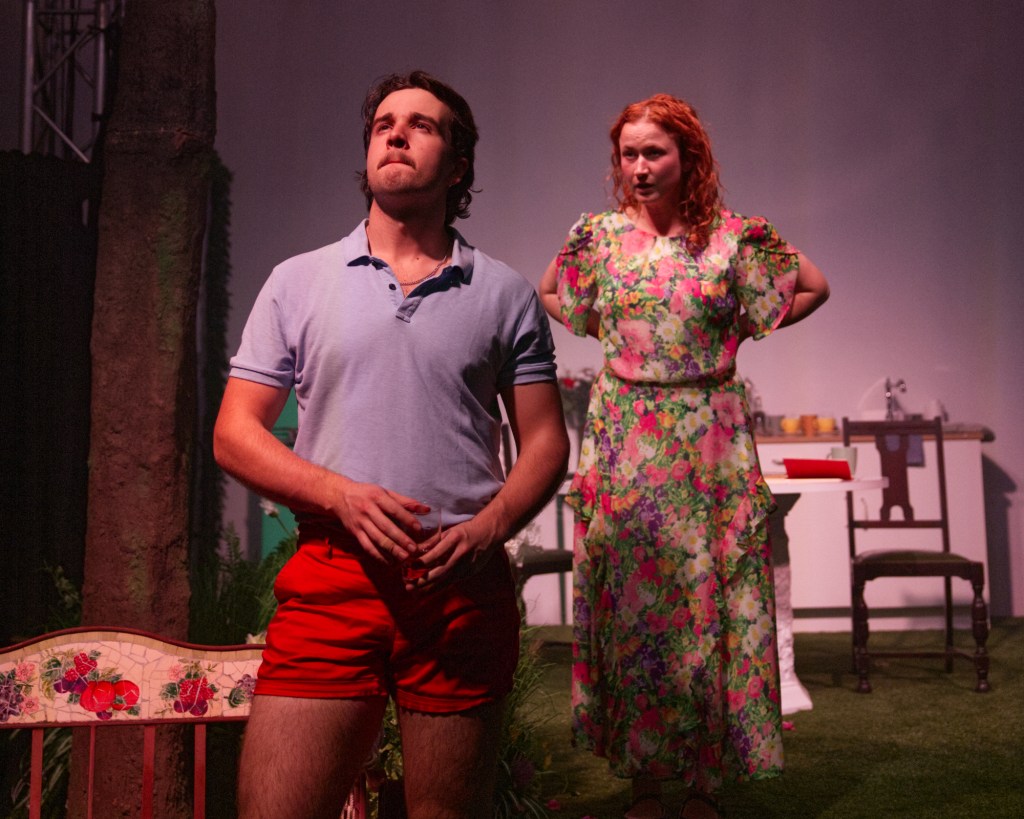
This attention to detail is an exciting element of the evening. Every stretch of the stage, every prop and every piece of furniture is interacted with, from the smallest details to the larger movements across the space, constructed by Indiah Morris. Each performance brings a sense of change and motion, with every lighting choice and design, by Noah Milne, and physical interaction adding another layer to the story, guided by stage manager Megan Dale. Allen’s role as director also extends to set, costume design and stage projections.
The production feels like something you could watch again from a different angle and discover another perspective within the stage. The use of montage-like elements and the contrasting colours of orange and blue lighting create distinct moments across both timelines.
From the costume designs to the use of real props, every detail contributes to the familiarity of the space. Then there is the live pianist, yes live! Music composed by sister duo Hannah Page and Mettea Page and performed by pianist Mattea Page introduce what becomes one of the most memorable elements of the evening. The composition creates an atmosphere that perfectly fits the themes of love and memory, while the carefully placed percussive moments add another layer of emotion and connection between the actors, the stage and the audience.
Lovesong feels extraordinary. It is a reminder that theatre does not require a large stage to tell a deeply human story
The production finds moments where the past and present exist alongside each other, creating a quiet dialogue between the younger and older versions of Billy and Maggie. Through the careful use of lighting, movement and performance, emotions of regret, reflection and understanding exist without needing to be spoken. The characters do not simply tell each other what they have learned, they reveal it through the weight of a glance, a pause or a moment of recognition that carries years of memories between them.
What makes Lovesong so memorable is how every element of the production feels connected. The actors, lighting, sound, set and music never compete with one another, instead they create a shared language that allows the audience to experience love not only through words, but through memory, movement and silence.
For a production created by a small creative team within the intimate space of PIP Theatre, the ambition and detail within Lovesong feels extraordinary. It is a reminder that theatre does not require a large stage to tell a deeply human story. Sometimes it is within the smallest moments, a glance, a pause, a familiar argument or a remembered feeling where the most powerful stories are found.
Lovesong plays PIP Theatre, 20 Park Rd, Milton, until August 8.
This article was written as part of The Critical Writing Program, run in partnership with Queensland Writers Centre and InReview Queensland, supported by the Queensland Government through Arts Queensland, part of the Department of Education.
Want to see more stories from InDaily Qld in your Google search results?
- Click here to set InDaily Qld as a preferred source.
- Tick the box next to "InDaily Qld". That's it.
Free to share
This article may be shared online or in print under a Creative Commons licence