Are yesteryear’s fairy tale dreams the nightmare reality of today?
Psycho-siren Leah Shelton brings her theatricality, dark humour and high-camp performance art to a subject that has been keeping her awake at night.
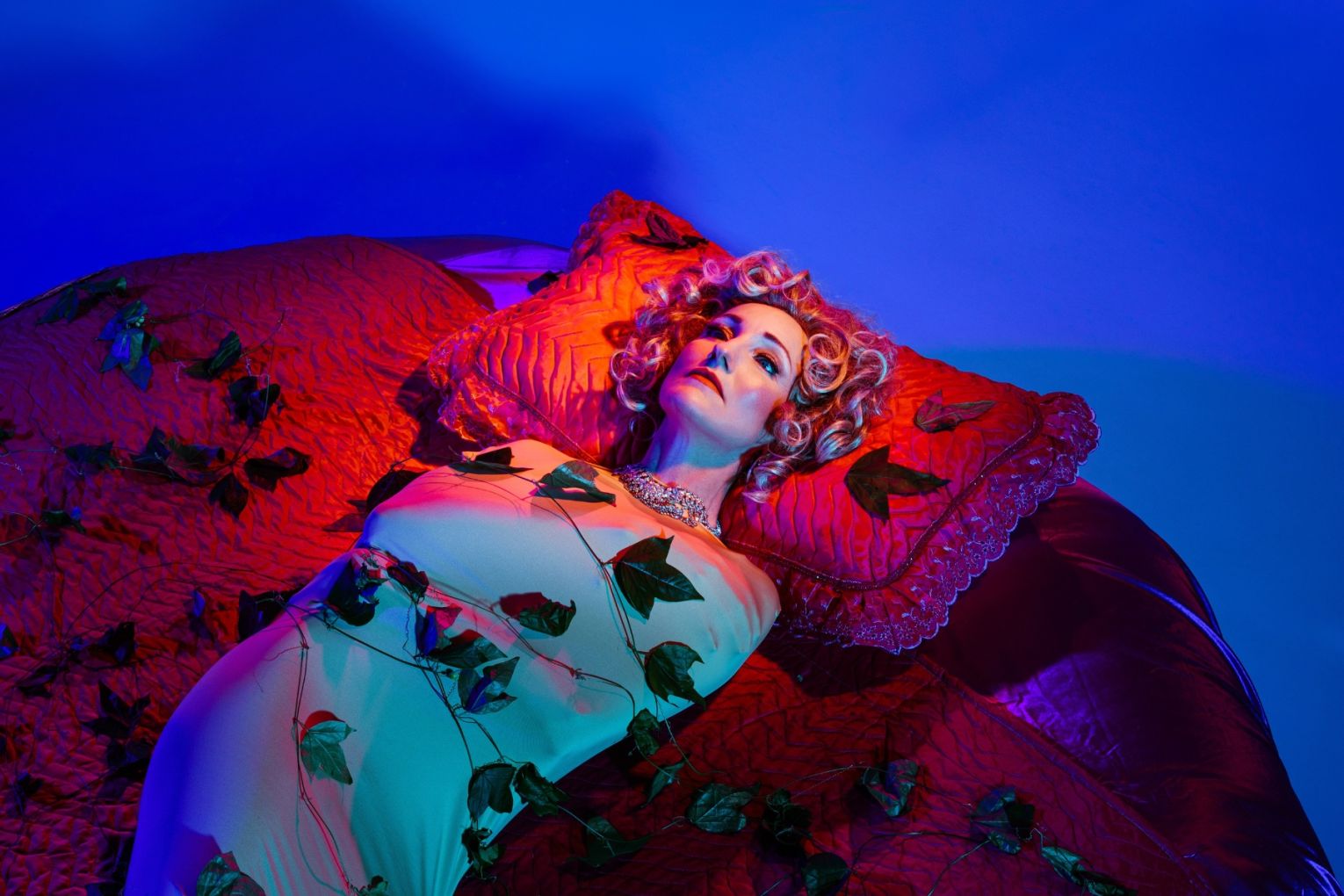
A provocative wake-up call to the narratives and cultural fixations around sexual sedation, Keep Sleeping, Beauty is a one-woman show by performer and creator Leah Shelton.
Tucked into the Metro Arts stage, a woman (Leah Shelton) is asleep, silent, subdued. As we waited for the show to start, her breathing elevated.
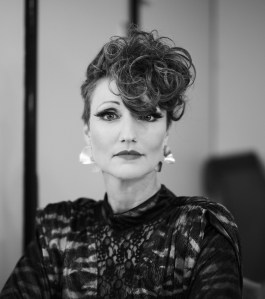
Keep Sleeping, Beauty is the latest performance show from Shelton, whose growing repertoire of solo shows includes smash-hit Batshit. She is also the co-director of feminist theatre Polytoxic, which celebrates diversity and collaboration and may be best known for the cabaret show Dangerous Goods.
Directed by Ursula Martinez and presented by Metro Arts and Quiet Riot as part of Melt Festival, Shelton is the main character of this story – in other words, she plays herself.
“Three weeks ago I uncovered this cassette recording of myself at age seven reading the story of Sleeping Beauty,” she recently told InReview. “The show shifted because we then had to include this touchstone of innocence. As a very young girl, I was just trying to get the words right, but there are all these layers of conditioning behind those words. And it made me very aware that my own stories at this age included this formative damsel-in-distress narrative.”
You might like

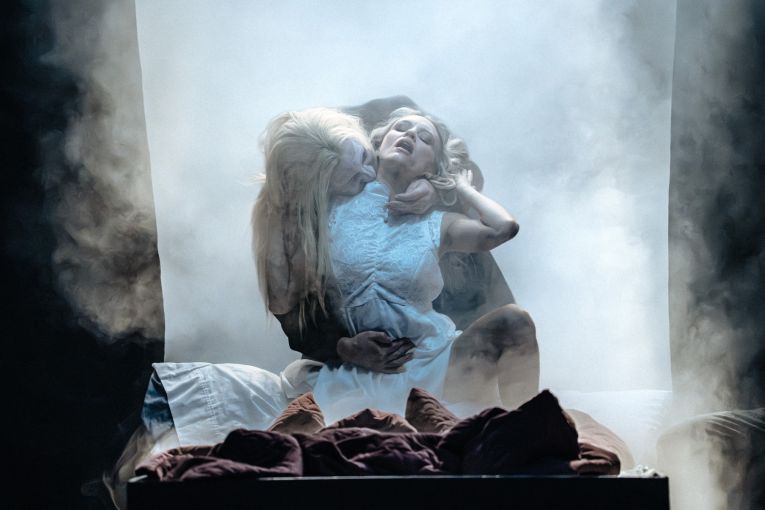
The earliest known version Sleeping Beauty was in 1634 by Giambattista Basile. A young woman (a princess) gets a splinter and falls unconscious. A passing king (who is married) discovers and assaults her.
She gives birth to twins, and it is only when one of the children sucks out the splinter that she awakens. The king tells his wife, who convinces the princess and her twins to come to their castle. The wife then tries to burn the princess and to force the king to eat his children. The children escape, and the princess asks if she may first take off her clothes. The wife agrees, but as the princess removes her clothes, she cries for the king, who returns. The king burns his wife instead and lives happily ever after with the princess he assaulted and his almost cannibalised children.
Shelton says, “My work is always about interrogating the conditioning, the labelling, the messaging, the patriarchy and the myths we’re told over and over. While these stories are hundreds of years old, they’re still infiltrating the way we relate to each other. Retelling and interrogating these fairy tales is how we begin to understand their impact.”
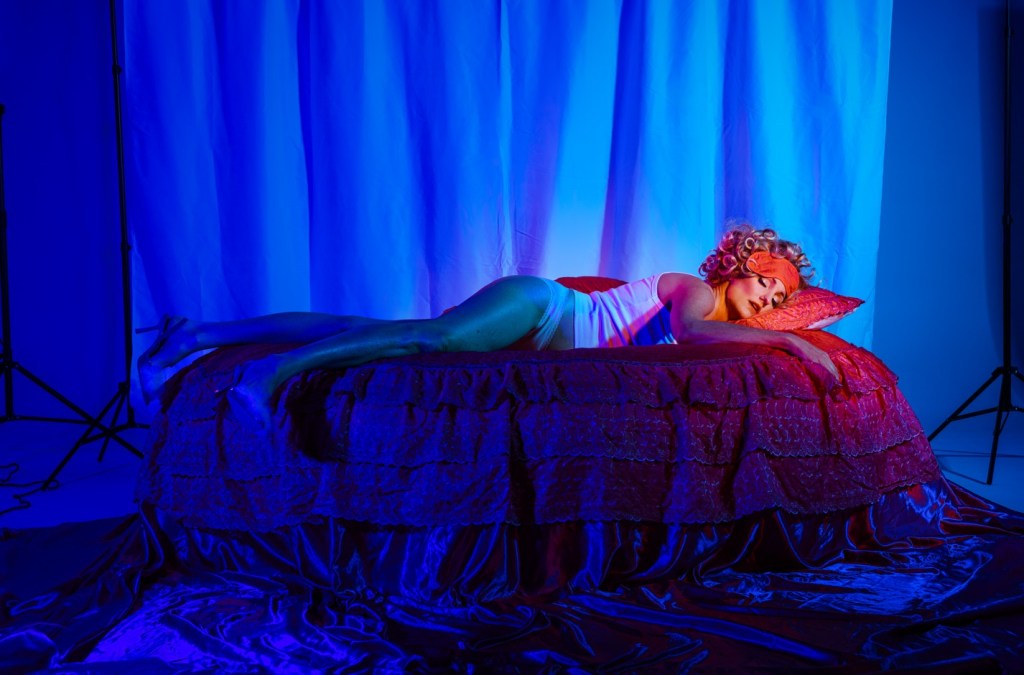
It’s disturbing to think about the longevity of this problematic narrative. Why is there such an obsession, an attraction to a quiet, unconscious woman? Why perpetuate this fairy tale with every generation of girls? And why are men, to this day, determined to make beautiful placid objects out of other human beings?
These are the big questions Shelton asks in this performance, using her signature uncomfortable humour, incorporating lip-synced news articles, different camera angles, videos, text messages, wonderful costume design and performance art.
Subscribe for updates
For Shelton: “Props, setting and sound design are my co-stars. It is a mish-mash of forms, and the work we’ve created is very much responding to this current screen culture. We have several phones and projection screens within the space, so there’s a real sense of technology and the impact it has had on the way we view consent, and all the online networks that are facilitating the growth of sedation of women.”
A brilliant line in the show is from a viral clip by UK-based poet and performer Georgie Jones, where she talks about how it’s not all men but, “if I gave you a bag of Maltesers and told you that one in 10 of them was shit dipped in chocolate, you’d be wary of them all”.
The performance is vivid, and the message is strong, but its violence is not overt
And she asks why the genuine Maltesers constantly advertise that they’re real – instead of getting rid of the bad smell beside them. A statistic used in the show is that 51% of women have woken to their male partner having sex with them, or performing sexual acts on them, while they slept.
Part-researched discussion, part artwork, Shelton interrogates these dark themes. Yet the nature of the performance – a solo show – makes you aware that it’s not going to be overtly confronting in a physically triggering way. The performance is vivid, and the message is strong, but its violence is not overt. And, as Shelton told me, “Yes, dark topics, but camp, ridiculousness, over-the-top flamboyant theatrics, absurdity and comedy – they’re all such big parts of my work and the most important thing for me is to make these topics accessible and make them connect with an audience.”
It is delivered in a way that doesn’t alienate viewers but instead draws them powerfully into the discussion.
I found that there were times when the plot was lost in the repetitive nature of a scene. But the ending brought it all back together, and the skin-crawling sensation turned to goosebumps as Shelton found her strength and began fighting what was keeping her immobile; what she ultimately defeats represents those men who would rather she stayed in bed, asleep and silent, with her perfect golden sunshine hair and lips the shade of a red rose.
Is the show’s message ultimately hopeful? Shelton pauses and promises: “Rage – and hope – I hope people take away a sense of solidarity, after sitting together and feeling the room fill with rage but also hope for a better world.”
This show will keep you up at night with its sharp critique of sleep culture.
Keep Sleeping, Beauty plays Metro Arts’ New Benner Theatre, West End, until November 14 (50 minute show with no interval).
Secure your seats here and visit the Melt Festival website to see the full program.
This article was written as part of The Critical Writing Program, run in partnership with Queensland Writers Centre and InReview Queensland, supported by the Queensland Government through Arts Queensland, part of the Department of Education.
Want to see more stories from InDaily Qld in your Google search results?
- Click here to set InDaily Qld as a preferred source.
- Tick the box next to "InDaily Qld". That's it.
Free to share
This article may be shared online or in print under a Creative Commons licence